By myhandsanitizershop January 7, 2026
Buying hand sanitizer online is convenient, but it also creates opportunities for counterfeit products, misleading labels, diluted formulas, unsafe contaminants, and shady sellers.
If you want to buy hand sanitizer online safely, you need to think like a careful shopper and a basic quality inspector at the same time. The goal is simple: get a product that actually works, is safe to use on skin, arrives in good condition, and comes from a seller you can trust.
To buy hand sanitizer online safely, start with two big ideas. First, hand sanitizer is most reliable when it is alcohol-based and meets evidence-based guidance for effectiveness. Public health guidance emphasizes using an alcohol-based hand sanitizer containing at least 60% alcohol when soap and water aren’t available.
Second, “safe” also means avoiding products linked to contamination or quality failures. Regulatory agencies have repeatedly warned consumers about certain dangerous hand sanitizers and have pointed shoppers to recall resources and enforcement actions.
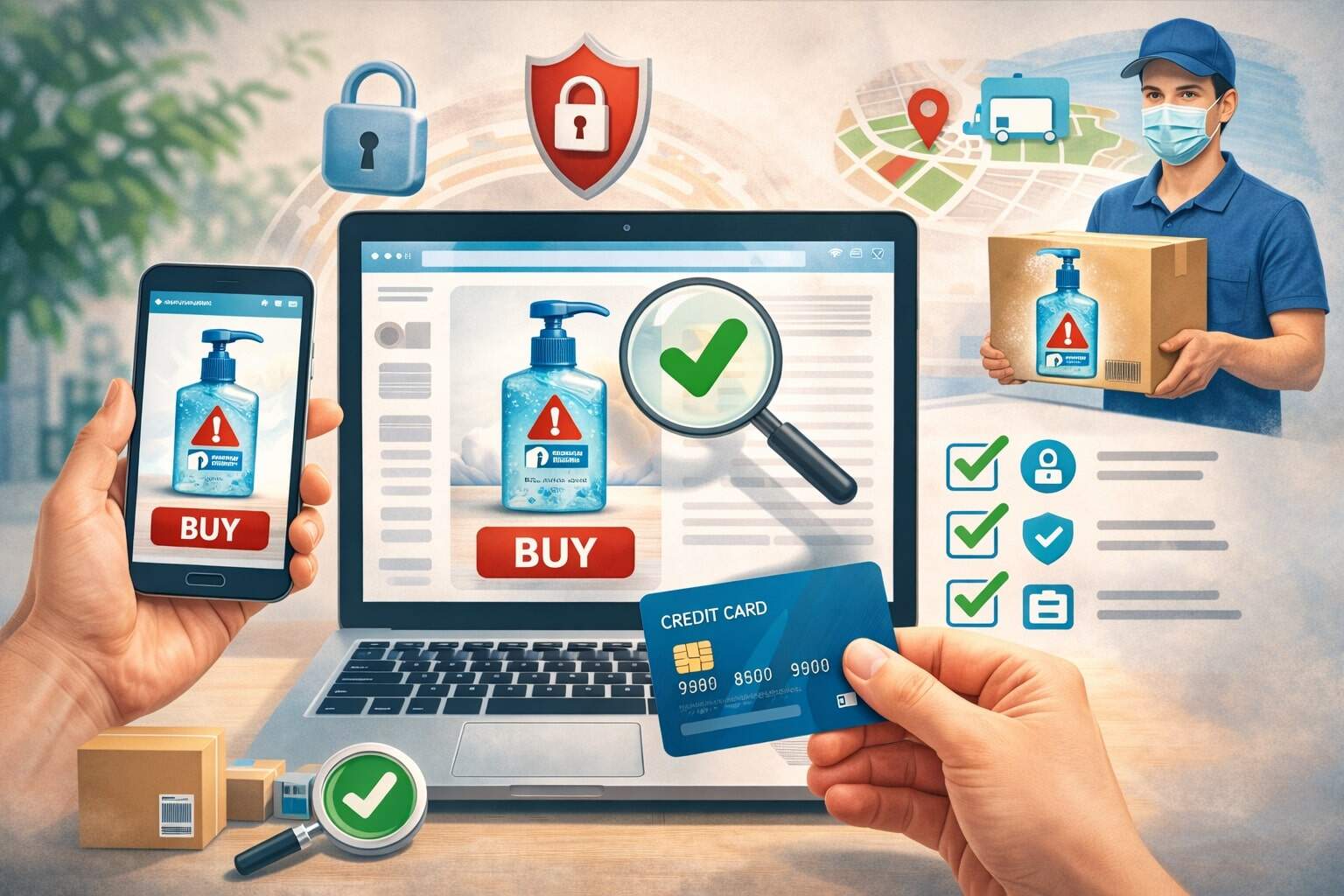
This guide walks you through a practical checklist—before you click “buy,” while you’re checking the listing, and after the package arrives—so you can buy hand sanitizer online safely every time.
Why buying hand sanitizer online can be risky
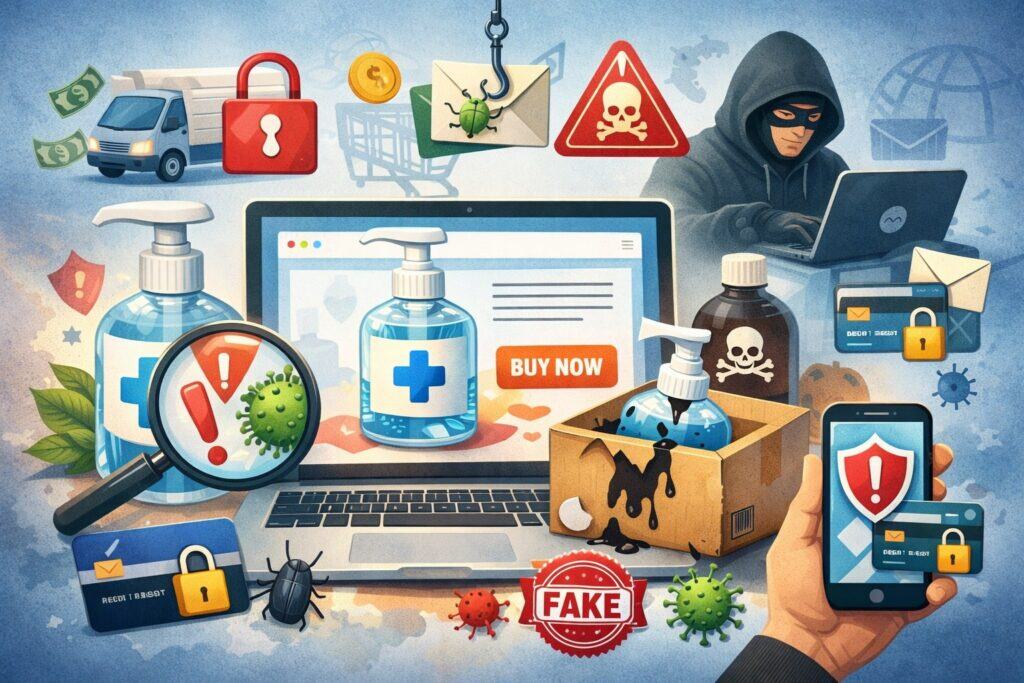
To buy hand sanitizer online safely, it helps to understand what can go wrong. Online marketplaces make it easy for legitimate brands to sell directly to customers, but they also make it easy for unknown resellers to list products with vague photos and copy-pasted descriptions.
Some risks are annoying but not dangerous, like receiving an old bottle that smells off. Others can be serious, like buying a product that contains the wrong type of alcohol or contains contaminants.
One historic safety concern has been toxic alcohol contamination. For example, regulators have warned about hand sanitizers containing methanol, a type of alcohol that should not be used in hand sanitizer and can be harmful.
Regulatory agencies have also maintained consumer updates and enforcement pages related to hand sanitizers and have emphasized checking official recall sources for the newest actions.
Another risk is “ineffective sanitizer.” If the alcohol percentage is too low, you may be rubbing your hands with a scented gel that doesn’t meaningfully reduce germs. Public health guidance remains consistent: if you’re using sanitizer, use one with enough alcohol, and use it correctly.
Finally, online listings can include misleading marketing such as “medical grade,” “hospital strength,” or exaggerated disease-prevention claims. To buy hand sanitizer online safely, you want clear labeling, credible sellers, and realistic claims that match how sanitizer is intended to be used.
What “safe” hand sanitizer means: effectiveness, skin safety, and product quality
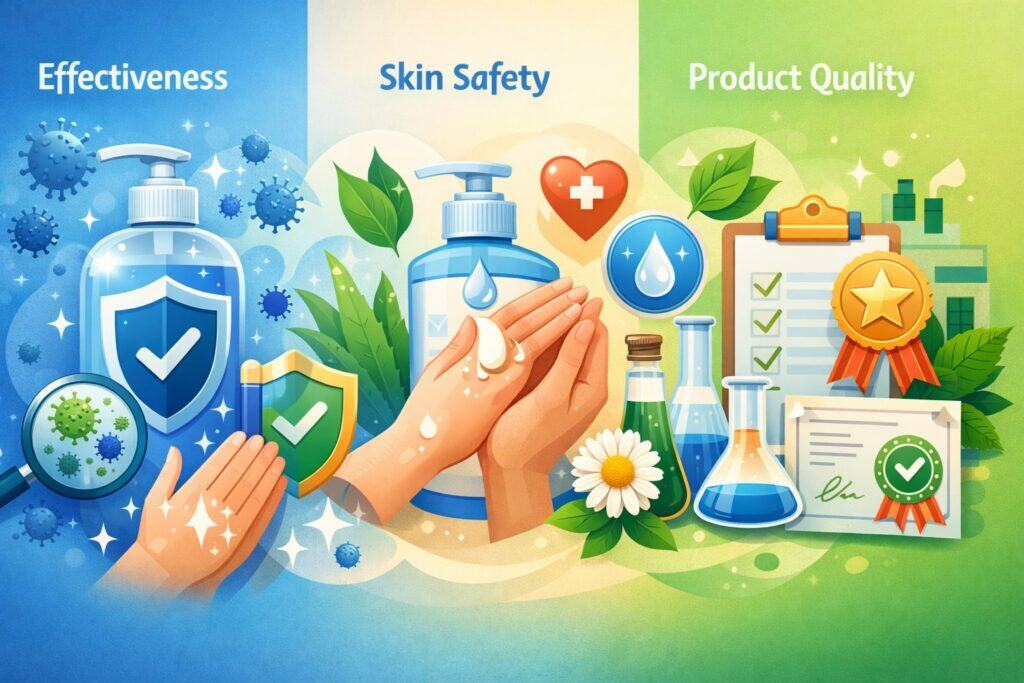
If your goal is to buy hand sanitizer online safely, define “safe” in three layers: effectiveness, skin safety, and product quality. Effectiveness means the sanitizer has enough alcohol and is used properly. Hand sanitizer is not a magic coating; it’s a process.
Guidance for community settings emphasizes alcohol-based sanitizer (at least 60% alcohol), applying enough to cover all hand surfaces, and rubbing until dry—often around 20 seconds.
Skin safety means the formula is appropriate for repeated use. Many people tolerate common alcohol-based sanitizers well, but frequent use can still cause dryness or irritation. That’s where ingredients like glycerin (a humectant) can help. Skin safety also includes avoiding problematic additives like undisclosed fragrances that trigger sensitivity.
Product quality is the part online shoppers forget. Quality means consistent manufacturing, correct alcohol concentration, accurate labeling, and no contamination.
Regulators have cautioned consumers about problematic hand sanitizer products over time and have directed people to recall databases and enforcement information for the most current actions.
When you buy hand sanitizer online safely, you’re not just buying “a gel.” You’re buying a product that needs to meet basic performance and safety expectations.
The first rule: choose the right type and alcohol percentage
To buy hand sanitizer online safely, pick the right type first—before you compare prices or scents. Public health guidance says alcohol-based hand sanitizer should have at least 60% alcohol when soap and water aren’t available. This is the easiest filter you can apply online.
Look for “Active ingredient” information in the listing photos or description. Typical active ingredients include ethanol (ethyl alcohol) or isopropyl alcohol. If the listing doesn’t clearly state the alcohol percentage, treat that as a red flag. A reputable listing usually shows the full label, not just a lifestyle photo.
Also consider the format. Gel is popular and less drippy. Foam can be pleasant and easier for kids (with supervision). Spray is convenient but can be more flammable in certain use situations and may be easier to inhale accidentally if misused. Whichever type you choose, the “at least 60% alcohol” rule is your anchor point for effectiveness.
If you want to buy hand sanitizer online safely for high-frequency use (workplace, travel, deliveries), consider buying a smaller bottle plus a larger refill from a trusted seller. That reduces your exposure to random “too-good-to-be-true” listings while keeping you stocked.
Reading an online listing like a pro
To buy hand sanitizer online safely, don’t shop like you’re buying a phone case. Read the listing like you’re checking a product label in a store—except online you must rely on what the seller provides.
Start with photos. You should be able to see: brand name, active ingredient, alcohol percentage, net contents, directions, warnings, and a lot number (sometimes printed on the bottle or packaging). If every image is a generic mockup, be cautious. A real seller usually shows real packaging.
Then scan the description for specifics. Good signs include: clear alcohol percentage, full ingredient list, manufacturer/distributor name, and safety warnings (flammable, keep away from eyes, keep out of reach of children).
Listings that scream “kills 99.99% of everything instantly forever” are often marketing fluff and may signal a seller who isn’t careful with compliance or accuracy.
Also watch for keyword stuffing and medical claims. Claims should align with common, responsible usage: sanitizer helps when soap and water aren’t available, and correct technique matters. If a listing implies it replaces all hygiene or prevents every illness, that’s not a sign you can buy hand sanitizer online safely from that source.
Finally, confirm the size and packaging. Some scams use tiny bottle photos while selling a very small volume at a big price. A careful reading helps you buy hand sanitizer online safely and avoid “surprise micro-bottles.”
How to verify the seller and avoid counterfeit or diverted products
When you buy hand sanitizer online safely, the seller matters as much as the brand. The safest path is the brand’s official store, an authorized retailer, or a well-known pharmacy chain’s online shop. Large marketplaces can still be safe, but you need to verify who is actually fulfilling the order.
Look for “sold by” and “shipped by” details. Prefer orders fulfilled directly by the marketplace or by the brand/authorized retailer rather than a random third-party seller with limited history.
Check seller ratings, but don’t rely on stars alone—read recent reviews for patterns like “different label than pictured,” “smells like chemicals,” “watery,” or “arrived unsealed.”
Be skeptical of “new sellers” offering bulk sanitizer at a steep discount. During past periods of high demand, regulators and policymakers discussed price gouging and deceptive practices, and enforcement attention increased around COVID-era fraud and unfair practices.
Even today, if a listing looks like a “deal too perfect to be real,” it may be a sign you won’t buy hand sanitizer online safely from that seller.
If you’re buying for a business, request documentation from suppliers (spec sheets, COA—certificate of analysis—if available) and keep purchase records. That’s an extra step, but it’s how professional buyers buy hand sanitizer online safely at scale.
Avoiding contaminated or recalled hand sanitizer
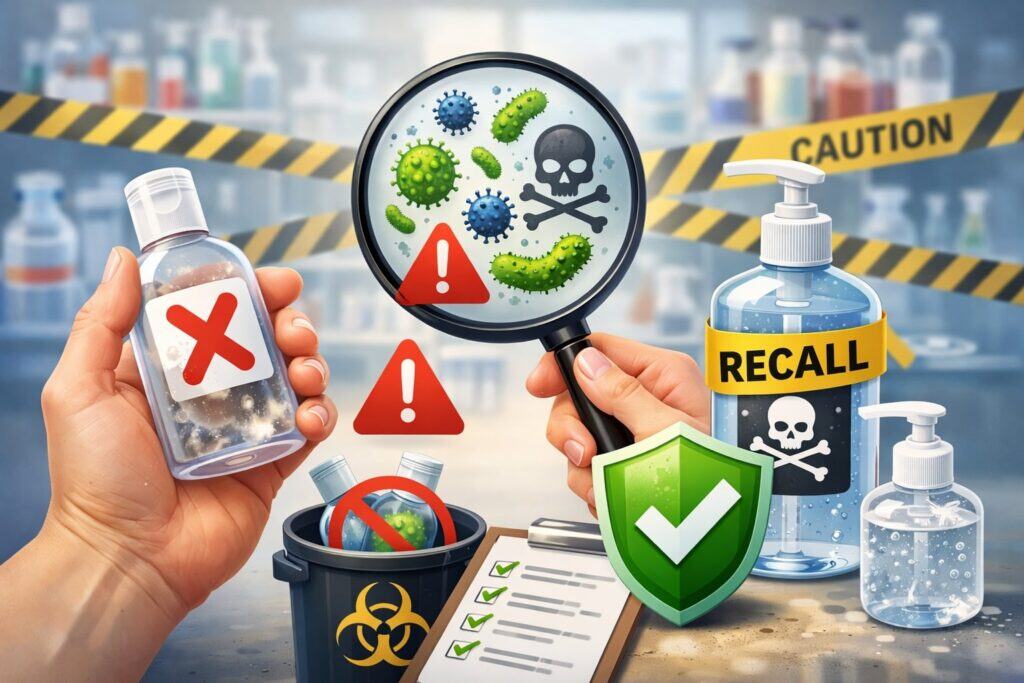
To buy hand sanitizer online safely, you should treat recalls and safety alerts as part of your shopping routine. Regulatory agencies have published consumer updates on hand sanitizers to avoid and have made clear that some older pages are no longer updated—meaning shoppers should use recall databases and current enforcement resources to check the latest actions.
Here’s a practical approach:
- Search the brand + “recall” before purchase.
- After it arrives, check the lot number (if present) against recall information if you see any warning signs.
- Avoid products with odd odors, discoloration, separation, or a harsh industrial smell.
Contamination concerns aren’t limited to one substance. Regulators have also communicated about risks such as benzene contamination in drugs and have noted recalls in categories that can include certain hand sanitizers.
While the average shopper doesn’t need to panic, it’s another reason to buy from reputable sellers and avoid unknown brands with no track record.
If you want to buy hand sanitizer online safely, prioritize mainstream brands sold through trusted channels, especially if you’re purchasing for kids, older adults, or anyone with sensitive skin.
Ingredient red flags and marketing claims you should ignore
To buy hand sanitizer online safely, you need a “red flag radar.” Many risky products don’t look dangerous at first glance—they look trendy, “natural,” or “extra strong.”
- Red flag #1: unclear alcohol type or missing percentage. If the listing hides the active ingredient or won’t show the label, move on. Effective use guidance relies on alcohol concentration, and you can’t verify that without a label.
- Red flag #2: miracle claims. Sanitizer is helpful, but it’s not a replacement for common-sense hygiene. Guidance emphasizes using sanitizer when soap and water aren’t available, and using it correctly (apply enough, rub until dry). If a listing claims it prevents infection in ways that sound like a medicine advertisement, be skeptical.
- Red flag #3: “FDA approved” splashed everywhere. Some sellers misuse regulatory language. A safer sign is transparent labeling and a reputable supply chain, not flashy badges.
- Red flag #4: “chemical-free” hand sanitizer. Alcohol is a chemical. This phrase often signals misleading marketing.
- Red flag #5: extreme fragrances or essential-oil heavy formulas with weak alcohol levels. If fragrance seems to be the main selling point, you may not buy hand sanitizer online safely for effectiveness.
A good rule: focus on clear alcohol percentage, standard warnings, and seller credibility. That’s how you buy hand sanitizer online safely without getting distracted by hype.
Safe shipping and storage: what can go wrong in transit
To buy hand sanitizer online safely, consider what happens between the warehouse and your door. Alcohol-based hand sanitizer is flammable and can be sensitive to storage conditions.
Even a legitimate product can become unpleasant if it sits in extreme heat for long periods. Heat can also worsen packaging leaks, evaporation, or pressure changes in sealed containers.
When buying online, choose shipping options that minimize time in transit when possible, especially during hot seasons. Once delivered, open the box promptly. Check for leakage, broken seals, or a strong vapor smell that suggests spillage. If the product arrived leaking, don’t ignore it—contact the retailer and avoid using a compromised bottle.
Store sanitizer in a cool, dry place away from flames and heat sources. Keep it away from cooking areas, heaters, and direct sun in a car. This is especially important if you buy hand sanitizer online safely in bulk and store multiple bottles at home or at work.
Also store out of reach of children. Public health guidance specifically notes supervising young children to prevent swallowing alcohol-based sanitizer. Safety is not just about what you buy; it’s also how you store and use it after you buy hand sanitizer online safely.
How to check your hand sanitizer when it arrives
To buy hand sanitizer online safely, do a quick “arrival inspection.” It takes two minutes and can prevent weeks of using a questionable product.
Start with packaging. Is the cap sealed? Is there an intact shrink wrap or tamper evidence (when the brand normally uses it)? Is the label crisp and properly applied, or does it look like a home printer sticker? Check the lot number and expiration date if shown.
Next, check the product consistency. Many gels are clear and uniform. Separation, floating particles, discoloration, or excessive watery texture can be a warning sign. Smell matters too. Most alcohol sanitizers smell like alcohol with a mild fragrance. A sharp “solvent,” “fuel,” or “industrial” smell is not a good sign.
Then confirm the label matches the listing. Look for the alcohol percentage and active ingredient. Remember: to buy hand sanitizer online safely, you want an alcohol-based product that aligns with public guidance on alcohol percentage.
Finally, test usability. Use a small amount. It should spread easily, cover the hands, and dry within a reasonable time when rubbed properly (often around 20 seconds).
If it stays sticky forever, feels oily, or never dries, stop and reassess. A careful arrival check is part of how you buy hand sanitizer online safely in real life, not just in theory.
Best practices for buying in bulk for families, schools, and workplaces
To buy hand sanitizer online safely in bulk, the biggest risks are supply chain uncertainty and storage mistakes. Bulk orders are more likely to come from third-party distributors, and the product may sit longer in warehouses. That makes seller selection and documentation more important.
For families, buy a few smaller bottles plus a refill from a trusted retailer. For schools and childcare settings, consider dispensing systems that reduce spills and overuse, and train staff on correct technique: apply enough to cover surfaces, rub until dry, and supervise young children.
For workplaces, standardize. Choose one or two approved products and stick with them. This reduces the chance an employee orders random brands that don’t meet expectations. If you’re responsible for purchasing, keep a simple internal checklist: seller verified, alcohol percentage verified, label photos confirmed, and storage plan in place.
Bulk buying is where scams love to hide. If you see “industrial sanitizer” with vague labeling, avoid it. To buy hand sanitizer online safely for a group, you want traceability: reputable brand, clear label, consistent packaging, and a seller that can answer basic questions.
This approach isn’t just safer—it’s also easier to manage, reduces complaints about skin irritation, and prevents waste from bad batches.
How to pay and protect your data while shopping
People often forget that to buy hand sanitizer online safely, you must also shop safely online. Many counterfeit health product sellers also run sketchy websites designed to capture payment details or personal information.
Start with basics: use a reputable retailer, check the site URL carefully, and avoid clicking “sponsored” ads that lead to lookalike domains.
Prefer payment methods with buyer protections (credit cards are generally stronger than debit cards for disputes). Avoid bank transfers, crypto-only checkouts, or direct-pay requests from sellers on social platforms.
Be cautious with “subscription” sanitizer deals. Some sites enroll buyers into recurring shipments with tricky cancellation. Review the terms and watch for deceptive pricing tactics.
The federal rules include guides related to deceptive pricing practices, and while these are broader than sanitizer alone, the underlying idea matters: pricing and comparisons should be genuine, not manipulative.
If your goal is to buy hand sanitizer online safely, think of payment security as part of product safety. A safe product isn’t worth it if the purchase creates fraud risk.
The correct way to use hand sanitizer so it actually works
You can buy hand sanitizer online safely and still get poor results if you use it incorrectly. Technique matters. Guidance for sanitizer use emphasizes applying enough to cover all hand surfaces and rubbing hands together until they feel dry.
Use sanitizer when soap and water aren’t available. If your hands are visibly dirty or greasy, handwashing is typically more effective.
When you apply sanitizer, don’t do a tiny dab. Use enough to wet the entire surface of both hands, including between fingers and the backs of hands. Rub thoroughly. Many people stop too early—keep rubbing until dry.
Also be mindful of safety in the moment. Alcohol-based sanitizer is flammable until it evaporates. Keep it away from open flames. Supervise children and store sanitizer out of reach, because swallowing alcohol-based sanitizer is dangerous.
If you’re trying to buy hand sanitizer online safely for travel, keep a small bottle accessible so you don’t end up using it hurriedly in unsafe conditions (like right next to a lit stove or grill). The “safe buy” and “safe use” steps work together.
Common scams and how to spot them fast
To buy hand sanitizer online safely, it helps to recognize the patterns scammers repeat. Most scams fall into a few buckets: counterfeit product, diluted product, misleading claims, and non-delivery fraud.
Counterfeit product scams often use familiar brand names but show blurry photos, inconsistent labeling, or oddly low prices. Diluted product scams hide the alcohol percentage or use vague statements like “high alcohol content” without a number. Misleading claim scams promise dramatic medical effects.
Non-delivery fraud is simpler: you pay, and the seller disappears. This happens more on standalone sites and social media. Use trusted retailers and payment methods with dispute options.
Price manipulation also shows up. During emergencies, enforcement discussions have highlighted concerns about unfair or deceptive practices and price gouging behaviors, even though the exact legal tools vary by jurisdiction and context.
The practical takeaway for shoppers is timeless: if the seller is exploiting fear, urgency, or “limited stock” pressure, you may not buy hand sanitizer online safely from them.
Fast checklist: no alcohol percentage, no label photos, no clear seller identity, aggressive medical claims, and extreme discounts. Any one of these can be enough to walk away.
Future trends and predictions for buying hand sanitizer online
If you want to buy hand sanitizer online safely not just today but over the next few years, expect three trends: more transparency, more compliance pressure, and more “smart” shopping tools.
First, transparency. More brands are likely to add QR codes that link to product details, lot tracking, and authenticity checks. Shoppers increasingly expect traceability, especially for health-adjacent products. Second, compliance.
Regulators have signaled ongoing attention to contamination concerns across drug products, including topics like benzene risk communication and manufacturer alerts. That pressure tends to push manufacturers and retailers toward better testing, better documentation, and quicker recalls when needed.
Third, smarter platforms. Marketplaces are investing in counterfeit detection, review-fraud detection, and tighter controls for sellers making health claims. Payment providers also continue improving fraud monitoring, which helps consumers buy hand sanitizer online safely by reducing scam storefronts.
On the product side, expect more skin-friendly formulations (barrier-support ingredients), more fragrance-free options, and more sustainable packaging like refill pouches and concentrated refills.
The safest shopper will still do the basics—verify alcohol percentage, seller credibility, and label transparency—but future tools should make it easier to buy hand sanitizer online safely with less guesswork.
FAQs
Q.1: How can I buy hand sanitizer online safely if I’m buying from a marketplace with third-party sellers?
Answer: To buy hand sanitizer online safely on a marketplace, focus on who is selling and fulfilling the item. Look for listings sold by the brand itself, a known retailer, or fulfilled by the marketplace’s own logistics (when available).
Then verify the listing includes clear label images showing the active ingredient and alcohol percentage. Public health guidance emphasizes sanitizer effectiveness depends on having enough alcohol, so the percentage must be visible and specific.
Read recent reviews for red flags like “different label,” “watery,” “smells like chemicals,” or “arrived unsealed.” Avoid new sellers offering bulk quantities at unusually low prices.
Keep your order confirmation and take photos if the product arrives damaged or inconsistent with the listing. This documentation helps if you need a refund or to report a suspicious product. With these steps, you can still buy hand sanitizer online safely even on big marketplaces.
Q.2: What alcohol percentage should I look for when I buy hand sanitizer online safely?
Answer: To buy hand sanitizer online safely, choose an alcohol-based hand sanitizer with at least 60% alcohol. That threshold is highlighted in public guidance for situations where soap and water are unavailable.
You should be able to confirm the percentage from label images or the product description. If the listing is vague (“high strength”) but doesn’t show the number, don’t buy it.
Also make sure you know the active ingredient type (commonly ethanol or isopropyl alcohol). The key point is simple: without a verified percentage, you can’t confidently buy hand sanitizer online safely for real-world effectiveness.
Q.3: How do I know if a hand sanitizer has been recalled or is unsafe?
Answer: To buy hand sanitizer online safely, check for recalls and safety alerts before purchase and after arrival if anything seems off.
Regulatory agencies have maintained consumer update pages and have emphasized using recall databases and current resources because some older lists are no longer updated.
Search the product name + “recall,” and if you see any official action, avoid that product. After delivery, check the lot number (if available) and compare it to recall information if you suspect an issue.
If the sanitizer smells unusual, looks separated, or arrives leaking, stop using it and contact the seller. Staying recall-aware is a core part of how you buy hand sanitizer online safely.
Q.4: Is it safe to buy “natural” or “non-alcohol” hand sanitizers online?
Answer: If your goal is to buy hand sanitizer online safely for germ reduction when soap and water aren’t available, alcohol-based sanitizer is the standard recommendation, and guidance specifically calls for at least 60% alcohol. “Natural” is a marketing term and doesn’t guarantee effectiveness or skin safety.
Non-alcohol products may be sold for cosmetic or deodorizing purposes, but they may not perform the same way as alcohol-based sanitizers for reducing germs in typical community settings.
If you still choose a non-alcohol product, be extra strict about seller credibility, ingredient transparency, and realistic claims. In most cases, the safest way to buy hand sanitizer online safely is to stick to clearly labeled alcohol-based options from reputable retailers.
Q.5: What should I do if my hand sanitizer arrives leaking, smells strange, or looks different than the listing?
Answer: To buy hand sanitizer online safely, you also need a plan for “delivery day surprises.” If it arrives leaking, don’t use it—leaks can change concentration and create safety risks.
If the odor is unusually harsh or “chemical,” or the product is watery or separated, pause and investigate. Compare the label to the listing photos. Take pictures, request a refund, and report the listing if the retailer offers reporting tools.
If you suspect the product might be part of a recall or safety issue, check official recall resources. Regulatory agencies have pointed consumers to recall databases and enforcement information for the most current actions.
When in doubt, it’s better to discard a questionable bottle than to keep using it. That decision is part of how you buy hand sanitizer online safely in practice.
Conclusion
To buy hand sanitizer online safely, you don’t need to be a chemist—you need a repeatable checklist. Choose an alcohol-based product with at least 60% alcohol, verify the label information in photos, buy from reputable sellers, and avoid exaggerated medical claims.
Public guidance on effective use—apply enough to cover hands and rub until dry—matters just as much as what you buy.
Safety also means staying alert to product quality and recalls. Regulatory agencies have issued consumer updates about problematic sanitizers and have directed shoppers toward recall databases and current enforcement information, especially because some older lists are no longer actively updated.
Add smart delivery checks (seal, consistency, smell, matching label), safe storage (cool, away from flames), and child safety supervision, and you’ll cover the main real-world risks.
The online shopping environment will keep evolving—expect more authenticity tools, better marketplace controls, and stronger traceability. But the fundamentals won’t change. When you consistently buy hand sanitizer online safely, you protect your hands, your household, and your wallet—without falling for hype or risking ineffective or unsafe products.