By myhandsanitizershop January 7, 2026
If you’ve ever used a product that left your hands stinging, tight, flaky, or red, you already understand why choosing hand sanitizer for sensitive skin isn’t the same as grabbing whatever is on sale.
Sensitive skin reacts faster and more intensely because the skin barrier is often weaker, inflamed, or prone to irritation. That barrier is your “shield.” When it’s disrupted, even normal ingredients—alcohol, fragrance, preservatives, or certain thickeners—can feel harsh.
At the same time, hand hygiene still matters in everyday life: commuting, shopping carts, shared keyboards, gyms, childcare pickup, and healthcare visits.
Public health guidance continues to emphasize that washing with soap and water is best in most situations, but when that isn’t available, an alcohol-based product with at least 60% alcohol is recommended. That means many people rely on hand sanitizer daily, sometimes dozens of times.
For sensitive hands, frequency is the real challenge. Using hand sanitizer for sensitive skin once or twice might be fine. Using it 20 times a day can trigger cumulative dryness and irritation. That’s why the best approach is not only “which product,” but also “how you use it,” “what you do after,” and “what to avoid.”
In this guide, you’ll learn how to read labels like a pro, identify common irritants, choose formats that feel gentler, and build a routine that keeps your skin calm without compromising cleanliness. You’ll also see what’s changing in the market and where hand sanitizer for sensitive skin is heading next.
How Sensitive Skin Reacts to Hand Sanitizer
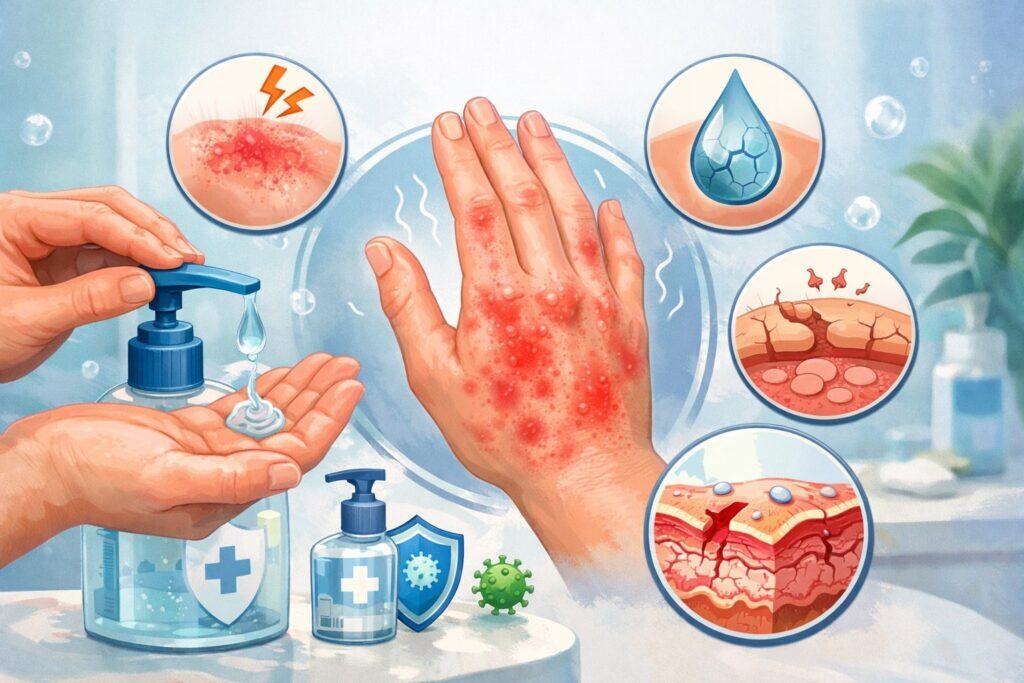
To choose the right hand sanitizer for sensitive skin, it helps to understand what’s happening on the surface of your hands. Your outermost layer (the stratum corneum) is made of skin cells and lipids that act like “bricks and mortar.” When those lipids are stripped away, moisture escapes faster, and irritants penetrate more easily.
Alcohol-based sanitizers work by rapidly disrupting germs. That same fast evaporation can also pull water from the surface and disturb skin lipids. This doesn’t mean alcohol is “bad.” It means the formula matters, and your aftercare matters even more.
Sensitive skin tends to fall into a few common patterns:
- Dryness-prone: tightness, flaking, rough texture, cracking around knuckles
- Reactive: stinging or burning immediately after application
- Barrier-compromised: redness, tiny fissures, worsening irritation over time
- Eczema-prone or dermatitis-prone: itchy patches, blisters, or repeated flare-ups
If you have eczema on your hands, moisturizer choice becomes critical. Dermatology guidance often recommends fragrance-free creams or ointments (not watery lotions) because they support barrier repair better. That’s directly relevant when you’re using hand sanitizer for sensitive skin frequently.
Also, “sensitive” doesn’t always mean “allergic.” Irritation is more common than true allergy. Allergy usually shows up as a worsening rash with repeated exposure to a specific ingredient. That’s why tracking ingredients and patch testing can be helpful.
The Non-Negotiables: Effectiveness Standards You Shouldn’t Compromise
When shopping for hand sanitizer for sensitive skin, it’s tempting to prioritize “gentle” over everything else. But gentleness without effectiveness is not a win. A sanitizer that feels nice but doesn’t meet recommended alcohol levels won’t deliver the protection most people expect.
Here are the effectiveness basics you should keep:
1) Alcohol percentage matters
Public guidance recommends using a product with at least 60% alcohol when soap and water aren’t available. This threshold is important because lower concentrations may reduce performance.
2) Soap and water still wins in key situations
Even with the best hand sanitizer for sensitive skin, there are moments where you should wash instead. If hands are visibly dirty or greasy, soap and water generally do a better job. That “film” can prevent sanitizer from contacting the skin evenly. CDC messaging consistently emphasizes soap and water as the best way in most situations.
3) Use enough product and rub correctly
Many people under-apply. A small dab may not cover fingertips, thumbs, nail folds, and between fingers. For hand sanitizer for sensitive skin, technique also reduces repeated reapplications. If you cover all surfaces the first time, you’re less likely to “double pump.”
4) Don’t “DIY” unsafe formulas
Homemade mixes can end up with wrong alcohol percentages or unstable formulas. If you must use a locally produced formula (for example, in emergencies), recognized formulations exist, and they include humectants like glycerol.
An effective product can still be gentle. The goal is not to avoid alcohol at all costs. The goal is to pick hand sanitizer for sensitive skin that meets effectiveness expectations while reducing the dryness and sting cycle.
Ingredient Checklist: What to Look For in Hand Sanitizer for Sensitive Skin
Choosing hand sanitizer for sensitive skin gets much easier when you know what “good” looks like on an ingredient list. You don’t need to memorize chemistry. You just need a practical checklist.
Alcohol: Ethyl alcohol or isopropyl alcohol (at the right level)
These are the most common activities in effective sanitizers. For daily use, many sensitive-skin users do well with alcohol-based formulas that include added moisturizers, as long as the product is fragrance-free and used with a good cream afterward.
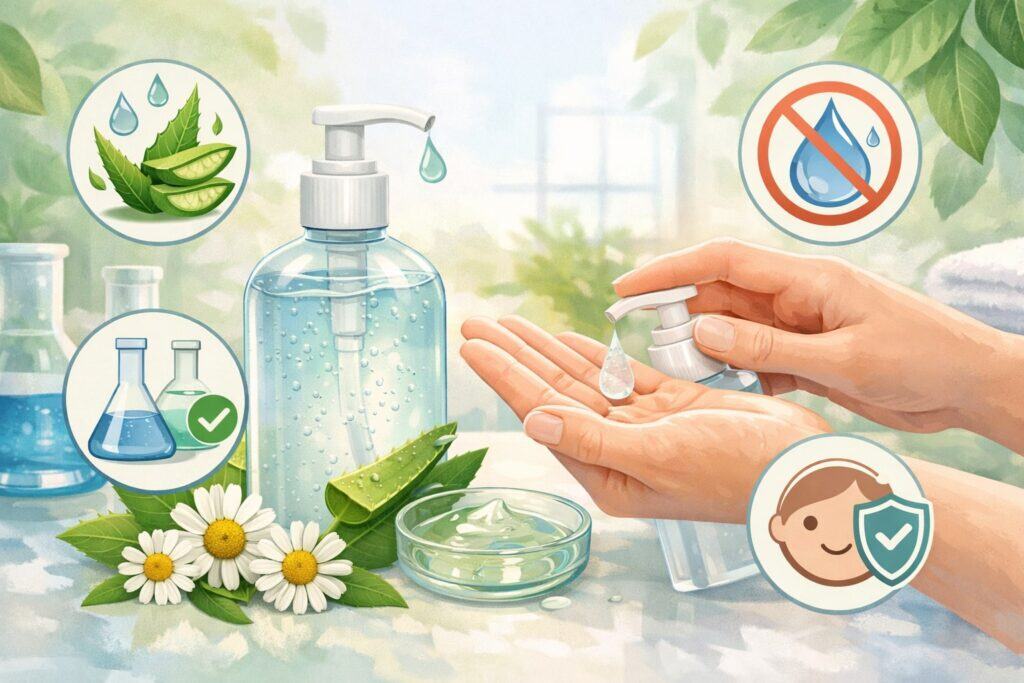
Humectants: Glycerin/glycerol and similar hydrators
Humectants attract water. Glycerol (also called glycerin) is commonly used in recognized handrub formulations to improve skin acceptability. If you’re scanning labels, glycerin is a strong “green flag” for hand sanitizer for sensitive skin.
Emollients: Skin-softening helpers
Look for ingredients that support barrier feel, such as:
- Propylene glycol (can be irritating for some, so it’s “it depends”)
- Aloe (helpful for some, irritating for others depending on additives)
- Fatty alcohols or light emollients (in some gel/cream sanitizers)
Minimal “extras”
For hand sanitizer for sensitive skin, fewer extras often means fewer triggers:
- No added scent
- No essential oils
- No dyes
- No “cooling” additives
Simple texture system
Thickeners like carbomer are common in gels. Most people tolerate them well, but sensitive users sometimes react to certain combinations, especially in aerosols or sprays where propellants and other inactive ingredients vary.
The best strategy is to pick a short, fragrance-free formula with the right alcohol level, glycerin (or another humectant), and a texture you’ll actually use consistently. That’s the sweet spot for hand sanitizer for sensitive skin.
Ingredients to Avoid (or Treat With Caution) If Your Skin Is Reactive
Not every “bad reaction” comes from alcohol. In many cases, irritation is triggered by fragrance, botanicals, dyes, or certain preservatives. If you’ve struggled to find hand sanitizer for sensitive skin, this section can save you a lot of trial and error.
Fragrance and essential oils
Fragrance is one of the most common causes of irritation and allergic contact dermatitis in personal care products. “Unscented” isn’t always the same as fragrance-free; some products use masking fragrances. For hand sanitizer for sensitive skin, fragrance-free is usually the safer choice.
Botanical blends and “natural” extracts
“Natural” can still irritate. Citrus oils, peppermint, tea tree oil, and complex plant blends can trigger stinging, redness, or dermatitis—especially when used multiple times a day.
Dyes and colorants
Dyes add nothing for performance. If your hands are reactive, skip them. Clear formulas are often a safer bet for hand sanitizer for sensitive skin.
Known contaminant risks: why reputable brands matter
Regulators have documented contamination concerns in some sanitizer products over recent years, including recalls for methanol and findings of benzene contamination in certain products. The practical takeaway isn’t panic—it’s choosing reputable manufacturers and checking recalls when buying unfamiliar brands.
Also note: the FDA’s long-running “do not use” hand sanitizer update page explicitly states it is no longer being updated and points consumers toward the recalls database and recall announcements. That’s another reason to buy hand sanitizer for sensitive skin from sources you trust and to stay aware of recall channels.
If your skin is highly reactive, “avoid list” discipline is often what makes hand sanitizer for sensitive skin finally work for you.
Gel vs Foam vs Spray vs Wipes: Which Format Is Best for Sensitive Hands?
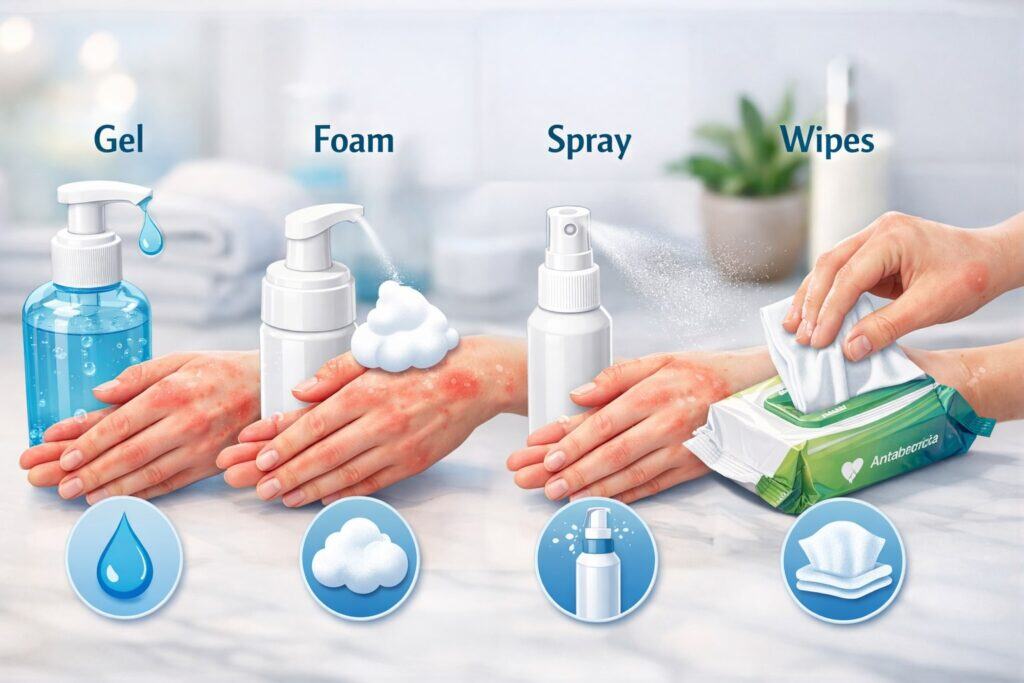
The “best” hand sanitizer for sensitive skin isn’t just about ingredients. Format changes how the product spreads, evaporates, and feels—and that changes whether people overuse it or avoid it.
Gel sanitizers
Gels are common, travel-friendly, and easy to control. They can be great as hand sanitizer for sensitive skin if:
- They are fragrance-free
- They contain glycerin or similar humectants
- They don’t leave a sticky film that makes you reapply
Downside: some gels feel tacky, and that can lead to extra applications or wiping hands on clothes, which increases irritation.
Foam sanitizers
Foams spread quickly and can feel lighter. For some users, foam is the easiest hand sanitizer for sensitive skin choice because it feels less “wet” and dries fast. However, foam formulas vary widely. Some contain fragrances or added sensorial ingredients.
Spray sanitizers
Sprays can be convenient, but they come with trade-offs for sensitive skin:
- More inhalation exposure risk if used in a car or small room
- Greater chance of overspraying and drying the surrounding skin
- Some sprays use propellant systems that can be irritating for some people
If you use spray as hand sanitizer for sensitive skin, spray into the palm (not directly onto hands in the air), then rub.
Sanitizing wipes
Wipes can be helpful when you need to remove grime first, but some wipes contain additional preservatives or fragrances. For hand sanitizer for sensitive skin, wipes are best for occasional use rather than constant daily use.
If you’re unsure, start with a fragrance-free gel or foam with glycerin and see how your hands respond over a week. Format is one of the easiest ways to make hand sanitizer for sensitive skin feel comfortable without sacrificing practicality.
How to Read the Label Like a Pro (Without Overthinking It)
Finding hand sanitizer for sensitive skin can feel overwhelming because labels are full of claims: “gentle,” “clean,” “natural,” “dermatologist tested,” “hypoallergenic.” Some of those words are helpful. Many are marketing.
Here’s a simple label-reading system that works.
Step 1: Confirm the active ingredient and percentage
Look for the “Drug Facts” panel. Confirm the active ingredient and alcohol percentage. Public guidance recommends alcohol-based sanitizer with at least 60% alcohol when soap and water aren’t available. If the label doesn’t clearly show active ingredient and percentage, skip it.
Step 2: Scan inactive ingredients for triggers
For hand sanitizer for sensitive skin, scan for:
- Fragrance / parfum
- Essential oils
- Dyes (often listed as FD&C colors)
- Strong botanical blends
- “Cooling” ingredients
Step 3: Look for humectants
Glycerin/glycerol is a common sign the formula is designed with comfort in mind. Recognized handrub formulations include glycerol specifically to improve skin acceptability.
Step 4: Don’t overvalue vague claims
“Hypoallergenic” doesn’t guarantee zero irritation. “Dermatologist tested” doesn’t tell you what was tested or on whom. For hand sanitizer for sensitive skin, ingredient transparency beats buzzwords.
Step 5: Check the product type and warnings
Watch for:
- Flammability warnings (normal for alcohol products)
- Directions for use
- Age warnings and eye-contact guidance
If you use a label-first approach, you’ll waste less money and find hand sanitizer for sensitive skin that fits your needs faster.
The Sensitive-Skin Routine: How to Use Hand Sanitizer Without Drying Your Hands Out

Even the best hand sanitizer for sensitive skin can fail if the routine is harsh. The goal is to reduce the number of “barrier hits” your hands take each day.
Use the right amount—once
Apply enough to cover all surfaces. Rub fingertips, nail folds, thumbs, between fingers, and backs of hands. Let it dry fully. If you stop early, you may reapply and double the exposure.
Alternate with handwashing strategically
When you can, wash with a gentle soap and lukewarm water. CDC guidance still says soap and water is the best way in most situations. For sensitive hands, over-washing can also be a problem—so “strategic washing” matters:
- Wash after messy tasks, cooking, gardening, restroom use
- Use hand sanitizer for sensitive skin for quick transitions when hands aren’t visibly dirty
Moisturize at the right times
For sensitive hands, moisturizer is not optional. Dermatology guidance often favors fragrance-free creams or ointments over watery lotions for eczema-prone skin because they support healing better. A practical approach:
- Keep a thick, fragrance-free cream by your sink
- Apply after washing hands
- Apply before bed (and consider cotton gloves overnight if severely dry)
Protect your hands from compounding irritants
Hand sanitizer isn’t the only irritant. Dish soap, cleaning sprays, cold weather, and hot water add up. Gloves for cleaning and a barrier cream strategy can dramatically improve how hand sanitizer for sensitive skin feels.
This is the truth most people miss: the “best” sanitizer is part product, part technique, part aftercare.
Special Situations: Eczema, Dermatitis, Cracking, and Healthcare-Style Hygiene
If you’re choosing hand sanitizer for sensitive skin because of eczema, contact dermatitis, or painful cracking, you need a plan that goes beyond “buy a gentle bottle.”
When eczema is active on your hands
Open cracks and inflamed skin can burn with alcohol. In that phase:
- Minimize sanitizer use when soap and water is available
- Use lukewarm water and gentle cleanser
- Apply a fragrance-free cream or ointment frequently (especially after washing)
- Consider speaking with a clinician if flares persist
When you need frequent sanitizing (workplaces, caregiving, busy public-facing roles)
High-frequency use is where hand sanitizer for sensitive skin is most important. In these scenarios:
- Choose a fragrance-free sanitizer with humectants
- Use a thicker cream after every few cycles of sanitizer use
- Keep a small tube of barrier-support cream in your bag
When your hands crack or bleed
Cracking can be a sign your barrier is severely compromised. Alcohol can sting. A repair-focused routine helps:
- Nightly ointment application
- Gentle daytime moisturizing
- Reducing exposures to harsh detergents
If you’re in a setting where hygiene must be strict, it’s still possible to make hand sanitizer for sensitive skin work—but you’ll need to treat moisturizer like “part of the hygiene routine,” not a cosmetic extra.
Choosing Safe Products: Recalls, Contaminants, and Where to Buy
Most people think safety issues with sanitizers are in the past. But contaminants and recalls are a reality for many product categories, and hand hygiene products are no exception. Choosing hand sanitizer for sensitive skin should include basic safety habits—especially if you’re buying unfamiliar brands online or from nonstandard retailers.
What kinds of issues have appeared in recalls?
Regulators and recall notices have documented problems including:
- Methanol contamination (unsafe if absorbed or ingested)
- Benzene findings in certain products, which triggered recalls and warnings
How to stay updated without obsessing
A practical approach:
- Prefer reputable, well-known manufacturers
- Be cautious with “too cheap to be true” bulk deals
- If you’re buying a new brand, do a quick recall check
Also, note that the FDA’s long-running page listing sanitizers consumers should not use states it is no longer being updated and directs people to recall resources and databases instead. That means your “safety check” should focus on active recall channels rather than old lists.
Why this matters for sensitive skin
If your skin is reactive, a contaminated or poorly made product can cause more than dryness—it can trigger significant irritation. So the safest hand sanitizer for sensitive skin purchase is typically:
- From established retailers
- From brands with clear labeling and traceable manufacturing details
Safe sourcing isn’t fear-based. It’s just smart consumer hygiene—especially when your skin is already vulnerable.
Future Trends and Predictions: Where Hand Sanitizer for Sensitive Skin Is Headed Next
The market for hand sanitizer for sensitive skin keeps evolving because consumer expectations changed permanently after years of heightened hygiene. The next wave is less about “more sanitizer everywhere” and more about “better formulas that people can tolerate daily.”
Prediction 1: More barrier-support formulas (without sacrificing performance)
Expect more products designed like skincare: added humectants, improved slip, and reduced sting. Recognized formulations already use humectants like glycerol to improve skin comfort. Brands will keep building on that idea with more elegant textures.
Prediction 2: Tighter quality expectations and more testing
Contaminant concerns (including benzene findings and recalls in some products) pushed more attention toward supply chains and ingredients like thickeners and propellants. Expect more brands to highlight testing and sourcing transparency—especially for spray formats.
Prediction 3: “Skin-first hygiene” education becomes mainstream
Public guidance still emphasizes soap and water as best in most situations, and sanitizer as a backup when unavailable. More workplaces and schools may adopt messaging that pairs sanitizer stations with moisturizer recommendations, especially in dry seasons.
Prediction 4: Better options for highly reactive users
There’s ongoing dermatology interest in allergens and marketing claims in commercial sanitizers, because contact dermatitis risk rises with increased hand hygiene. That pressure tends to encourage simpler, more transparent formulas—good news for hand sanitizer for sensitive skin shoppers.
The future of hand sanitizer for sensitive skin is likely “less harsh, more consistent,” with better comfort, better compliance, and clearer labeling.
FAQs
Q.1: What is the best hand sanitizer for sensitive skin if alcohol burns my hands?
If alcohol burns, it’s often a sign your skin barrier is compromised—cracked, inflamed, or actively irritated. At that moment, the “best” hand sanitizer for sensitive skin may not be a different sanitizer at all. It may be a routine change.
Start with the basics: when soap and water are available, use them, because public guidance still says soap and water is best in most situations. Use lukewarm water and a gentle cleanser, not scalding water and harsh soap.
After washing, apply a fragrance-free cream or ointment. Dermatology guidance commonly recommends fragrance-free creams or ointments over watery lotions for eczema-prone skin.
If you still need hand sanitizer for sensitive skin during the day, choose a fragrance-free formula with humectants like glycerin, and use it only when hands are not visibly dirty. Apply once, rub thoroughly, and let it dry.
Then moisturize when you can (even a small dab of cream helps). If burning persists for several days, consider professional evaluation, because ongoing stinging can signal dermatitis that needs targeted treatment.
Q.2: Is “unscented” the same as fragrance-free when choosing hand sanitizer for sensitive skin?
Answer: No—and this is one of the biggest label traps when choosing hand sanitizer for sensitive skin. “Fragrance-free” generally means no fragrance ingredients are added to create scent.
“Unscented” can still mean fragrance chemicals are present, sometimes as masking agents designed to neutralize odor. For sensitive or allergy-prone users, that difference can matter.
If you’ve had repeated irritation from products that claim to be gentle, switch to explicitly fragrance-free hand sanitizer for sensitive skin and keep everything else simple: no essential oils, no botanical blends, no dyes. Then support your barrier with a thick, fragrance-free cream after washing.
A practical tip: if you’re unsure, check the inactive ingredients for “fragrance,” “parfum,” or essential oils. If those appear, it may not be the safest option for hand sanitizer for sensitive skin, even if the front label looks reassuring.
Q.3: How often can I use hand sanitizer for sensitive skin without damaging my hands?
Answer: There isn’t one perfect number, because it depends on your baseline dryness, weather, exposure to detergents, and whether you moisturize. The real key is reducing cumulative barrier stress.
If soap and water are available, remember that guidance says handwashing is best in most situations. But if you need sanitizer frequently, choose hand sanitizer for sensitive skin that is fragrance-free and includes humectants like glycerin, which is used to improve skin acceptability in recognized handrub formulations.
Then follow the “cycle rule”:
- Sanitize when needed, using enough product once
- Every few sanitizing cycles, apply a small amount of cream
- After your next full handwash, apply a thicker layer of moisturizer
If your hands start cracking, itching, or staying red, that’s feedback. The best hand sanitizer for sensitive skin can’t overcome zero aftercare. Moisturizing is what makes frequent hygiene sustainable.
Should I worry about recalls or contaminants when buying hand sanitizer for sensitive skin?
It’s reasonable to be aware, but you don’t need to be anxious. There have been recalls and alerts related to contaminants such as methanol and benzene findings in certain products. These issues are more likely to appear in poorly controlled supply chains or in products from unknown sources.
A simple safety approach for hand sanitizer for sensitive skin:
- Buy from reputable sellers
- Choose brands with clear labeling and traceability
- Avoid suspiciously cheap bulk sanitizer from unfamiliar names
Also, it’s worth knowing that the FDA’s historical “do not use” sanitizer update page says it is no longer being updated and directs consumers to recall resources and databases. So if you want to check safety, current recall channels are more useful than old lists.
For sensitive skin specifically, safer sourcing matters because irritant reactions are easier to trigger when your barrier is already stressed.
What’s the best moisturizer to pair with hand sanitizer for sensitive skin?
For many people, the “secret” to making hand sanitizer for sensitive skin work is not changing sanitizer at all—it’s changing moisturizer strategy.
Dermatology guidance often recommends fragrance-free creams or ointments for eczema-prone hands and warns that watery lotions can be less helpful because they contain more water and may not protect the barrier as well. In everyday terms, creams and ointments “stick around” longer and reduce moisture loss.
A practical pairing system:
- Daytime: fragrance-free cream (absorbs faster, less greasy)
- Night: thicker cream or ointment (more protective barrier)
- After washing: apply while hands are slightly damp
- During high sanitizer days: apply a pea-sized amount every few cycles
If you’re trying to rank your comfort higher, prioritize a fragrance-free moisturizer first, then pick hand sanitizer for sensitive skin with glycerin and minimal extras. The combination is what keeps hands calm over weeks, not just minutes.
Conclusion
Choosing hand sanitizer for sensitive skin is about balancing two needs: reliable hygiene and a healthy skin barrier. The best choice is rarely the fanciest label. It’s usually a fragrance-free product with the right alcohol percentage, a comfort-support ingredient like glycerin, and a format you’ll use correctly and consistently.
Just as important is how you use it. Apply enough once, rub thoroughly, and let it dry. Use soap and water when hands are visibly dirty, since guidance still emphasizes that handwashing is best in most situations. Then “seal the deal” with moisturizer—especially creams or ointments if you’re eczema-prone or reactive.
Finally, buy smart. Recalls and contaminant findings have happened, so choose reputable products and stay aware of active recall channels.
If you do these three things—pick a simple formula, use it correctly, and moisturize like it’s part of hygiene—you’ll find a hand sanitizer for a sensitive skin routine that protects your health and your hands, now and in the years ahead.