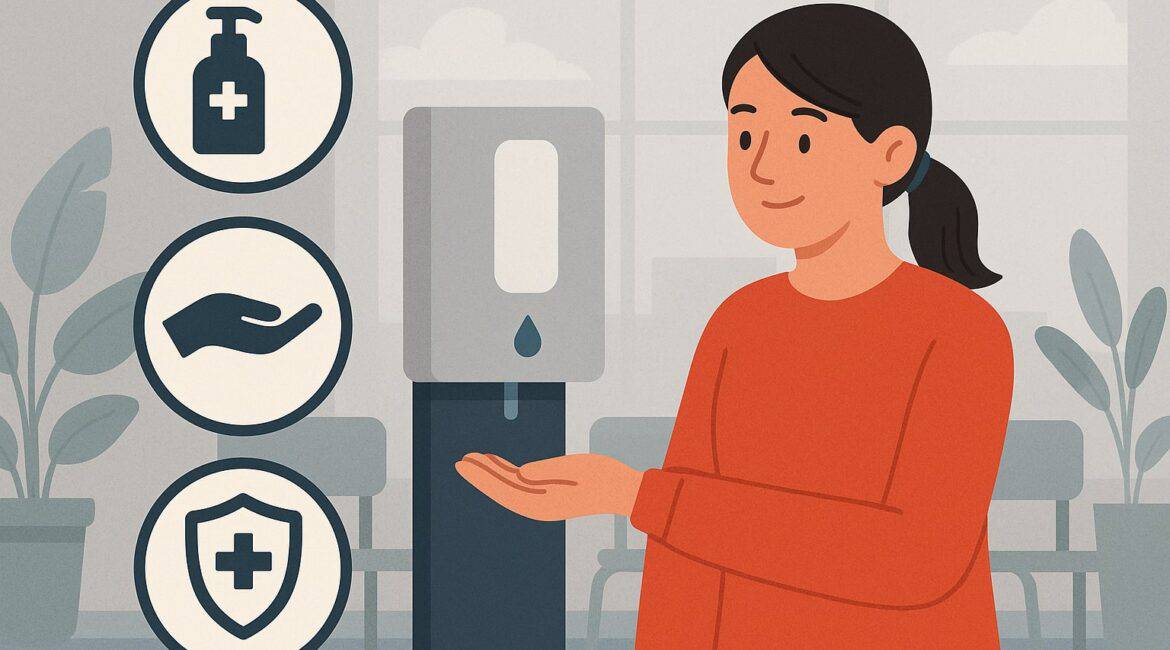
Keeping students, staff, and the public healthy starts with reliable hand sanitizer dispensers that people actually use. In busy hallways, cafeterias, lobbies, and transit hubs, the right dispensers reduce germs, speed up traffic flow, and reinforce a culture of hygiene. This updated US-focused guide explains what to buy, how to...
Reducing Waste with Refillable Sanitizer Technologies
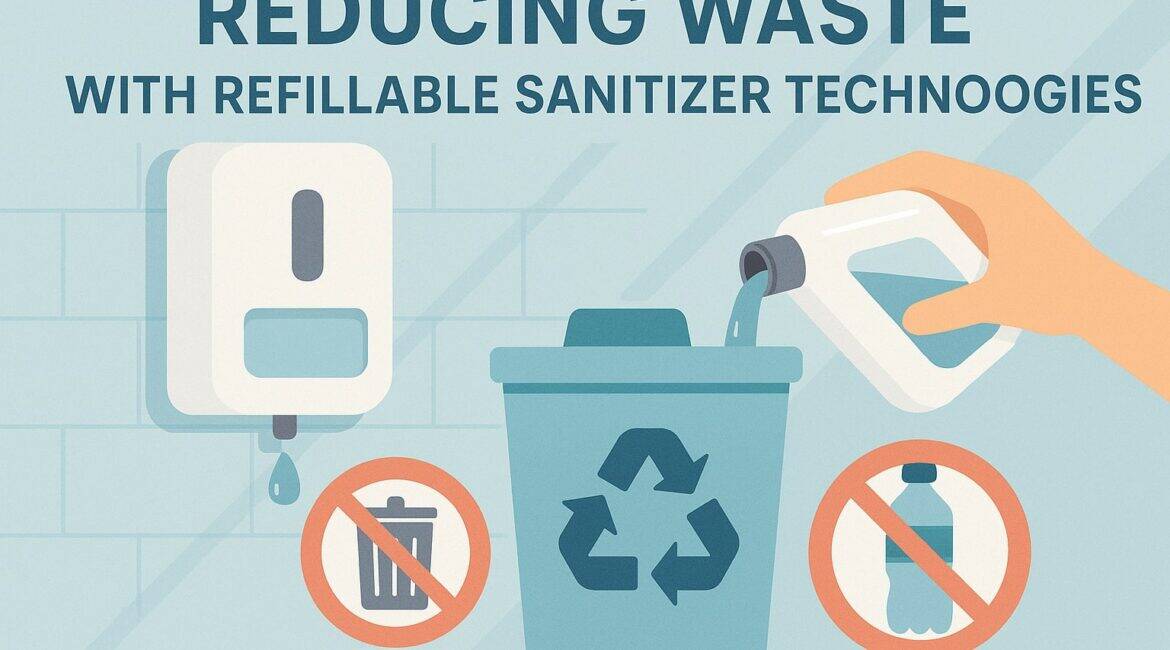
Refillable sanitizer technologies are transforming how American workplaces, schools, hospitals, retailers, and venues deliver hand hygiene—while slashing plastic waste and cutting costs. Instead of tossing single-use bottles and foil pouches, organizations are switching to bulk, closed-loop, or cartridge-based systems that refill on site. Done right, refillable sanitizer technologies reduce packaging,...
Wall-Mounted vs. Portable Dispensers: Which Works Best?
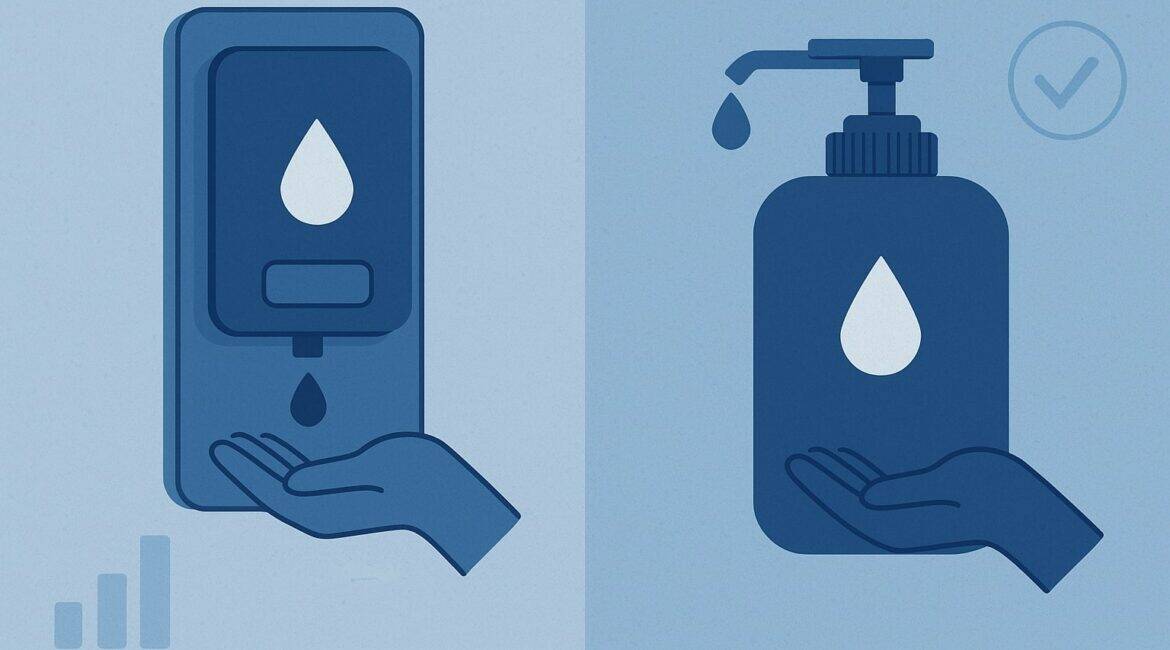
Choosing between wall-mounted dispensers and portable dispensers sounds simple—until you factor in hygiene standards, traffic patterns, ADA accessibility, long-term costs, and the real-world way people use restrooms, classrooms, lobbies, and job sites across the U.S. This guide breaks down wall-mounted vs. portable dispensers in clear, practical terms so you can...
Eco-Friendly Hand Sanitizer Dispenser Technologies
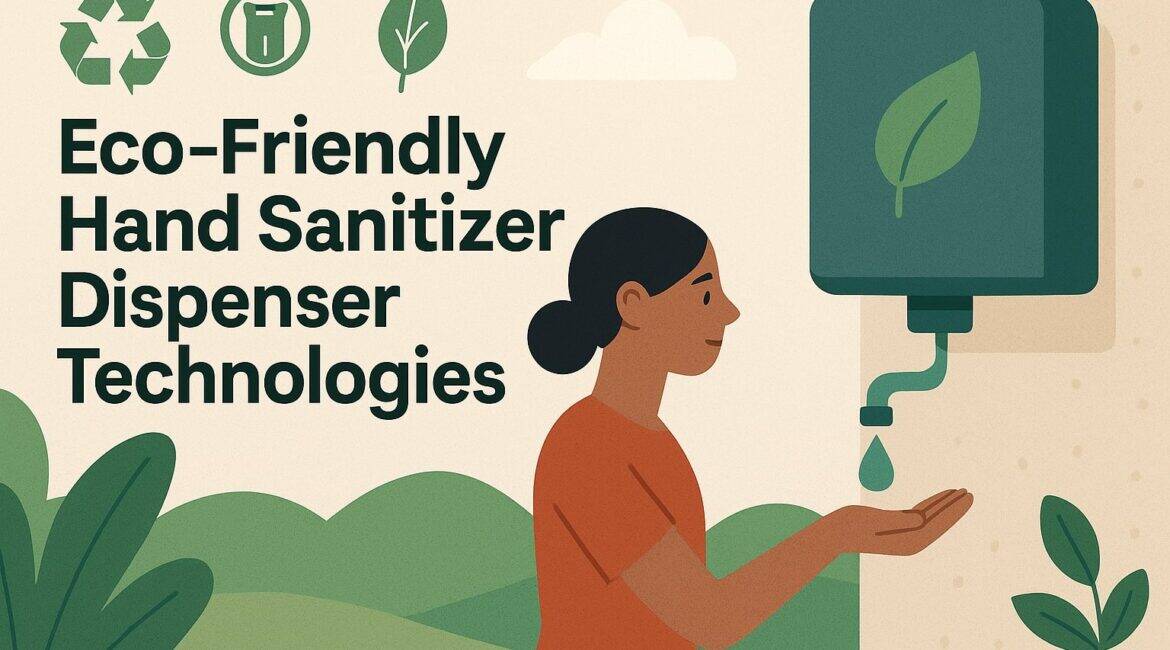
Eco-friendly hand sanitizer dispenser technologies combine touchless hardware, efficient dosing, and sustainable materials to deliver hygiene with a smaller environmental footprint. These systems cut plastic waste, save energy, and optimize sanitizer use without sacrificing safety or user experience. In a world where public health and sustainability now go hand in...
Refillable Dispensers vs. Cartridge-Based Systems
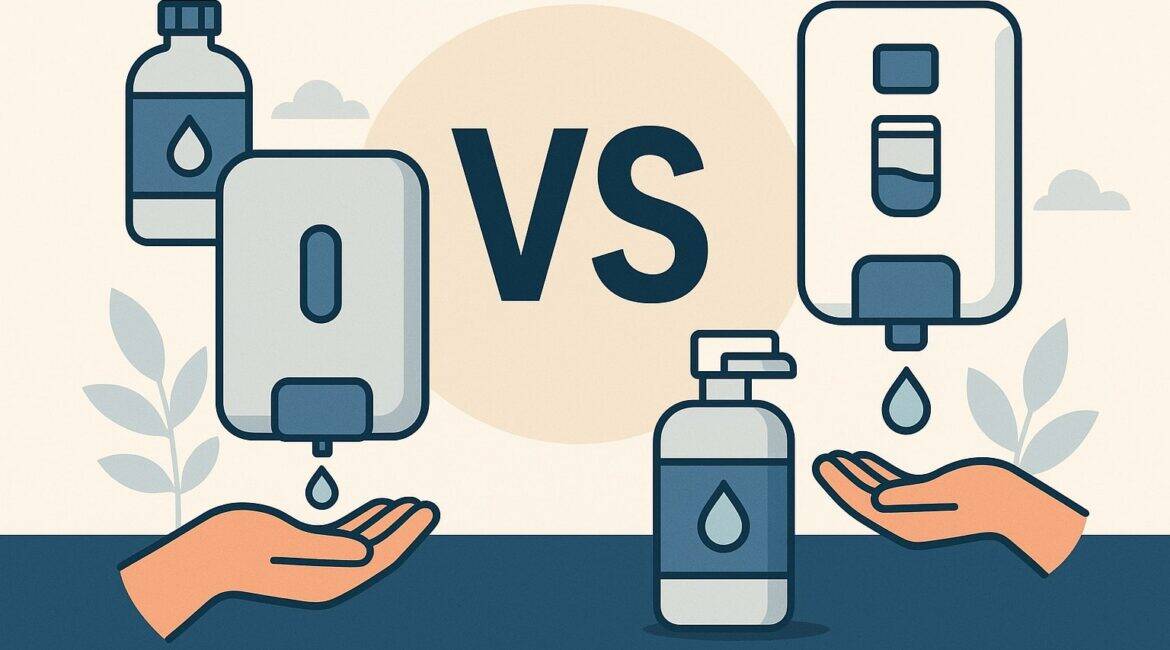
Choosing between refillable dispensers vs. cartridge-based systems can feel surprisingly high-stakes when you’re responsible for safety, budgets, and sustainability in U.S. workplaces. These two approaches dominate categories like hand soap, sanitizer, paper towel alternatives, surface cleaner concentrate, air care, and even beverage syrup and condiment programs. While both aim to...
Touchless Hand Sanitizer Dispensers: Benefits and Best Models
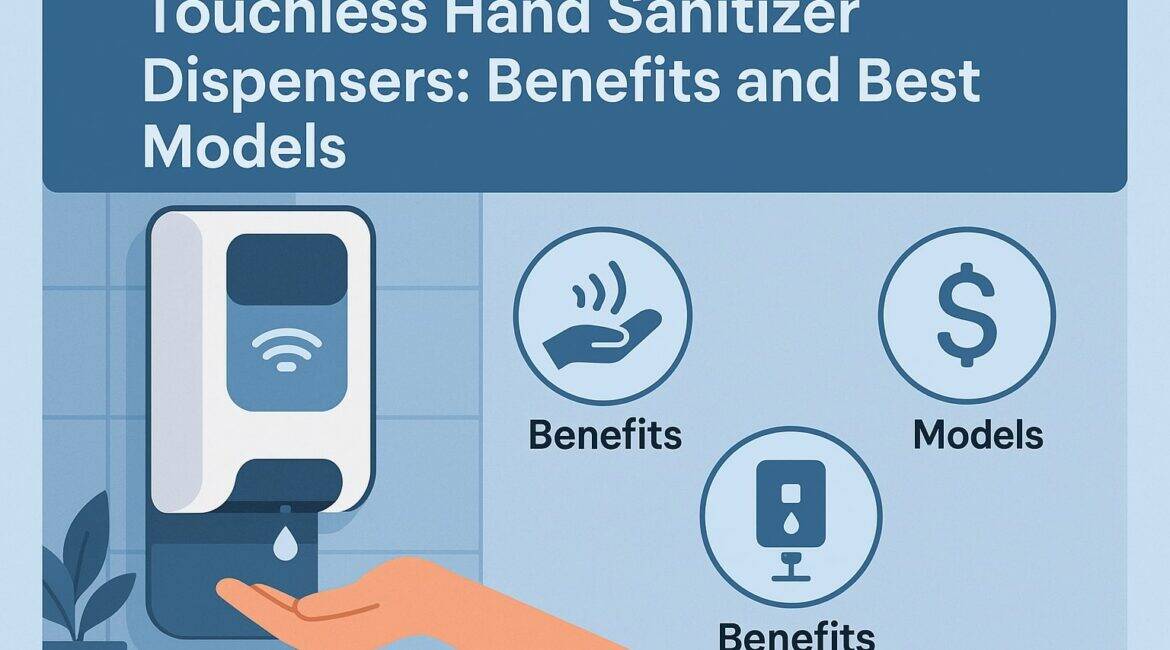
Touchless hand sanitizer dispensers lower the risk of cross-contamination because hands never touch a pump, lever, or surface. That seemingly small detail matters in high-traffic U.S. environments—offices, schools, hospitals, retail, airports—where dozens or even thousands of people use the same fixtures daily. Touchless systems also deliver controlled doses of sanitizer,...
Common Mislabeling Issues in Hand Sanitizers
Hand sanitizers have become an essential part of everyday life, especially in the wake of global health crises such as the COVID-19 pandemic. From schools and workplaces to retail stores and hospitals, these products are used to prevent the spread of harmful germs and keep people safe. However, despite their...
Recognizing Fake or Unregulated Hand Sanitizers
Hand sanitizers have become a household essential, especially in the wake of global health crises such as COVID-19. While they are designed to protect us from harmful pathogens, not all products on the market meet safety and quality standards. The surge in demand for hand sanitizers has unfortunately opened the...
Where to Find Eco-Friendly Hand Sanitizer Packaging
Switching to eco-friendly hand sanitizer packaging isn’t just a feel-good move—it’s a practical way to reduce waste, differentiate your brand, and often lower total landed cost through smarter materials and logistics. The good news is there are now robust, professional sources for sustainable bottles, closures, pouches, labels, and refill systems...
Hand Sanitizer Deals: How to Save Money on Safe Products

Hand sanitizer isn’t just another bathroom accessory; it’s a portable infection-control tool that, when chosen and used correctly, meaningfully reduces the spread of many germs. But “safe” and “effective” aren’t guaranteed just because a bottle says “kills 99.9%.” Understanding the science behind what makes sanitizer work helps you avoid weak...