By myhandsanitizershop February 7, 2026
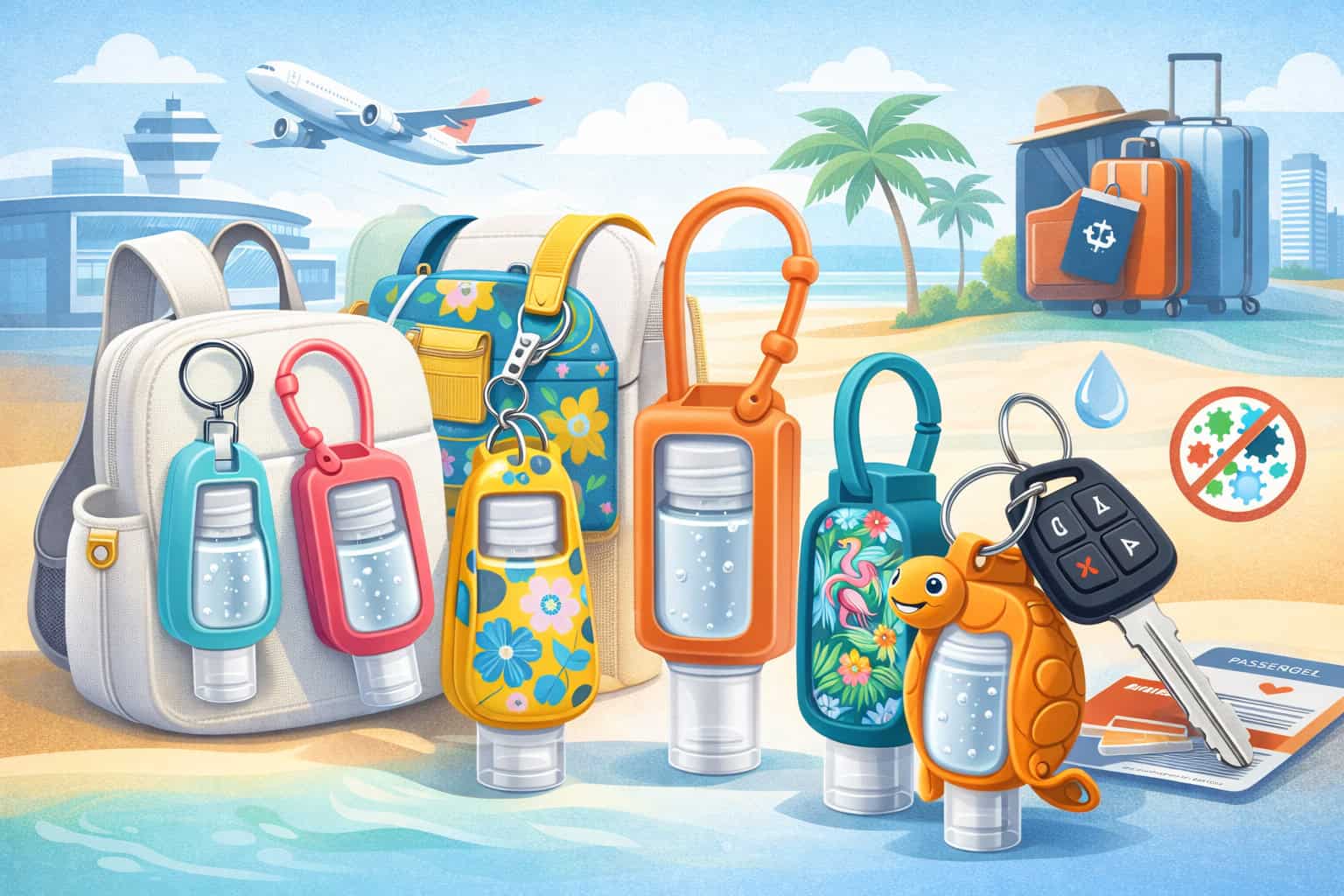
Hand sanitizer holders for travel sound like a tiny accessory, but they solve a big problem: keeping sanitizer easy to reach, not leaking, and not lost when you’re moving through airports, hotels, rideshares, theme parks, conferences, and everyday errands.
When sanitizer is buried in a backpack, people tend to skip using it. When it’s loose in a pocket, it can crack, pop open, or coat your phone and wallet in sticky gel. A well-chosen holder turns sanitizer into a “grab-and-go” habit—one you can maintain while juggling luggage, boarding passes, kids, or coffee.
This guide focuses on hand sanitizer holders for travel that work in real life: holders that survive getting tossed in a tote, clipped to a belt, squeezed into a seat-back pocket, or bounced around in a car console.
You’ll learn which types fit your travel style, what materials last, what features actually matter, and how to avoid common failures like leaks, broken clips, and gunky buildup.
You’ll also see forward-looking updates on where the category is heading—like refillable systems, better leak control, and travel accessories designed around faster hygiene routines. If your goal is to buy once and travel better, use this guide as your checklist.
Why Hand Sanitizer Holders for Travel Matter More Than You Think
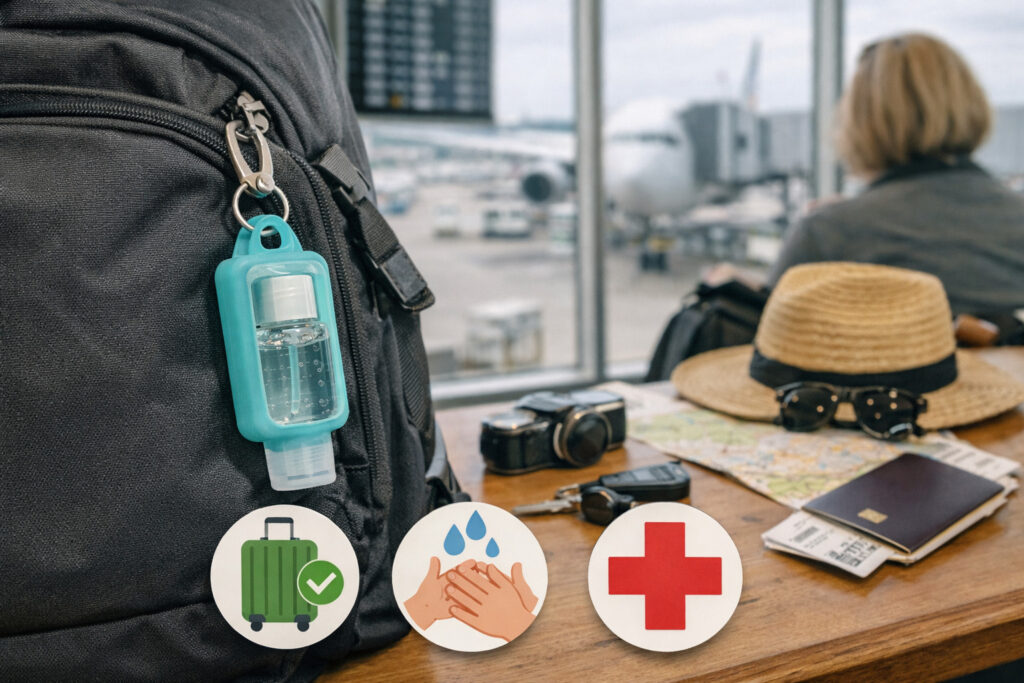
The best hand sanitizer holders for travel do more than hold a bottle—they reduce friction. Travel is full of touchpoints: elevator buttons, luggage handles, door pulls, ATM keypads, gas pumps, shared pens, tray tables, railings, kiosks, and rideshare seatbelts. The easier sanitizer is to access, the more consistently people use it. That consistency is the real benefit.
A travel holder also protects your stuff. A cheap cap that flips open in a bag can create a messy chain reaction: sticky gel on chargers, earbuds, passports, makeup bags, and fabric.
Many people end up buying “more sanitizer” when the real issue is packaging and carry, not supply. Hand sanitizer holders for travel act like a secondary containment layer, helping prevent leaks from spreading.
Another overlooked point is speed. In busy lines—security, check-in, museums, events—there’s no time to stop and dig. A clipped holder lets you sanitize with one hand, then move on. That matters when you’re holding a child’s hand, rolling a suitcase, or balancing a phone and boarding pass.
Finally, a holder supports better organization. When sanitizer has a consistent home (keychain, backpack strap, stroller handle, or car visor), it becomes part of your travel system—like your wallet or keys. The best hand sanitizer holders for travel fit your routine so well that you stop thinking about them, which is exactly the point.
The Most Popular Types of Hand Sanitizer Holders for Travel
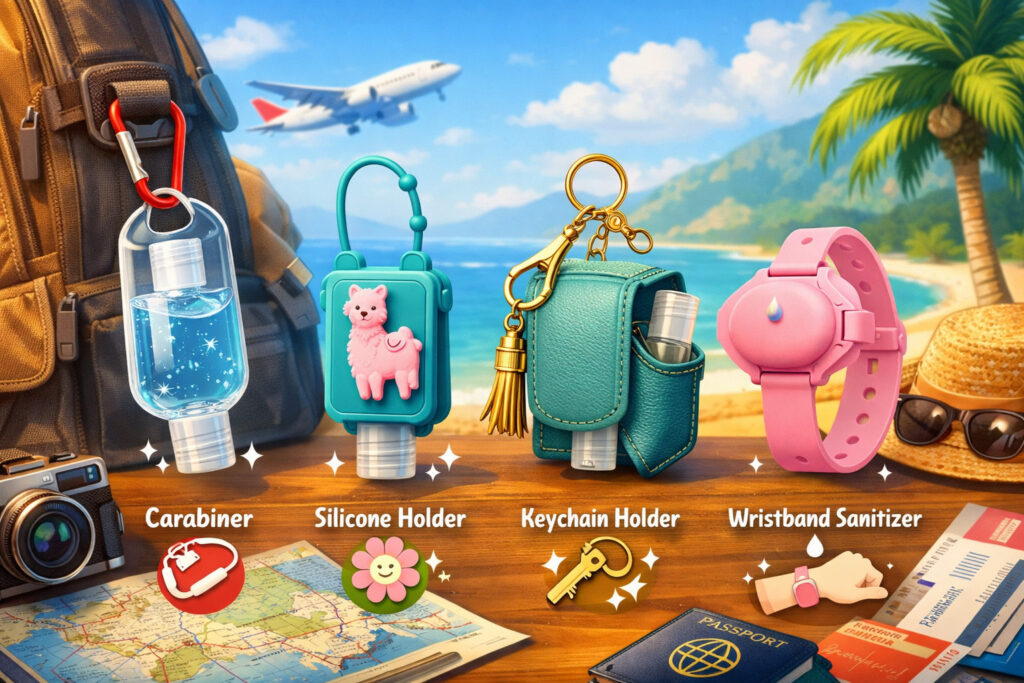
Hand sanitizer holders for travel come in a few main styles, and each one solves a different “where do I put this” problem.
The right pick depends on how you travel: minimalist with pockets, hands-free with backpacks, family travel with strollers, or work travel with briefcases and badges. Understanding types first helps you avoid buying a cute holder that doesn’t match your actual day.
In general, holders fall into sleeves (silicone, fabric, leather-like), hard cases (plastic shells), and wearable or clip systems (carabiners, belt clips, lanyards). Some holders are designed for standard travel bottles, while others fit branded shapes. For the best experience, choose holders that support common bottle sizes so refills are easy.
It also helps to think about access. Do you want to sanitize while walking? You’ll prefer a one-handed holder with a stable clip. Do you mostly sanitize right after touching something? A holder near your dominant hand—like on a crossbody strap—wins. Do you need to prevent crushing in a tightly packed suitcase? A hard case may be worth it.
Below are the most travel-friendly categories and what they’re best at. Each one can be an excellent option—if you match it to your travel habits rather than buying based on looks alone.
Silicone Sleeve Holders: The Go-To Option for Most Travelers
Silicone sleeves are among the best hand sanitizer holders for travel because they’re simple, affordable, durable, and grippy. A silicone sleeve stretches around a travel-size bottle and usually includes a loop or strap plus a clip.
That stretch-fit matters: it holds the bottle firmly so it doesn’t slide out when you’re walking fast, bumping a bag, or pulling luggage. Silicone also provides friction, so the holder doesn’t spin around on a strap the way smoother materials can.
For travel, silicone shines in messy conditions. It doesn’t absorb sanitizer drips, it rinses easily, and it dries quickly. If you’re at a beach, theme park, road trip, or outdoor event, a silicone sleeve is low-maintenance.
Many travelers like them for families because they survive being dropped, squeezed, and tugged by kids. They’re also easy to color-code—one color per person.
The main downside is heat and lint. Silicone can pick up lint in pockets and may feel slightly tacky, especially in hot weather. Some designs also use thin silicone around the neck, which can tear if you yank on it repeatedly.
To avoid that, look for reinforced straps, thicker silicone near stress points, and a clip that rotates rather than forcing the sleeve to twist.
If you want one “default” solution, silicone sleeves are often the best hand sanitizer holders for travel for everyday carry, flights, and multi-stop itineraries.
Neoprene and Fabric Holders: Comfortable, Lightweight, and Quiet
Neoprene and fabric holders are another strong category of hand sanitizer holders for travel, especially for people who hate the feel of silicone or want something softer. Neoprene—the same type of material used in wetsuits—has gentle stretch, cushioning, and a comfortable feel against skin.
That makes it great for holders that hang from a wristlet, lanyard, or bag strap. Fabric styles can also look more “everyday” and less utilitarian, which some travelers prefer for work trips or conferences.
A big benefit of neoprene is that it reduces noise. Hard clips and rigid cases can clack against zippers and buckles as you walk. Neoprene is quieter and less likely to scratch sunglasses, a tablet, or a phone. It also provides mild insulation, which can help a little in extreme temperatures, though it won’t fully protect sanitizer from heat.
The trade-off is absorbency and cleaning. Fabric can soak up sanitizer residue and hold odor if it’s not washed. Some holders are machine washable, while others need hand washing. For frequent travelers, choose one with stitching that won’t fray and hardware that doesn’t rust. Metal parts should be coated or stainless-style to handle humidity and sweat.
If your priority is comfort, a softer look, or minimal noise, neoprene and fabric hand sanitizer holders for travel can be a smart upgrade—especially when you’re clipping them to a purse or briefcase.
PU Leather and Leather-Like Holders: A Polished Option for Work Travel
Leather-like holders—often made from PU (synthetic leather)—are popular hand sanitizer holders for travel when you want something that looks more professional.
They pair well with luggage tags, tote bags, and briefcases, and they blend into work outfits better than brightly colored sleeves. For conferences, meetings, and client travel days, a sleek holder can make sanitizer feel like a normal accessory rather than a medical add-on.
PU leather holders usually wrap around the bottle with a snap, button, or stitched pocket, and many include a keyring or clip. The best designs balance structure and flexibility: stiff enough to protect the bottle, flexible enough to remove and refill quickly. They also tend to hold their shape in a bag, which can reduce the chance of the bottle getting compressed in a tight pocket.
However, leather-like materials can crack over time if they’re low quality, especially with heat exposure in cars or direct sun near windows. They can also be harder to clean if sanitizer leaks and dries in seams. For travel, pick a holder with sealed edges, reinforced stitching, and hardware that feels sturdy in your hand.
If you want a more “grown-up” look without sacrificing function, PU leather hand sanitizer holders for travel are a solid choice—just treat them like a bag accessory and avoid leaving them baking in a hot vehicle.
Hard Shell Cases: Best for Crush Protection and Structured Packing
Hard shell hand sanitizer holders for travel are ideal when your sanitizer gets abused. If you pack tightly, toss bags into overhead bins, or cram essentials into a small daypack, a rigid case can protect bottles from cracking, popping open, or getting squeezed until they leak.
These cases are usually plastic shells that snap shut around a bottle or are designed as refillable hard containers.
For structured packing, hard cases feel neat. They slide into a tech pouch or toiletry kit cleanly and are less likely to snag on fabric. Some hard cases include a tight cap design that resists accidental opening. That can be helpful if you’ve had gel leak all over a bag before.
The drawbacks are weight, bulk, and usability. Some hard cases require two hands to open, which is inconvenient when you’re walking or holding items. They can also rattle or clack against other gear. And if the case is designed around one specific bottle shape, refills become annoying.
If you travel with a lot of gear, want maximum protection, or often pack sanitizer into checked luggage, hard shell hand sanitizer holders for travel can make sense. For minimalist carry, they may feel like overkill.
Key Features That Separate the Best Hand Sanitizer Holders for Travel From the Rest

Not all holders are created equal. Two products can look similar online, but one will survive months of travel while the other fails in a week.
The best hand sanitizer holders for travel nail a few non-negotiable features: secure fit, reliable attachment, easy access, and materials that tolerate sanitizer residue. If you focus on these fundamentals, you’ll avoid most buyer regret.
First is fit. A holder should grip the bottle tightly enough that it won’t slide out when you’re moving, but not so tight that you have to wrestle the bottle out to refill. Universal-fit designs are great as long as they actually accommodate common travel bottle shapes. If a holder is too loose at the neck or base, it will fail when clipped to a bag and bounced around.
Second is attachment quality. Cheap clips break. Weak split rings deform. Thin straps tear at the hole. For travel, your holder is only as good as the hardware keeping it attached. A rotating clip can reduce twisting and stress. A thicker loop reduces tearing. A secure ring or carabiner keeps it from falling off in a taxi or on a trail.
Third is access. If the cap is blocked by the holder, or the holder flips upside down constantly, you won’t use it. The best hand sanitizer holders for travel keep the bottle oriented in a way that supports one-handed use and quick return. Finally, consider cleaning. Sanitizer residue builds up. Materials that rinse clean will stay pleasant to carry.
Leak Resistance and Bottle Security: The #1 Travel Priority
Leak resistance is the feature that matters most in hand sanitizer holders for travel because leaks create the biggest mess and the most frustration. While the holder can’t fix a poorly made bottle, it can reduce the risk of disaster by keeping bottles upright, preventing caps from getting pressed, and providing a barrier if a small leak happens.
Look for holders that support the bottle from the base and sides. A sleeve that only grips the neck can let the bottle wobble and tug at the cap. A better sleeve hugs the bottle body and creates stability.
If the holder includes a snap strap, make sure it doesn’t press on the cap mechanism. Some designs accidentally push flip-tops open when squeezed in a bag—exactly what you don’t want.
The best hand sanitizer holders for travel also make it easy to pair with better bottles. If you can choose your own leak-resistant travel bottle and then add a universal holder, you get more control.
In practice, bottles with firmer caps, tighter hinges, and a slightly recessed opening tend to behave better in transit. Pump tops can work too, but they need a lock or cover.
Clips, Carabiners, and Attachment Points: Don’t Let Hardware Be the Weak Link
Hardware is the silent hero of hand sanitizer holders for travel. If the clip fails, the holder is gone—dropped on a sidewalk, left in a rideshare, or lost at a venue. That’s why the attachment system deserves as much attention as the holder material.
Carabiner-style clips are popular because they’re quick to attach to backpack straps, purse loops, belt loops, and stroller bars. For travel, choose clips that feel springy and close fully.
A weak gate can pop open if it catches on a seat edge or a jacket zipper. Split rings are secure but slower; they’re good if you plan to keep sanitizer on a keychain permanently. Swivel clips reduce twisting, which prevents straps from tearing over time.
Also consider where you’ll attach it. A holder clipped to an outer backpack strap will swing and bounce, so it needs stronger hardware than one tucked inside a tote. If you’ll clip it to a belt loop, it should sit flat and not poke your hip. If you’re attaching to a lanyard, you’ll want lightweight hardware to avoid neck strain.
The best hand sanitizer holders for travel often include reinforced grommets, double stitching, or thick molded loops. If a listing doesn’t show close-ups of the hardware, that’s a warning sign. In travel gear, weak hardware is the fastest path to disappointment.
Size, Refillability, and Travel Convenience: What Actually Works on the Move
Size matters because the “perfect” hand sanitizer holders for travel are the ones you’ll actually carry. Too big, and you leave it behind. Too small, and you run out when you need it. Most travelers do best with a compact bottle that lasts a day or two of normal use, plus a refill option in luggage for longer trips.
Refillability is a major advantage. If your holder works with standard bottles, you can refill from a larger container at your lodging rather than buying new bottles constantly. That’s cheaper and reduces waste.
The best designs make bottle removal easy, but still secure. If you dread refilling because the holder is too tight or awkward, you’ll avoid it—and the whole system breaks down.
Convenience also includes cap access. Flip-tops are fast, but they can open in bags if they’re flimsy. Pump tops can feel cleaner, but they’re bulkier and can dispense too much if pressed. Many travelers prefer a flip-top bottle with a sturdy hinge and a holder that keeps the cap protected.
How to Choose Hand Sanitizer Holders for Travel Based on Your Trip Style

There isn’t one “best” option for everyone. The best hand sanitizer holders for travel depend on how you move through the day. Are you carrying a backpack? Wearing a crossbody? Traveling with kids? Driving long distances? Flying with strict carry-on rules? The same holder can feel perfect on one trip and annoying on another.
Start by choosing the carry location that feels natural: keys, bag strap, belt loop, stroller handle, or inside a tech pouch. Then pick a holder that supports that location.
For example, a swinging carabiner holder is great on a backpack, but may smack your hip on a belt loop. A sleek leather-like holder may look great on a tote, but could be annoying on a hiking pack where you want rinseable materials.
Also consider environmental factors. If you’ll be outdoors, prioritize washable materials and stronger clips. If you’ll be in meetings, prioritize quiet, polished designs. If you’ll be in transit all day, prioritize one-handed access and leak resistance.
Below are travel-style recommendations that make choosing hand sanitizer holders for travel easier. Match the category to your reality, not your idealized version of travel.
Air Travel and Airport Days: Security Lines, One-Hand Access, and Clean Organization
Air travel is where hand sanitizer holders for travel prove their value fast. Airports require constant switching between tasks: showing ID, holding a phone, lifting bags, opening zippers, and touching shared surfaces. You want sanitizer accessible without stopping to dig through a personal item.
For airport days, attach the holder to a backpack strap or the handle area of a carry-on, where it’s reachable while standing in line. A swivel clip helps prevent twisting when you lift bags into overhead bins. Choose a holder that doesn’t block the bottle cap, so you can sanitize quickly after touching bins, railings, or kiosks.
Leak prevention matters more on flights because bags get squeezed into tight spaces. Pair your holder with a bottle that has a firm cap and avoid overfilling. A silicone sleeve or a structured leather-like holder usually works well. Hard cases can also be useful if your bag gets compressed, though they may be slower to open.
Another practical tip: keep sanitizer accessible but not dangling too far. Swinging holders can catch on seat arms or bag straps. The best hand sanitizer holders for travel in airports sit snug and stable, so you can move through checkpoints smoothly and keep your hands clean without slowing down.
Road Trips and Daily Driving: Consoles, Cup Holders, and Heat Concerns
Road trips introduce different problems: heat, clutter, and convenience at stops. Hand sanitizer holders for travel in a car should keep the bottle upright, prevent it from rolling under seats, and allow quick use after gas stations, rest stops, and drive-thrus.
For driving, consider a holder that can attach to a bag you keep in the passenger seat, or a strap system that clips to a headrest loop or organizer. If you frequently sanitize while stepping out of the car, a keychain holder is excellent—your keys and sanitizer move together, which improves consistency.
Heat is the big concern. Cars can get very hot, and some materials degrade faster under heat exposure. Silicone and hard plastic generally tolerate heat better than low-quality PU leather, which can crack over time.
Fabric can hold odor if sanitizer leaks in warm conditions. Whenever possible, store sanitizer out of direct sun and avoid leaving it in a sealed hot car for long periods.
Road trip life is messy—snacks, napkins, sunscreen, and receipts everywhere—so choose hand sanitizer holders for travel that clean easily. A rinseable sleeve with sturdy hardware is usually the most practical option for frequent driving.
Outdoor Travel and Theme Parks: Sweat, Water, Dirt, and Constant Movement
Outdoor days are high-contact, high-motion situations. You’re touching railings, benches, ticket scanners, water bottles, and shared equipment. The best hand sanitizer holders for travel in these environments are washable, secure, and comfortable to carry all day.
Silicone sleeves are especially strong here because they resist water and rinse clean. Neoprene can also work if you’re okay washing it regularly. Hard cases protect bottles if you’re hiking or doing activities where gear gets compressed.
For theme parks, clip the holder to a crossbody strap or belt bag so it stays within reach when you’re in lines or moving between rides.
Sweat and sunscreen can make everything slippery, so grippy materials help. Also, make sure the holder doesn’t swing too much—constant bouncing gets annoying and can stress the attachment point. A short strap placement or a snug clip position reduces movement.
Outdoor environments also highlight the value of refills. If you’ll be out all day, you might want a slightly larger bottle or a backup in your day bag. The best hand sanitizer holders for travel make it easy to swap bottles without stretching the sleeve until it tears. Choose durability over cute designs for these trips.
Cleaning, Refilling, and Hygiene Tips for Hand Sanitizer Holders for Travel
Hand sanitizer holders for travel need maintenance, even though they’re small. Over time, residue builds up—especially around cap areas—leading to stickiness, lint, and odor. A dirty holder can make sanitizer feel unpleasant to use, which defeats the purpose. The good news is that simple cleaning keeps everything fresh.
For silicone holders, warm water and mild soap usually work. Rinse thoroughly and let it air dry completely before reinserting the bottle. For fabric or neoprene, check if it’s machine washable; if not, hand wash and avoid harsh cleaners that damage stitching. For leather-like holders, wipe gently with a damp cloth and avoid soaking seams.
Refilling also affects hygiene. If you refill a travel bottle, make sure it’s clean and dry first. Mixing old residue with new sanitizer can create weird textures or smells.
Use a small funnel if needed to avoid messy spills, and wipe bottle threads before closing to help prevent leaks. Avoid overfilling; leaving a small air gap reduces pressure and makes caps easier to close properly.
Also think about where you store it at night during trips. Hanging a holder on a hook or placing it in a consistent spot helps you avoid setting it on questionable surfaces. Clean habits plus smart storage keep hand sanitizer holders for travel working well and feeling pleasant to use—trip after trip.
Preventing Sticky Buildup: Small Habits That Make a Big Difference
Sticky buildup is the most common complaint with hand sanitizer holders for travel, and it usually comes from tiny drips around the cap that collect lint. The fix is mostly behavioral, not complicated.
First, wipe the cap area after heavy use. Even a quick swipe with a tissue reduces residue. Second, keep the cap clean and close it firmly every time—half-closed flip tops leak. Third, choose a bottle design that doesn’t ooze gel around the hinge or nozzle. Some caps dispense too much and smear gel on the outside when you close them.
Placement helps too. If your sanitizer hangs upside down on a clip, gel can creep toward the cap. Some holders naturally keep bottles upright; those are often better for long days. If you must hang it upside down, be extra careful about cap quality and cleaning.
Finally, consider switching the sanitizer format. Gel is common, but some people prefer spray sanitizer because it tends to leave less residue on bottle exteriors. If you do use spray, ensure the nozzle is protected and not getting pressed in a bag.
The best hand sanitizer holders for travel support clean use with minimal mess, but your habits are what keep the setup feeling fresh.
Carry Rules and Practical Compliance Considerations for Flights
When you’re flying, hand sanitizer holders for travel must fit into your overall carry system and align with common screening expectations. The practical goal is simple: don’t create delays for yourself. Keep travel-size liquids organized, easy to show if needed, and unlikely to leak under pressure and compression.
The easiest approach is to use a holder for “in-the-moment” sanitizer and keep a backup bottle in your liquids bag. That way, you can sanitize while moving through the airport and still keep liquids neatly packed. If a screener asks you to place liquids in a bag, you can unclip the sanitizer quickly rather than digging through every pocket.
Avoid oversized bottles clipped outside your bag in crowded terminals. They can snag, fall off, or get squeezed. Also be mindful that some sanitizer formulas are more liquid than gel, which makes leaks more likely. A holder that keeps the bottle stable and protected is key.
If you travel frequently, consider standardizing your setup: same bottle shape, same refill method, same clip location. That consistency speeds up your routine and reduces mistakes like leaving sanitizer behind at a checkpoint. The best hand sanitizer holders for travel support a smooth screening experience by keeping sanitizer accessible but controlled.
Sustainable and Budget-Friendly Choices Without Sacrificing Quality
Sustainability and cost matter, especially if you travel often. The most sustainable hand sanitizer holders for travel are the ones that last and support refillable bottles. Constantly replacing cracked sleeves or broken clips creates waste and costs more than buying a better holder once.
Refillable systems reduce single-use plastic. If your holder fits standard travel bottles, you can refill from a larger container at your lodging rather than buying mini bottles repeatedly. That also lets you choose formulas that work better for your skin, including options with moisturizers that reduce dryness from frequent use.
Material choice impacts longevity. Thick silicone tends to last a long time and is easy to clean. High-quality neoprene can also be durable, especially with reinforced stitching. Leather-like holders vary widely; invest in better finishing if you want them to last. Hard cases can last a long time too, though hinges and snaps are potential failure points.
Budget tip: spend money on hardware, not decoration. A simple holder with a strong clip beats a fancy-looking holder with weak attachment points. If you’re buying multiples for a family, choose one durable style and color-code.
That approach keeps costs predictable and prevents “random mismatch bottles” that don’t fit your holders. Sustainable travel gear often looks like boring reliability—and in hand sanitizer holders for travel, boring is good.
Future Predictions: Where Hand Sanitizer Holders for Travel Are Headed
Hand sanitizer holders for travel are evolving from simple sleeves into smarter “micro-carry systems.” As travelers keep prioritizing quick hygiene routines, we’ll likely see more designs built around speed, refillability, and cleaner handling.
The biggest trend is integration: holders that attach seamlessly to bag straps, key systems, and travel organizers without swinging or snagging.
Expect better leak control. Brands are already improving cap designs, and holders will follow with more structured collars, cap shields, and compression-resistant shapes.
Some holders may incorporate secondary seals or tight-fitting covers that reduce accidental opening in crowded bags. Another direction is modularity: clip systems that let you swap sanitizer, lip balm, and small tools on the same attachment point.
Sustainability should push growth in refillable hard containers and standardized bottle sizes. When bottle shapes are consistent, holders become more universal, and travelers can refill rather than discard. We may also see more antimicrobial or easy-clean coatings, though cleaning habits will still matter most.
Finally, expect the design to split into two lanes: rugged, outdoors-focused hand sanitizer holders for travel with heavy-duty clips and washable materials, and professional, minimalist holders that match work luggage and daily outfits. In both cases, the best products will be the ones that make sanitizer effortless—because convenience drives real-world use.
FAQs
Q.1: What are the best hand sanitizer holders for travel for everyday use?
Answer: For most people, silicone sleeves with a sturdy carabiner or swivel clip are the best hand sanitizer holders for travel for everyday use. They’re washable, durable, and easy to move between bags.
If you prefer a softer feel or a quieter carry, neoprene is also a strong everyday option. The “best” choice is the one you’ll actually keep attached to your keys or bag, because consistency matters more than the material.
Q.2: Will a hand sanitizer holder prevent leaks completely?
Answer: A holder helps, but it can’t guarantee zero leaks if the bottle cap is weak or overfilled. The best hand sanitizer holders for travel reduce the impact of small leaks by stabilizing the bottle and adding a barrier. Pair your holder with a reliable travel bottle, close caps firmly, and avoid overfilling—those habits do most of the work.
Q.3: Should I clip sanitizer to the outside of my bag or keep it inside?
Answer: Clipping sanitizer outside is great for access, especially in airports and crowded places. It’s also where hand sanitizer holders for travel provide the biggest convenience boost.
The risk is snagging or losing it if the clip is weak. If you’re worried about loss, attach it to an interior loop, or use a split ring inside a pocket. Many travelers do both: outside for the day, inside when packing tight.
Q.4: Are spray sanitizers better than gel for travel holders?
Answer: Sprays can reduce sticky buildup because they often leave less residue on the bottle exterior. However, spray nozzles can be accidentally pressed in a bag if not protected.
Gel is more common and can be easier to control, but it tends to create sticky caps. The best hand sanitizer holders for travel work with either—just match the holder to the dispenser style and keep the cap area clean.
Q.5: How do I clean my hand sanitizer holder while traveling?
Answer: Silicone holders can be rinsed in a sink with mild soap and air dried. Fabric and neoprene holders can often be hand washed and dried overnight.
Wipe leather-like holders with a damp cloth. The key is to clean before buildup becomes stubborn. Regular quick cleaning keeps hand sanitizer holders for travel comfortable to carry and pleasant to use.
Conclusion
The best hand sanitizer holders for travel make hygiene easy, not annoying. They prevent the common headaches—leaks, lost bottles, sticky messes, and inconvenient digging—by keeping sanitizer exactly where you need it: reachable, secure, and ready.
When you match the holder type to your travel style, sanitizer becomes a simple habit you can maintain across airports, road trips, outdoor days, and work travel.
If you want the most universally practical option, a durable silicone sleeve with strong hardware is hard to beat. If you prefer comfort and a softer feel, neoprene or fabric can be a better daily experience.
If you care about a polished look for meetings, a quality leather-like holder fits work travel. And if your gear gets crushed, a hard shell case offers extra protection.