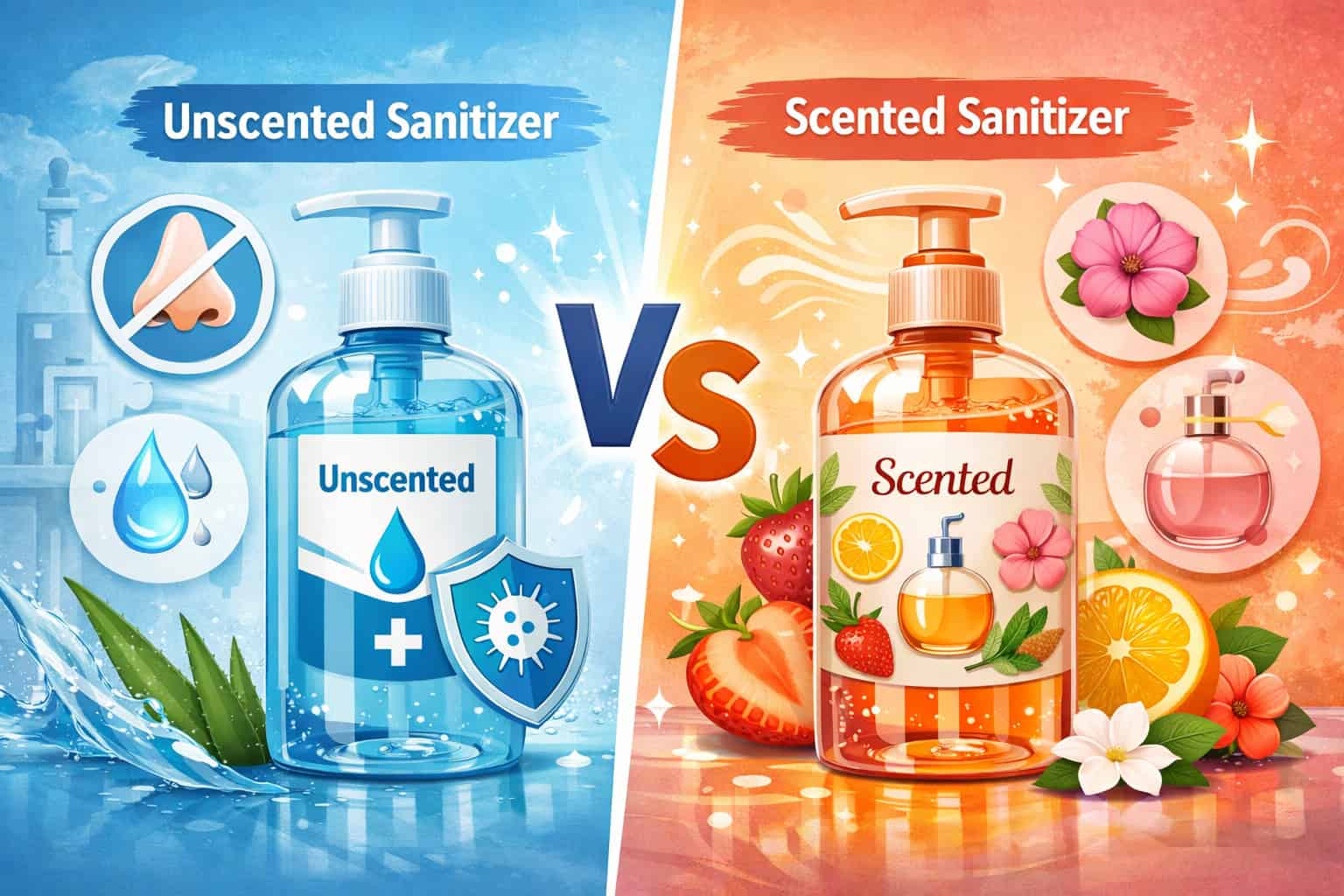
Hand sanitizer seems like a simple purchase until scent enters the picture. One bottle smells fresh and pleasant, another claims to be fragrance-free, and a third leaves your hands feeling dry, sticky, or irritated after just a few uses.
For many buyers, the scent decision is not just about liking a fragrance. It can affect skin comfort, repeated daily use, workplace acceptance, travel convenience, and whether people actually want to use the product in the first place.
That is why the debate around unscented vs scented hand sanitizer matters more than it appears. A sanitizer that smells great but bothers sensitive skin may become a product you avoid.
A sanitizer that feels gentle but has an unpleasant alcohol odor may not be the best fit for shared spaces or frequent public use. In many cases, the “right” option depends less on marketing claims and more on your skin type, your environment, and how often you sanitize throughout the day.
Another source of confusion is labeling. Many shoppers assume “unscented” always means “fragrance-free,” but that is not always true. Some formulas use masking ingredients to neutralize odor, while others deliberately add fragrance for a more polished sensory experience.
Understanding those differences can help you avoid trial-and-error buying and choose a sanitizer that fits your real-life routine.
Used correctly, hand sanitizer should contain an appropriate active ingredient level, and public health guidance still places soap and water first when hands are visibly dirty or greasy. When soap and water are not available, alcohol-based sanitizer with at least 60% alcohol remains a widely recommended option.
This guide breaks down what unscented and scented sanitizers really are, how they differ, when each works best, and what buyers should look for before deciding.
What Unscented Hand Sanitizer Really Means
Unscented hand sanitizer is generally marketed as a product that does not have an obvious added smell. In practice, that can mean two slightly different things. Some formulas are truly fragrance-free and contain no added fragrance ingredients.
Others are labeled unscented because they are designed not to smell strongly, even though they may contain ingredients that reduce or mask the natural odor of alcohol or other components.
That distinction matters because people often shop for “no scent” for very different reasons. One buyer simply dislikes perfume-like sanitizer. Another is trying to avoid fragrance exposure because of irritation, headaches, or skin reactivity.
In those situations, the label needs a closer look. An unscented sanitizer may still not be the same as a fragrance-free sanitizer, and that difference can be important for people looking for an unscented sanitizer for allergies or a sanitizer for skin sensitivity.
Unscented formulas are often preferred in settings where fragrance can become distracting or unwelcome. Think shared offices, classrooms, medical-adjacent spaces, food service areas, and households where one person is sensitive to added scents.
These sanitizers also appeal to people who want their moisturizer, soap, or personal care products to be the only noticeable scent on their skin.
One common reason shoppers choose unscented products is control. A scented sanitizer can mix with perfume, cooking smells, lotion, sunscreen, or even the interior smell of a car or bag. Unscented options reduce that layering effect and usually feel less intrusive in close-contact environments.
Unscented does not always mean odorless
A lot of people expect unscented hand sanitizer to smell like nothing at all. That expectation often leads to disappointment the first time they open a bottle and notice the sharp smell of alcohol.
An unscented sanitizer can still have a noticeable base odor because ethanol and isopropyl alcohol have their own natural smell. If a formula avoids added fragrance, that alcohol note may be more obvious during application, especially before the product dries.
This is not necessarily a flaw. In fact, many people who want the simplest possible formula prefer that straightforward smell over added perfume or botanical blends. They may interpret it as a sign that the formula is more minimal and less likely to trigger irritation.
For frequent users, especially those sanitizing dozens of times a day, a short-lived alcohol scent may be easier to tolerate than a lingering fragrance.
At the same time, “unscented” on the front label should never be the only thing you rely on if you are highly reactive to fragrance. Ingredient lists matter.
Dermatology literature has long distinguished fragrance-free products from products that are merely unscented, because masking ingredients can still be relevant for people with fragrance allergy or sensitivity.
Why buyers choose unscented formulas
The biggest appeal of unscented sanitizer is predictability. It tends to create fewer conflicts with personal preference, shared environments, and layered daily products. In a family, office, or classroom, one neutral sanitizer is often easier to keep around than a fragrance that some people love and others dislike.
Unscented options are also popular with buyers who use sanitizer constantly. Repeated fragrance exposure can become tiring even if it does not cause a true allergy.
A lightly fragranced formula may smell nice once or twice, but after many applications it can feel overwhelming. That is one reason unscented products are often associated with practical, frequent-use routines.
There is also a skin-comfort angle. While alcohol itself can be drying, many people find that skipping fragrance, dyes, and strong essential oils reduces the number of possible irritants in a formula. That does not automatically make every unscented sanitizer perfect, but it often makes label-reading simpler.
What Scented Hand Sanitizer Is and Why It Appeals to So Many Buyers
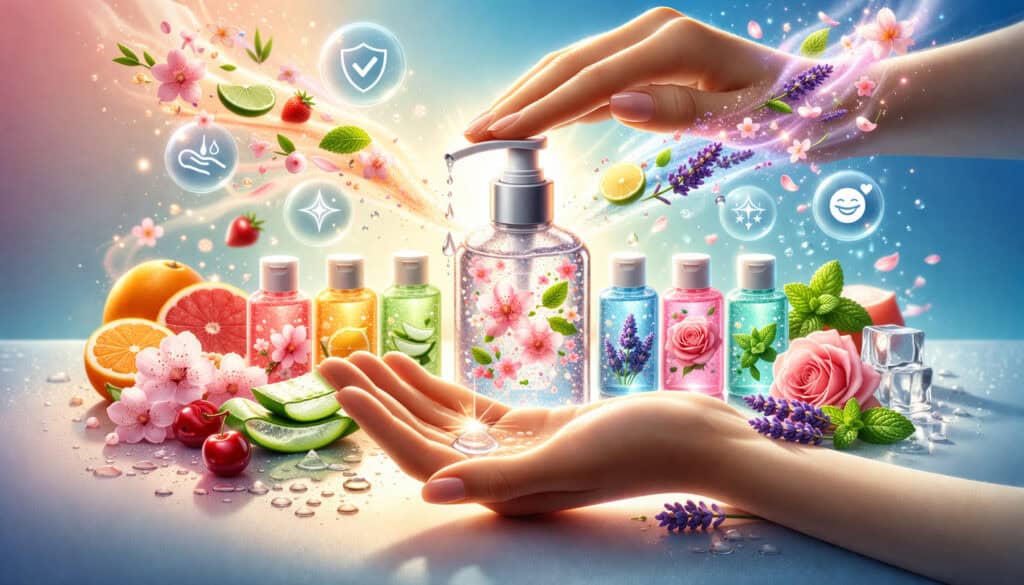
Scented hand sanitizer contains added fragrance intended to improve the sensory experience of using it. Those fragrances can range from light citrus or herbal notes to sweet, fruity, floral, fresh-linen, or seasonal profiles.
In some formulas, the scent is subtle and fades quickly. In others, it is a major selling point and remains noticeable on the skin long after the sanitizer dries.
The popularity of scented sanitizers makes sense. Alcohol has a natural smell that some people find sharp, clinical, or unpleasant. Fragrance can soften that first impression and make sanitizer feel more like a personal care product than a functional hygiene product.
For families, students, commuters, and casual daily users, a pleasant scent can improve acceptance and encourage more consistent use.
This is especially relevant in environments where people sanitize often but do not particularly enjoy it. A better smell can make the habit easier to maintain. That does not change how the active ingredients work, but it can change how willing someone is to reach for the bottle throughout the day.
Scented products also offer an element of preference and identity. Some buyers simply enjoy a clean-smelling or uplifting formula. For them, sanitizer is not just about practicality. It is part of everyday comfort, much like choosing a soap, lotion, or deodorant scent they actually like.
The role of fragrance in the sanitizer experience
Fragrance affects more than smell. It shapes the overall impression of the product. Two sanitizers with similar active ingredients can feel completely different depending on scent strength, dryness, finish, and how long the smell lingers after use. That is why a hand sanitizer fragrance comparison is not trivial. It often influences satisfaction more than buyers expect.
A lightly fragranced sanitizer may create a sense of cleanliness and freshness that makes people feel better about repeated use. For some, this is especially helpful in public spaces, on transit, after shopping, or when eating on the go. A pleasant scent can reduce the harsh “just used alcohol” feeling and make the product seem more refined.
However, fragrance is highly personal. One person’s “clean and refreshing” is another person’s “too strong and irritating.” In shared environments, that subjectivity matters. A scented sanitizer placed at a front desk or break room might be appreciated by some and avoided by others. That is why fragrance choice is often more suitable for personal bottles than universal shared dispensers.
Scent can also signal a product category emotionally. Citrus may feel energizing, lavender may feel calming, and mint may feel crisp. Even when those effects are mostly psychological, they influence buyer preference and everyday use.
When scented sanitizer makes practical sense
Scented formulas can be a smart choice when user enjoyment matters and sensitivity is not a major concern. They often fit well in personal routines, gift sets, travel kits, handbags, gym bags, or family use where everyone likes the scent profile. They can also work well for occasional use, where fragrance is a nice touch rather than a constant exposure.
For parents, a lightly scented sanitizer can sometimes be easier to encourage than a clinical-smelling one, especially if children associate the fragrance with something pleasant and familiar. For adults, a personal pocket-sized scented sanitizer may feel more appealing than a basic unscented bottle when running errands or commuting.
Scented formulas can also help in situations where the user wants the alcohol smell masked more effectively. Some people strongly dislike that initial alcohol note and find a scented option easier to tolerate. That does not mean scented sanitizer is “better,” but it can be a more realistic choice for someone who will otherwise avoid using sanitizer altogether.
Fragrance-Free Hand Sanitizer vs Scented: The Label Difference Buyers Need to Understand
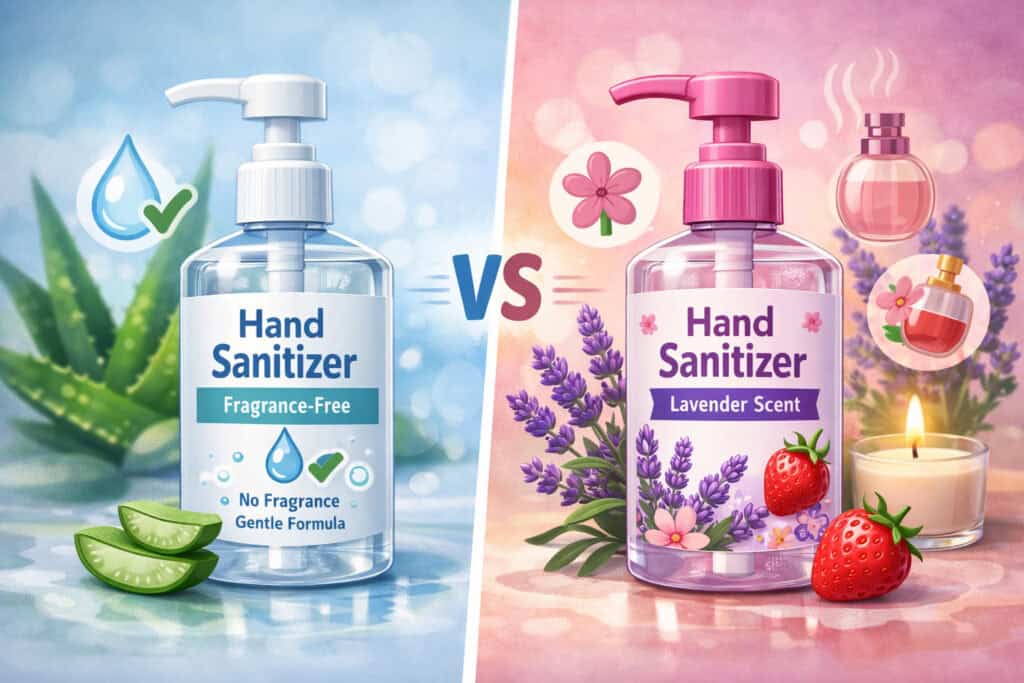
One of the biggest mistakes shoppers make is treating “fragrance-free,” “unscented,” and “scented” as if they were simple opposites. They are not. A formula can be unscented without being truly fragrance-free, and a scented formula can still feel mild if the fragrance load is low.
Understanding label language helps you make a better choice and avoid buying a product that does not match your needs.
A fragrance-free hand sanitizer vs scented comparison begins with intent. A fragrance-free formula aims to avoid added fragrance ingredients. A scented formula includes them on purpose. An unscented formula sits in the middle and can be trickier, because it may or may not contain masking components designed to neutralize or soften odor.
This matters most for people with fragrance sensitivity, eczema-prone hands, contact dermatitis history, or headaches triggered by strong smells. For those buyers, the absence of obvious perfume smell is not enough. What matters is whether fragrance-related ingredients are actually absent.
The ingredient list is where the truth usually lives. Front labels are designed for quick shopping. Ingredient panels are designed for accuracy. If your reason for choosing unscented is medical, comfort-based, or sensitivity-driven, reading that panel is worth the extra few seconds.
What “fragrance-free” usually signals
Fragrance-free generally means the formula does not intentionally include fragrance ingredients for scent. For buyers concerned about irritation, this is often the more useful term than unscented.
It suggests the product is designed without perfume-like additives, although you should still review the full ingredient list for essential oils, plant extracts, or other possible irritants.
In practical buying terms, fragrance-free formulas are often favored by people searching for the best hand sanitizer for sensitive skin. They simplify the decision-making process because one major class of possible triggers is less likely to be present.
That does not guarantee zero irritation, since alcohol concentration, preservatives, texture agents, and repeated use still matter, but it can lower the risk.
Fragrance-free also tends to make sense in shared environments. If your goal is to choose a bottle that many people can tolerate, fragrance-free is usually safer than “lightly scented,” because scent preference is unpredictable. In offices, clinical settings, school entry points, and care environments, neutrality is often an advantage.
Why “unscented” can still be confusing
Unscented products are marketed around the user experience of not noticing a strong smell, but that does not always tell you how the formula achieves that effect.
Some unscented products contain odor-masking agents or other ingredients that reduce the perception of scent without being fully fragrance-free. For most shoppers, that distinction may not matter. For scent-sensitive users, it can matter a lot.
This is where product claims and real-world use can diverge. A shopper picks “unscented” expecting it to be ideal for sensitivity, then notices mild irritation or a subtle cosmetic smell they were trying to avoid. That experience is one reason many skin-focused buyers skip the marketing language and go straight to ingredients.
A helpful mindset is to treat “unscented” as a sensory description and “fragrance-free” as a more ingredient-focused description. They can overlap, but they are not guaranteed to mean the same thing.
For more label-reading help, this ingredient comparison guide and this guide to comparing hand sanitizer brands can help you compare beyond the front label.
Unscented vs Scented Hand Sanitizer: Side-by-Side Comparison
The simplest way to understand unscented vs scented hand sanitizer is to compare what changes and what does not. The active antimicrobial performance of a sanitizer depends primarily on the formula’s active ingredients and proper use, not whether the product smells like citrus, lavender, or nothing noticeable at all.
Scent affects the user experience, comfort, tolerance, and preference, but not the basic role of the active ingredient. Soap and water still remain the first choice in many situations, and sanitizer selection should start with effectiveness, then move into comfort and usability.
Where scent does make a real difference is in repeated exposure, perceived comfort, and environmental fit. A person sanitizing once or twice a day may be fine with a pleasant scented formula.
A nurse, cashier, teacher, student, caregiver, or warehouse employee using sanitizer repeatedly may care more about skin comfort and fragrance fatigue. A front desk dispenser has different needs than a personal purse bottle.
The best comparison is not “Which one is universally better?” but “Which one fits the user and the setting?” That is the core of any useful scented sanitizer buying guide.
| Feature | Unscented / Fragrance-Free Sanitizer | Scented Sanitizer |
| Skin comfort | Often preferred for reactive or easily irritated skin | Can feel fine for many users, but fragrance may be an added trigger |
| Smell during use | May have a natural alcohol odor that fades as it dries | Designed to mask or replace alcohol odor with a chosen fragrance |
| Ingredient sensitivity | Usually simpler for buyers avoiding fragrance-related triggers | Requires closer attention if you react to fragrance, essential oils, or botanicals |
| User preference | Best for neutral shared use or people who dislike lingering scent | Best for people who enjoy a fresh, pleasant sensory experience |
| Workplace fit | Often safer in scent-sensitive shared spaces | Better for personal use unless the environment welcomes fragrance |
| Frequent daily use | Often easier to tolerate over many applications | May become overwhelming for some users with constant reapplication |
| Ideal use cases | Sensitive skin, care settings, classrooms, shared dispensers, fragrance-sensitive homes | Personal travel bottles, occasional use, gym bags, family use, users who dislike alcohol smell |
Scented vs unscented sanitizer benefits explained simply
When people search for scented vs unscented sanitizer benefits, they are usually trying to understand which trade-offs matter most. Unscented sanitizer benefits include neutrality, lower fragrance exposure, easier use in shared settings, and a better fit for many people with skin or scent concerns.
Scented sanitizer benefits include a more pleasant user experience, reduced perception of harsh alcohol odor, and better acceptance among users who dislike purely functional formulas.
Neither set of benefits is imaginary. They simply serve different priorities. Unscented is often about reducing the chance of irritation, conflict, or sensory overload. Scented is often about improving enjoyment and encouraging regular use.
That is why your environment matters. A neutral formula may be ideal in a classroom or reception area. A scented one may be perfect for your own bag or desk drawer. A family may keep both on hand: a fragrance-free pump bottle for shared use and a few personal scented bottles for people who prefer them.
Does scent change sanitizer effectiveness?
This is one of the most common buying questions, and the short answer is no. Fragrance itself does not make sanitizer more effective at reducing germs.
What matters is the active ingredient, the concentration, the amount used, and whether you cover all hand surfaces and rub until dry. Public guidance continues to recommend alcohol-based sanitizer with at least 60% alcohol when soap and water are not available.
What scent can change is consistency of use. A formula that feels or smells unpleasant may be used less often or applied too sparingly. In that indirect sense, the “best” sanitizer may be the one you are comfortable using correctly and often enough.
That is why effectiveness and comfort should not be treated as separate buying categories. A technically effective product that you avoid is not your best real-life choice. On the other hand, a beautifully scented product is not a smart purchase if it leaves your skin irritated after two days.
Scented Hand Sanitizer Pros and Cons
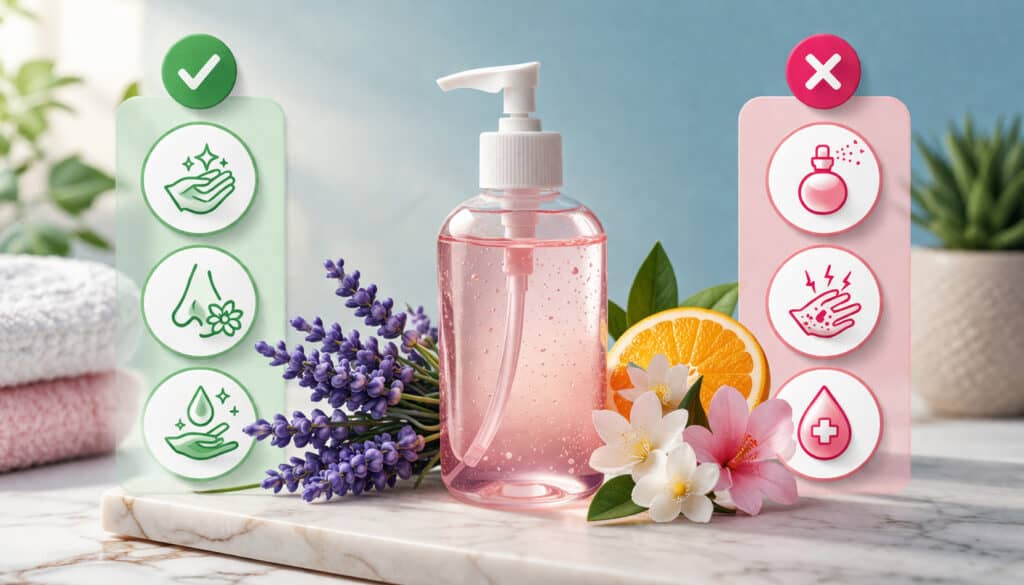
A balanced look at scented hand sanitizer pros and cons helps buyers move beyond personal taste and think about function. Scented sanitizer is not just a “fun” version of the unscented kind.
It changes how the product feels, how long the smell lingers, and how suitable it is for different settings. Depending on the user, those changes can be either a real advantage or a real drawback.
The biggest strength of scented sanitizer is acceptance. If a product smells pleasant, users are often more willing to keep it nearby and use it repeatedly. This is especially true for people who dislike the natural smell of alcohol or associate unscented sanitizer with a harsh, clinical feel. A pleasant scent can make a routine hygiene habit feel easier and more enjoyable.
At the same time, fragrance adds another variable. It can create sensory overload in close quarters, clash with other products, or irritate people with reactive skin or scent sensitivity. That does not make scented sanitizer a bad choice. It simply means it is usually the better fit when personal enjoyment matters more than maximum neutrality.
The main pros of scented sanitizer
Scented sanitizers often feel more approachable. For many buyers, that is their biggest selling point. A citrus, herbal, or light floral note can make sanitizer feel cleaner, fresher, and less medicinal. That can matter in everyday situations like commuting, shopping, using shared carts, or sanitizing before meals away from home.
Another benefit is odor masking. Some unscented sanitizers have a strong alcohol smell that users find unpleasant. Fragrance can soften that first impression and leave behind a lighter, more familiar scent. For personal use, this can be a meaningful quality-of-life improvement.
Scented formulas may also be more appealing in low-stakes environments like personal travel, gym use, handbags, backpacks, or family use around the house. If you enjoy the fragrance and your skin tolerates it well, there is nothing wrong with choosing the option that feels best to use.
Here are some common advantages:
- Better masking of alcohol odor
- More pleasant sensory experience for many users
- Can encourage more regular use
- Popular for personal bottles and casual daily carry
- Offers more variety in product style and feel
The main cons of scented sanitizer
The main downside is that fragrance can be an avoidable trigger. If you already struggle with dry, reactive, or easily irritated hands, fragrance may be one more thing your skin does not appreciate. Even if you do not have a formal allergy, repeated use of heavily fragranced products can become uncomfortable over time.
Another drawback is shared-space compatibility. A scented sanitizer that feels subtle to one person can be overpowering to another, especially in offices, classrooms, waiting rooms, vehicles, elevators, or healthcare-style environments. In these settings, neutral products usually create fewer complaints.
Strongly scented products can also clash with lotion, perfume, sunscreen, or food handling. That may not matter at home, but it can matter at work or in customer-facing roles.
Common drawbacks include:
- Added fragrance may irritate sensitive skin
- Strong scents can bother nearby people
- Less ideal for shared dispensers and scent-sensitive settings
- Fragrance may linger longer than you want
- Some formulas use botanicals or essential oils that feel harsher with frequent use
Unscented Sanitizer for Allergies, Fragrance Sensitivity, and Sensitive Skin
For many buyers, the question is not “Which scent do I like?” but “Which sanitizer can I use without paying for it later with dry, red, uncomfortable hands?” That is where unscented sanitizer for allergies, fragrance sensitivity, and reactive skin becomes especially relevant.
Skin reactions are not always caused by the active ingredient alone. Alcohol can be drying, but many people tolerate alcohol-based sanitizer reasonably well when the formula includes humectants like glycerin and avoids extra irritants.
Fragrance, essential oils, dyes, and botanical blends are often the difference between a tolerable daily sanitizer and one that stings or causes repeated discomfort.
WHO handrub guidance has long recognized that skin tolerability and user acceptance matter in real-world hand hygiene, and glycerol is included in standard formulations to improve skin acceptability.
That does not mean every unscented sanitizer is automatically the best hand sanitizer for sensitive skin. Texture agents, preservatives, and repeated overuse still matter. But if your skin is reactive, starting with a fragrance-free or truly low-additive formula is usually the more practical path.
Why fragrance can be a problem for some users
Fragrance can affect people in different ways. Some experience true allergic contact dermatitis. Others notice stinging, dryness, redness, or discomfort without a formal diagnosed allergy.
Some are bothered more by inhaled fragrance than by skin exposure, especially in enclosed spaces. This is why “sensitive” is a useful everyday word even when the underlying reason varies from person to person.
For hands, the issue is often cumulative. One scented sanitizer use may seem fine. Ten uses layered with frequent washing, cold weather, cleaning products, and low humidity can tell a different story. That is why shoppers often think they react to “sanitizer in general” when they may actually be reacting to the full formula or the frequency of exposure.
If you have eczema-prone skin, cracked knuckles, or a history of reacting to fragranced lotions or soaps, an unscented formula is often the safer starting point. It reduces one major category of possible irritants and makes it easier to identify what your skin tolerates.
What sensitive-skin buyers should look for
If your goal is a sanitizer for skin sensitivity, focus on simplicity rather than marketing language. A good starting formula often includes an appropriate alcohol level, a humectant such as glycerin, and as few nonessential extras as possible.
Public guidance also continues to place soap and water first when hands are visibly dirty, which can help reduce overreliance on sanitizer in the wrong situations.
Look for these buyer-friendly qualities:
- Fragrance-free or very minimal scent profile
- No obvious dyes or colorants
- Humectants such as glycerin or similar moisturizing support
- Clear, easy-to-read ingredient labeling
- Comfortable finish that does not make you want to wipe it off immediately
Avoid assuming that “natural” means gentler. Citrus oils, mint oils, tea tree, and other plant-derived ingredients can still irritate reactive skin. For some users, the simplest bottle on the shelf is the smartest one.
How Fragrance Affects User Experience, Comfort, and Daily Preference
Buying sanitizer is not just a chemistry decision. It is also a habit decision. The formula you choose affects how often you use it, how it feels after multiple applications, and whether it blends into your routine or becomes something you avoid. Fragrance plays a bigger role in that than many people realize.
A pleasant scent can make sanitizer feel cleaner, softer, and less medicinal. It can also improve mood and reduce resistance to use, especially for people who dislike the natural smell of alcohol. That matters in day-to-day life. People are more likely to use products that feel familiar and pleasant.
On the other hand, pleasant is subjective. What feels refreshing in a bathroom or kitchen may feel too strong in a car, classroom, or shared workspace. Fragrance can also change how long the product remains “present” after use. Some buyers love that. Others want sanitizer to do its job and disappear.
This is why a meaningful hand sanitizer fragrance comparison should include more than “smells nice” or “smells strong.” Buyers should consider intensity, how fast the scent fades, how it interacts with other products, and whether the smell becomes tiring with frequent use.
Lingering scent versus quick fade
One of the most overlooked product differences is scent persistence. Some sanitizers release a strong smell at first but fade within seconds. Others leave a noticeable fragrance on the skin for much longer. Neither is automatically better, but the right choice depends on context.
A lingering scent may work well for personal use if you enjoy it and do not mind smelling it while eating, driving, typing, or handling items afterward. A quick-fade scent is usually better for people who want a more polished experience without carrying the smell into everything else they do.
For unscented or fragrance-free formulas, the key question is often how quickly the alcohol smell dissipates. Some formulas smell sharper at first but dry down cleanly. Others leave a noticeable residue or faint base odor that users may dislike.
This is one reason texture and formula style matter alongside scent. If you want to compare formats, this gel, foam, and spray sanitizer comparison adds helpful context.
Comfort is physical and psychological
Comfort is not only about irritation. It is also about whether the product feels mentally easy to use. A fragrance you enjoy can make sanitizer feel less sterile and more like a normal part of your self-care routine. For some users, that emotional comfort matters.
At the same time, psychological comfort can also come from neutrality. People with migraines, sensory sensitivity, or simple dislike of strong scents often feel more comfortable with a product that disappears quickly and does not call attention to itself. In shared settings, neutral comfort tends to win because it is less likely to create conflict.
This is why there is no universal winner in the fragrance-free hand sanitizer vs scented debate. The better option is the one that supports consistent, comfortable use in the life you actually have.
Ingredients to Watch in Both Unscented and Scented Formulas
If you want to buy smarter, start reading sanitizer labels the same way you would read skincare labels. The active ingredient tells you the core germ-fighting component, but the inactive ingredients often tell you how the product will feel, smell, and behave on your skin.
In many alcohol-based sanitizers, ethanol or isopropyl alcohol is the main active ingredient, and public guidance emphasizes using appropriate alcohol strength for community use. Some products may use benzalkonium chloride instead.
Beyond that, inactive ingredients shape the user experience: humectants for moisture retention, thickeners for texture, botanical extracts for scent or marketing appeal, and fragrances to change the overall feel of the product.
For buyers comparing unscented and scented options, the ingredients that deserve extra attention are usually the nonessential ones. These are the components most likely to affect skin comfort and scent tolerance.
Helpful ingredients and neutral add-ons
A good sanitizer does not have to be fancy. In many cases, the most helpful extras are the boring ones. Humectants like glycerin can improve comfort by helping reduce that stripped, tight feeling many people notice after repeated use. WHO guidance on handrub formulations includes glycerol specifically to improve tolerability.
Supportive ingredients may include:
- Glycerin or glycerol
- Simple moisturizing agents
- Easy-to-rinse or quick-drying texture systems
- Minimal dye-free formulas
- Straightforward ingredient lists without a long chain of cosmetic extras
These are especially useful if you sanitize often. Comfort is not just about avoiding bad ingredients. It is also about including a few good ones that make frequent use more manageable.
Ingredients that deserve caution
If you have reactive skin, read carefully for fragrance, parfum, essential oils, strong botanicals, dyes, and flashy cosmetic additives that do not improve the core function of the product. A “luxury feel” formula may be perfectly fine for some users, but it can be the wrong fit for repeated use on compromised skin.
Ingredients that commonly deserve a second look include:
- Fragrance or parfum
- Citrus oils, peppermint oil, tea tree oil, and other essential oils
- Added dyes or colorants
- Heavy botanical blends
- Preservative systems that you already know bother your skin
This does not mean every one of these ingredients is always a problem. It means they are worth noticing, especially if you are trying to narrow down why one sanitizer feels fine and another does not.
Which Option Works Best in Workplaces, Schools, Healthcare-Style Settings, Travel, and Home Use
The best sanitizer scent profile often changes with the environment. A product that works beautifully at home may be a poor choice in a shared office. A travel sanitizer has different priorities than one mounted near a classroom entrance. That is why buying by setting is often more useful than buying by scent preference alone.
In shared or public-facing environments, unscented or fragrance-free options usually make the most sense. They are easier to tolerate across different users, less likely to trigger scent complaints, and more appropriate when the goal is broad acceptance rather than personal enjoyment. In environments where sanitizer is provided for everyone, neutrality is a practical advantage.
In personal environments, scented options can make more sense. If you are the primary user and your skin tolerates fragrance well, there is no rule saying you should choose unscented. The real question is whether the product fits the frequency and context of your use.
Best fit for workplaces, schools, and healthcare-style spaces
In offices, classrooms, reception areas, care facilities, and healthcare-adjacent settings, unscented or fragrance-free sanitizers are usually the safer default. These spaces involve varied users, close proximity, repeated use, and a greater chance that someone nearby will be bothered by strong fragrance.
Workplace and school dispensers should also prioritize comfort and consistency. A neutral formula is less likely to be avoided because of smell. For frequent or institutional use, user acceptance and skin tolerability are not side issues.
They are part of whether hygiene routines actually work in practice. WHO guidance specifically emphasizes tolerability and acceptance as important criteria in choosing handrub products.
Best fit for travel and home use
Travel and home use allow more flexibility. A personal travel bottle can absolutely be scented if you enjoy it and it does not irritate your skin. In fact, many people prefer scented sanitizers for bags, cars, backpacks, and personal desk use because they make quick, on-the-go applications more pleasant.
At home, the answer depends on who shares the product. If one bottle serves the whole household, unscented is often easier. If family members have different preferences, it may be worth keeping one neutral pump bottle in a common area and individual scented bottles for personal use.
For travel, also think about format. Gel, foam, and spray can all feel different in terms of scent intensity and how the product spreads. Spray may feel sharper in enclosed spaces, while gel can leave the scent more concentrated on the skin. That is why scent and format should be considered together, not separately.
How to Choose the Best Hand Sanitizer for Frequent Use and Skin Comfort
If you use sanitizer often, the right choice is rarely the cheapest, strongest-smelling, or trendiest bottle. The best choice is the one your skin can tolerate over time and that you can use comfortably without hesitation. Frequent use changes the buying equation because small annoyances become major ones when repeated many times a day.
A sanitizer that feels slightly drying may become a real problem after repeated applications. A fragrance that seems pleasant in the store may become overpowering by midafternoon. A sticky texture may tempt you to use too little or wipe the product off before it dries. This is why frequent-use buyers should think in terms of total wear experience, not just first impression.
For most people using sanitizer constantly, unscented or lightly scented formulas tend to perform better than strongly fragranced ones. That is not because fragrance is always harmful. It is because repeated exposure magnifies everything: smell, residue, dryness, and irritation risk.
A simple buying checklist for everyday users
When choosing for frequent daily use, ask these questions:
- Does it have a clear active ingredient and appropriate alcohol level?
- Does it include skin-supportive ingredients like glycerin?
- Is the formula fragrance-free, unscented, or lightly scented based on your tolerance?
- Does it dry cleanly without a sticky film?
- Could you realistically use it many times in one day without disliking it?
This checklist works better than buying based on marketing language alone. Sanitizer comfort is practical, not theoretical. The bottle that wins is the one that fits your real routine.
When to switch formulas
Sometimes the best buying decision is realizing your current sanitizer is not working for you. If your hands sting, feel tight, crack more easily, or stay noticeably scented longer than you like, it may be time to switch.
Do not assume all sanitizers will feel that way. Often, moving from heavily fragranced to fragrance-free or from a harsher texture to a better-balanced one makes a noticeable difference.
You may also need separate formulas for separate situations. A fragrance-free pump for home and work, plus a lightly scented travel bottle for errands, is a practical solution for many people. Buying smarter does not always mean choosing one perfect bottle. It can mean matching the product to the use case.
Common Myths About Unscented and Scented Sanitizers
Buying mistakes often come from myths that sound reasonable but do not hold up in real use. Clearing these up can save money, reduce irritation, and help you choose more confidently.
One myth is that scented sanitizer is always harsher. Not necessarily. Some scented formulas are well-balanced and comfortable, while some unscented ones can still feel drying or unpleasant.
Scent is only one part of the formula. Another myth is that unscented sanitizer is always fragrance-free. As discussed earlier, that is not guaranteed. Label-reading matters.
A third myth is that scent makes sanitizer stronger. It does not. Fragrance may improve the experience, but it does not replace the need for an appropriate active ingredient and correct use. Public health guidance remains focused on active ingredients and technique, not perfume level.
Myth: fragrance-free means no smell at all
Fragrance-free does not mean odorless. It means the formula is not intentionally fragranced. You may still notice the smell of alcohol or other base ingredients during application. That is normal and often fades quickly.
Some buyers misread this and assume the product is mislabeled. In reality, fragrance-free products can still have a temporary product smell. The important distinction is that the smell is not coming from added perfume designed to linger or mask the formula aggressively.
Myth: unscented is automatically best for everyone
Unscented is often a safe default, but it is not always the best answer for every user. Some people genuinely prefer scented sanitizer and use it more consistently because it feels better to them. If their skin tolerates it and the setting is appropriate, scented sanitizer can be the better practical choice.
The smarter view is this: unscented usually wins for sensitivity and shared settings, while scented can win for personal preference and habit consistency. The better product is the one that supports correct, repeated use without causing problems.
Frequently Asked Questions
Conclusion
Choosing between unscented and scented sanitizer is not a minor style decision. It is a practical buying choice that affects comfort, habit consistency, shared-space compatibility, and skin tolerance. The real difference is not that one is universally better than the other. It is that they solve different problems.
If your priority is neutrality, reduced fragrance exposure, shared use, or sensitive skin support, unscented or fragrance-free sanitizer is usually the stronger choice. If your priority is a more pleasant user experience and you know your skin handles fragrance well, a scented sanitizer may fit your routine better.
The smartest buyers think beyond the front label, check ingredients, consider the setting, and choose based on how the product will actually be used.
In the end, the best sanitizer is the one that combines appropriate effectiveness with a feel and scent profile you can live with day after day. That is what turns a bottle from a casual purchase into a product you will actually use consistently and comfortably.