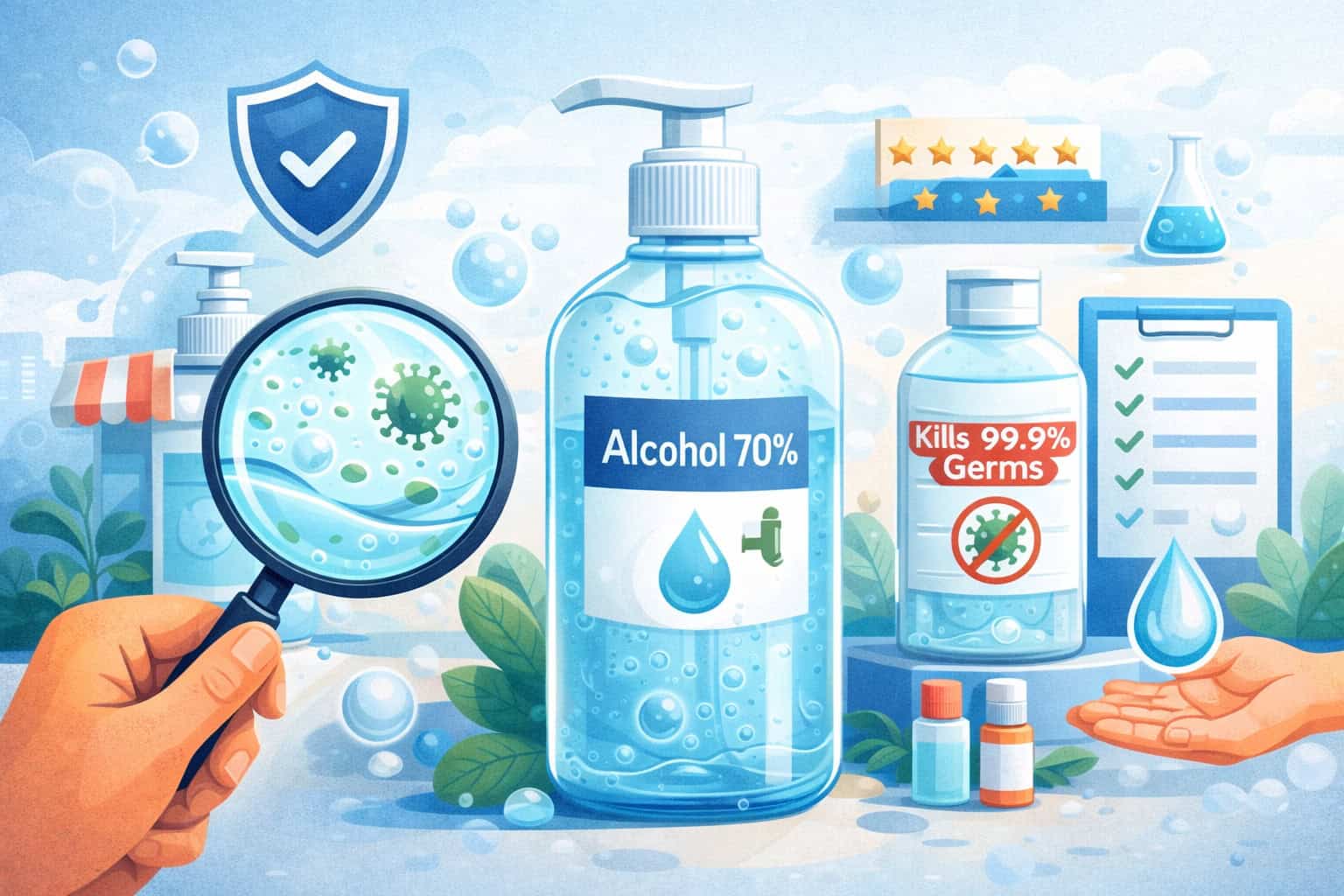
High-quality hand sanitizer products can be a convenient, effective hygiene tool—when you know what to look for. The challenge is that shelves (and online listings) are crowded with gels, sprays, foams, wipes, and “natural” formulas that sound trustworthy but don’t always deliver the protection, safety, or skin comfort you expect.
And because hand sanitizer products are often treated like an everyday commodity, people may not notice the small label details that separate a high-quality hand sanitizer from a weak, irritating, or even potentially unsafe one.
To spot a high-quality hand sanitizer, think in layers: germ-killing performance, safety and purity, label legitimacy, skin feel and usability, and how the product is stored and used. Performance starts with the right active ingredient and the right concentration.
Safety includes avoiding contamination risks (for example, unsafe alcohol sources or unwanted impurities), plus choosing packaging that reduces evaporation and tampering.
Legitimacy means the listing and label give you enough information to identify who made it, what’s inside, and how to use it. Usability matters because even a high-quality hand sanitizer won’t help much if it’s sticky, stings, or dries your hands so badly that you stop using it.
This guide walks through the most reliable signals of high-quality hand sanitizer products, how to compare formats and claims, what to avoid, and how to choose the right option for home, travel, school, food handling, or workplace settings—plus what’s likely to change next as manufacturers and regulators keep tightening expectations around quality and testing.
What “High-Quality Hand Sanitizer” Really Means

A high-quality hand sanitizer is not just “strong.” It’s consistently effective, safe to use as directed, properly labeled, and designed to work in real life—in your bag, at your desk, at a checkout counter, in a car cupholder, or at the entrance to a clinic.
Effectiveness is about whether it can reduce many common germs on hands when soap and water aren’t available. Public health guidance emphasizes that hand sanitizer works best when it contains enough alcohol to do the job, and that soap-and-water handwashing remains the gold standard in many situations.
Quality also includes formulation stability. Alcohol can evaporate if the cap doesn’t seal well or the packaging is flimsy, and a product that started at an effective concentration may drift downward over time.
High-quality hand sanitizer products are designed and packaged to maintain potency through their stated shelf life. They also avoid sloppy marketing that encourages misuse (for example, implying sanitizer replaces handwashing in every scenario).
Finally, high-quality hand sanitizer products are traceable. You should be able to identify the manufacturer, lot number, and key label information.
If you ever need to check a recall, report a reaction, or verify legitimacy, the label should help you do that quickly. In recent years, regulators have repeatedly warned consumers about certain unsafe products and emphasized checking recall information rather than relying on outdated lists.
The #1 Label Check: Alcohol Type and Alcohol Percentage
If you only do one thing to spot a high-quality hand sanitizer, do this: confirm the alcohol percentage and the alcohol type on the label. Health guidance consistently points to alcohol-based hand sanitizer with at least 60% alcohol as the baseline for effectiveness when soap and water aren’t available.
Alcohol percentage: what you want to see
High-quality hand sanitizer products typically fall in the 60%–95% alcohol range. Below that range, performance can drop sharply. Above that range, you may see diminishing returns in practical use because alcohol needs some water content to penetrate and denature proteins effectively, and ultra-high alcohol formulas can flash off too fast.
Look for the percentage expressed as “% v/v” (by volume) or sometimes “% w/w” (by weight). Either can be fine—what matters is that the product clearly states the concentration. If a product doesn’t show a percentage at all, that’s a strong reason to skip it.
Alcohol type: ethanol vs isopropyl alcohol
High-quality hand sanitizer products most commonly use:
- Ethanol (ethyl alcohol), or
- Isopropyl alcohol (2-propanol)
Either can be appropriate, but the formula should clearly name the active ingredient and the concentration. If you see vague wording like “contains alcohol” with no specifics, that’s not the transparency you want.
Beware “alcohol-free” and “essential-oil” positioning
Some alcohol-free products rely on other antimicrobials. They may have niche uses, but they often do not match the broad, quick reduction you get from alcohol-based hand sanitizer in everyday situations.
If your goal is a high-quality hand sanitizer for general public use, alcohol-based products that meet the minimum concentration are typically the safer bet for predictable performance.
Drug Facts and Other Legit-Looking Label Signals You Should Not Ignore
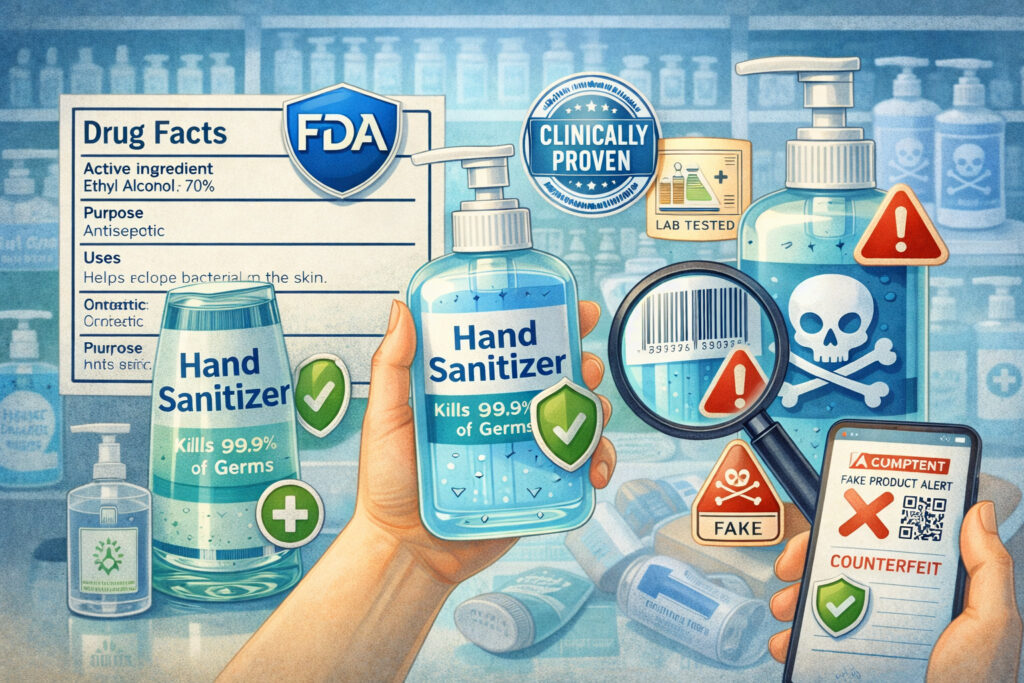
A high-quality hand sanitizer product doesn’t hide behind pretty branding. It gives you clear, standardized information, especially when it is marketed as an over-the-counter antiseptic product.
Look for a complete “Drug Facts” panel when applicable
Many alcohol-based hand sanitizers are regulated as nonprescription drug products. Import and regulatory guidance repeatedly describes alcohol-based hand sanitizers as drug products and highlights expectations around how they’re represented and marketed.
A robust label typically includes:
- Active ingredient(s) (ethanol or isopropyl alcohol) and strength
- Purpose (for example, “Antiseptic”)
- Uses (hand sanitizing when soap/water not available)
- Warnings (flammable, external use only, keep out of eyes, etc.)
- Directions (how much to apply, rub time)
- Inactive ingredients (glycerin, aloe, fragrance, thickener, etc.)
- Questions / contact info (phone or website)
- Lot number and expiration date
Lot numbers and expiration dates are quality signals
High-quality hand sanitizer products are traceable. Lot numbers are critical for recalls and quality control. Expiration dates matter because alcohol can evaporate, packaging can degrade, and performance may not be guaranteed beyond the stated period.
Suspicious gaps that often signal low quality
Be cautious if:
- There’s no manufacturer or distributor info
- There’s no lot number
- The label uses odd grammar, inconsistent fonts, or missing warnings
- The online listing photos don’t match the delivered product
- The product name is extremely similar to a trusted brand but slightly “off”
High-quality hand sanitizer is boring in the best way: it is consistent, specific, and compliant-looking.
Safety and Purity: How to Avoid Contaminated or Poorly Sourced Products

A high-quality hand sanitizer product is not only effective—it’s also safe from contamination risks associated with alcohol sourcing and manufacturing controls.
Over the past several years, regulators and independent testing have raised concerns about unsafe contaminants and substituted alcohols, which is a major reason to buy from reputable sources and demand clear labeling.
Methanol risk: the contamination you should know about
Methanol (wood alcohol) is toxic and should not be used as the active alcohol in hand sanitizer. Regulatory guidance has specifically focused on testing alcohol supplies to avoid methanol contamination or substitution.
A high-quality hand sanitizer manufacturer relies on validated sourcing and testing so the alcohol used is what the label says it is.
Benzene and other impurities: why quality control matters
Certain recalled products and manufacturer alerts have highlighted that unwanted impurities (including benzene concerns in some drug and aerosol contexts) can become a testing and compliance focus.
As a shopper, you won’t be running lab tests—but you can reduce risk by choosing products with strong traceability and avoiding sketchy listings.
“This page is no longer being updated” matters
One practical tip: some older “do not use” lists are no longer actively updated, with agencies directing consumers to recall databases and updated recall channels instead.
So, when you’re checking a questionable product, rely on current recall lookups and official recall sources, not a years-old static list.
High-quality buying habits that reduce contamination risk
- Buy from reputable retailers or directly from known manufacturers
- Avoid too-good-to-be-true bulk deals with unclear origins
- Prefer products with complete labeling and traceable lot codes
- Be extra cautious with unsealed products or broken tamper features
High-quality hand sanitizer products come from quality systems—not just a nice scent.
Performance in the Real World: Rub Time, Amount, and When Sanitizer Isn’t Enough
Even the highest-quality hand sanitizer can underperform if it’s used incorrectly. That’s why true “quality” includes how well the product supports correct use.
How much to use (and why it matters)
A high-quality hand sanitizer should dispense enough product to fully wet your hands. If you’re using too little, coverage gaps are common—especially on fingertips, thumbs, and around nails. Many people stop rubbing too soon because the product feels “done,” but effective use generally means rubbing until hands are dry, not wiping it off early.
Rub time and technique
Rub all surfaces: palms, backs of hands, between fingers, thumbs, and fingertips. If your sanitizer evaporates instantly, you may not have used enough—or the formula may be overly thin and fast-flashing. High-quality hand sanitizer products often balance evaporation with a usable “work time” so you can spread it properly.
When hand sanitizer is not the best tool
Health guidance emphasizes that handwashing with soap and water is best in most situations, and sanitizer is a backup when soap and water aren’t available.
Also, sanitizer is less ideal when hands are visibly dirty or greasy. In those situations, high-quality hand sanitizer may still struggle because dirt and oils can physically shield germs. A high-quality hygiene routine means knowing when to switch tools.
High-quality sanitizer supports compliance
If a product is painfully drying, leaves heavy residue, or smells harsh, people tend to underuse it. A high-quality hand sanitizer product is designed to be used often without misery—because consistent use is part of real protection.
Ingredients Beyond Alcohol: Moisturizers, Fragrances, and Skin-Friendliness
Two products can have the same alcohol percentage and still feel completely different. High-quality hand sanitizer products usually invest in the “inactive” side of the formula so users can tolerate frequent use.
Moisturizers that often improve comfort
Common supportive ingredients include:
- Glycerin (humectant)
- Aloe
- Propylene glycol or other humectants
- Light emollients that reduce tightness
A high-quality hand sanitizer uses these ingredients to reduce cracking and dryness without making the product slimy or sticky.
Fragrance and essential oils: quality vs irritation
Fragrance is not automatically “bad,” but it is a common trigger for irritation, headaches, or sensitivity. If you have sensitive skin, eczema, or frequent sanitizer use at work, a high-quality hand sanitizer for you may be:
- Fragrance-free
- Dye-free
- Minimal ingredient list
Be cautious with heavy essential oil blends. They can smell pleasant, but they can also irritate skin—and they do not replace the need for adequate alcohol concentration when you’re selecting a high-quality hand sanitizer for everyday germ reduction.
Sticky residue is a quality signal
Some residue can come from thickening agents or moisturizers. But if the residue is heavy, it may discourage correct use. High-quality hand sanitizer products aim for a finish that feels clean, not coated.
Packaging and Format: Gel vs Foam vs Spray vs Wipes (And What Quality Looks Like in Each)
High-quality hand sanitizer products come in multiple formats, and the “best” format depends on how and where you use it. The quality clues are partly about the container and partly about evaporation control.
Gel
Gel is popular because it’s easy to control and less likely to drip. A high-quality hand sanitizer gel:
- Dispenses consistently
- Spreads without clumping
- Dries without leaving thick residue
- Comes in a cap that seals tightly to reduce evaporation
Foam
Foam can feel lighter and spreads quickly. A high-quality hand sanitizer foam needs:
- A reliable pump that doesn’t clog
- Enough volume per pump to cover hands
- A formula that doesn’t collapse instantly before you spread it
Spray
Sprays are convenient for travel and quick use, but they can encourage under-application. A high-quality hand sanitizer spray should:
- Clearly instruct how much to apply
- Have a sprayer that delivers consistent output
- Use packaging designed to reduce leakage and evaporation
Wipes
Sanitizing wipes can be useful, but the quality depends on the saturation level and seal integrity. If wipes dry out quickly after opening, you’re losing potency and usability. For wipes, high-quality hand sanitizer performance is closely tied to packaging quality and closure design.
The packaging quality test you can do at home
- Does the cap seal firmly?
- Does it leak when stored sideways?
- After a week in a bag, does it smell weaker (a hint of evaporation)?
- Is the dispenser consistent?
High-quality hand sanitizer products respect the fact that alcohol is volatile—and package accordingly.
Red Flags: Claims, Listings, and Branding Tricks That Often Signal Low Quality
Knowing what to avoid is as important as knowing what to buy. Low-quality hand sanitizer products often reveal themselves through exaggerated claims and sloppy transparency.
Overblown medical claims
Be wary of products that claim to “cure,” “treat,” or “prevent” disease in a way that goes beyond typical hand hygiene claims. High-quality hand sanitizer products focus on practical use, not miracle marketing.
No real company behind it
If you can’t find a legitimate manufacturer address, customer service contact, or brand footprint beyond a single online listing, treat it as suspicious. High-quality hand sanitizer products come from accountable companies.
“Too cheap for the size” bulk deals
Sometimes low-quality products appear during demand spikes or via liquidation channels. Price alone doesn’t prove quality, but extreme bargains with vague labeling increase risk.
Weird smell can be a warning sign
A strong chemical odor, paint-thinner vibe, or unusually harsh fumes can signal poor-quality alcohol or formula imbalance. High-quality hand sanitizer products generally smell like typical alcohol with mild additives—sharp but not alarming.
The product photo doesn’t match the delivered label
Mismatches can indicate relabeling, gray-market inventory, or counterfeit branding. High-quality hand sanitizer should match its advertised label details exactly, including the alcohol percentage.
How to Pick the Right High-Quality Hand Sanitizer for Specific Use Cases
A high-quality hand sanitizer for a daycare pickup line may not be the same as a high-quality hand sanitizer for a warehouse shift or a restaurant front-of-house stand.
For families and school bags
Prioritize:
- At least 60% alcohol
- Secure cap (to reduce leaks)
- Fragrance-free if kids are sensitive
- Clear warnings and supervision guidance (especially because sanitizer is not for ingestion)
For workplaces and public dispensers
Prioritize:
- Reliable dispensing (consistent volume)
- Refill systems with traceability (avoid mystery refills)
- Clear label on refill containers
- Skin-friendly formula for repeated daily use
For food handling and kitchens
Prioritize:
- Knowing sanitizer isn’t a substitute for required handwashing in many food contexts
- Fragrance-free or low-odor options
- A high-quality hand sanitizer that dries cleanly and doesn’t leave sticky residue that might transfer to surfaces
For travel and commuting
Prioritize:
- Leak resistance
- Smaller sizes that still list complete label info
- Packaging that tolerates temperature swings (cars and luggage)
High-quality hand sanitizer choices get better when you match the product to the scenario.
Storage, Heat, and Shelf Life: Keeping a High-Quality Hand Sanitizer Effective
You can buy a high-quality hand sanitizer and still end up with a low-performance product if you store it poorly.
Heat and evaporation
Alcohol evaporates. Leaving a bottle in a hot car for long periods can speed evaporation, increase leakage pressure, and degrade the user experience. High-quality packaging helps—but it can’t break physics.
Expiration dates are not decoration
High-quality hand sanitizer manufacturers include expiration dates because potency and stability are not guaranteed forever. If you find an old bottle at the bottom of a bag, check the date and the smell/feel. If it has changed dramatically, replace it.
Watch for changes in texture
If a gel separates, becomes watery, or develops clumps, it may be degraded or poorly formulated. High-quality hand sanitizer products remain consistent through normal use conditions.
Refilling small bottles: a common quality trap
Refilling travel bottles from bulk containers can be fine, but it introduces:
- contamination risk
- labeling loss (you forget the alcohol percentage and lot number)
- evaporation if the travel bottle seals poorly
If you refill, label the bottle with the alcohol percentage and refill date so you keep a “high-quality hand sanitizer” standard even in your travel setup.
Regulatory and Manufacturing Clues That Indirectly Signal Quality
Most shoppers won’t read regulatory policy documents, but it helps to understand one core idea: high-quality hand sanitizer products come from controlled manufacturing environments with testing expectations that have become more explicit over time.
Why manufacturing obligations matter
Alcohol-based hand sanitizers are treated as regulated drug products in many contexts, with compliance expectations around labeling, manufacturing, and marketing.
Testing emphasis is real
Regulators have issued guidance focused on testing alcohol supplies for dangerous contaminants like methanol, reflecting a real-world risk that emerged in the broader market.
From a consumer viewpoint, this increases the value of reputable brands that can demonstrate consistent quality practices.
Industry signals: facility fees and compliance pressure
Programs and fee structures for OTC manufacturing can affect which manufacturers stay in the market and how seriously ongoing compliance is taken. For example, FDA communications around facility fee obligations for manufacturers highlight that ongoing manufacturing ties into ongoing regulatory expectations.
You don’t need to memorize fee categories—but you can expect higher-quality players to remain, while opportunistic “pop-up” brands may fade.
High-quality hand sanitizer is increasingly a compliance-driven product category, not just a cosmetic accessory.
Future Predictions: What High-Quality Hand Sanitizer Products Will Look Like Next
The definition of “high-quality hand sanitizer” is likely to keep evolving, mainly in three directions: purity/testing, skin health, and sustainability + user experience.
1) More emphasis on impurity monitoring
As regulators and third-party testers highlight impurities as an ongoing concern, more brands will advertise quality-control signals—batch testing, sourcing transparency, and manufacturing standards. Manufacturer alerts and recalls in the broader drug space keep impurity awareness high, and hand sanitizer remains part of that conversation.
2) Skin barrier-friendly formulas will become a bigger selling point
People who sanitize frequently want a high-quality hand sanitizer that doesn’t wreck their hands. Expect more:
- fragrance-free lines
- dermatologist-tested positioning
- barrier-support ingredients (while maintaining required alcohol concentration)
3) Better dispensers and smarter dosing
Public dispensers and workplace stations will likely move toward more consistent dosing and reduced waste. This is both a hygiene improvement and a cost-control play. The “quality” conversation will expand from just the liquid to the system (dispenser + refill + traceability).
4) Sustainability without compromising potency
Refillable packaging and recycled materials will grow, but quality brands will need to prove they can do that without leakage, evaporation, or contamination. High-quality hand sanitizer will increasingly mean “effective and responsibly packaged.”
FAQs
Q.1: What alcohol percentage should a high-quality hand sanitizer have?
Answer: A high-quality hand sanitizer should generally have at least 60% alcohol to be effective when soap and water aren’t available. This aligns with public health guidance and is one of the clearest label checks you can do.
Q.2: Is ethanol better than isopropyl alcohol in a high-quality hand sanitizer?
Answer: Both can be effective when used at an appropriate concentration. A high-quality hand sanitizer clearly identifies which alcohol it uses and the exact percentage. Choose based on tolerance (smell, skin feel) and trust in the brand’s labeling and traceability.
Q.3: Are “natural” or alcohol-free products considered high-quality hand sanitizer?
Answer: They can be high-quality in formulation craftsmanship, but they may not provide the same broad, quick germ reduction that alcohol-based hand sanitizer provides for general use. If your goal is everyday germ reduction, alcohol-based high-quality hand sanitizer that meets the minimum alcohol guidance is usually the safer, more predictable choice.
Q.4: How can I tell if a high-quality hand sanitizer is counterfeit?
Answer: Look for missing lot numbers, missing manufacturer contact info, unclear alcohol percentage, mismatched listing photos, and odd label inconsistencies. Buy from reputable retailers, and avoid listings that don’t show a clear “Drug Facts” style panel when applicable.
Q.5: Does a high-quality hand sanitizer expire?
Answer: Yes. Even a high-quality hand sanitizer can lose effectiveness over time due to alcohol evaporation and packaging wear. Check the expiration date and replace old bottles, especially if the smell or texture has changed.
Q.6: Should I rely on old “do not use” lists to evaluate quality?
Answer: Not by itself. Some older “do not use” lists are no longer actively updated, and consumers are directed toward recall information and recall databases for the most current status.
Conclusion
To consistently spot a high-quality hand sanitizer product, start with the basics and then refine based on your needs. First, confirm the sanitizer contains a clearly stated alcohol type (ethanol or isopropyl alcohol) at a clearly stated concentration—ideally at least 60%—because that’s the most reliable performance indicator for everyday use.
Next, check for a complete, transparent label: active ingredient, directions, warnings, manufacturer contact details, lot number, and expiration date. High-quality hand sanitizer products are traceable and specific, not vague.
Then evaluate safety cues: buy from reputable sellers, avoid weirdly cheap bulk deals, and be cautious with products that lack traceability—especially because regulatory guidance has emphasized the importance of preventing dangerous contamination and alcohol substitution.
Finally, choose a formula and format you will actually use correctly: a high-quality hand sanitizer that feels tolerable (not painfully drying, not unpleasantly sticky) supports consistent, proper use, which is where real-world protection comes from.
Looking ahead, “high-quality hand sanitizer” will likely keep shifting toward tighter impurity awareness, better dosing systems, and more skin-friendly formulas—meaning the best products will combine strong germ-killing basics with better transparency, better packaging, and better user experience.
If you apply the label checks and red-flag filters from this guide, you’ll be able to choose high-quality hand sanitizer products with confidence—today and as the market evolves.