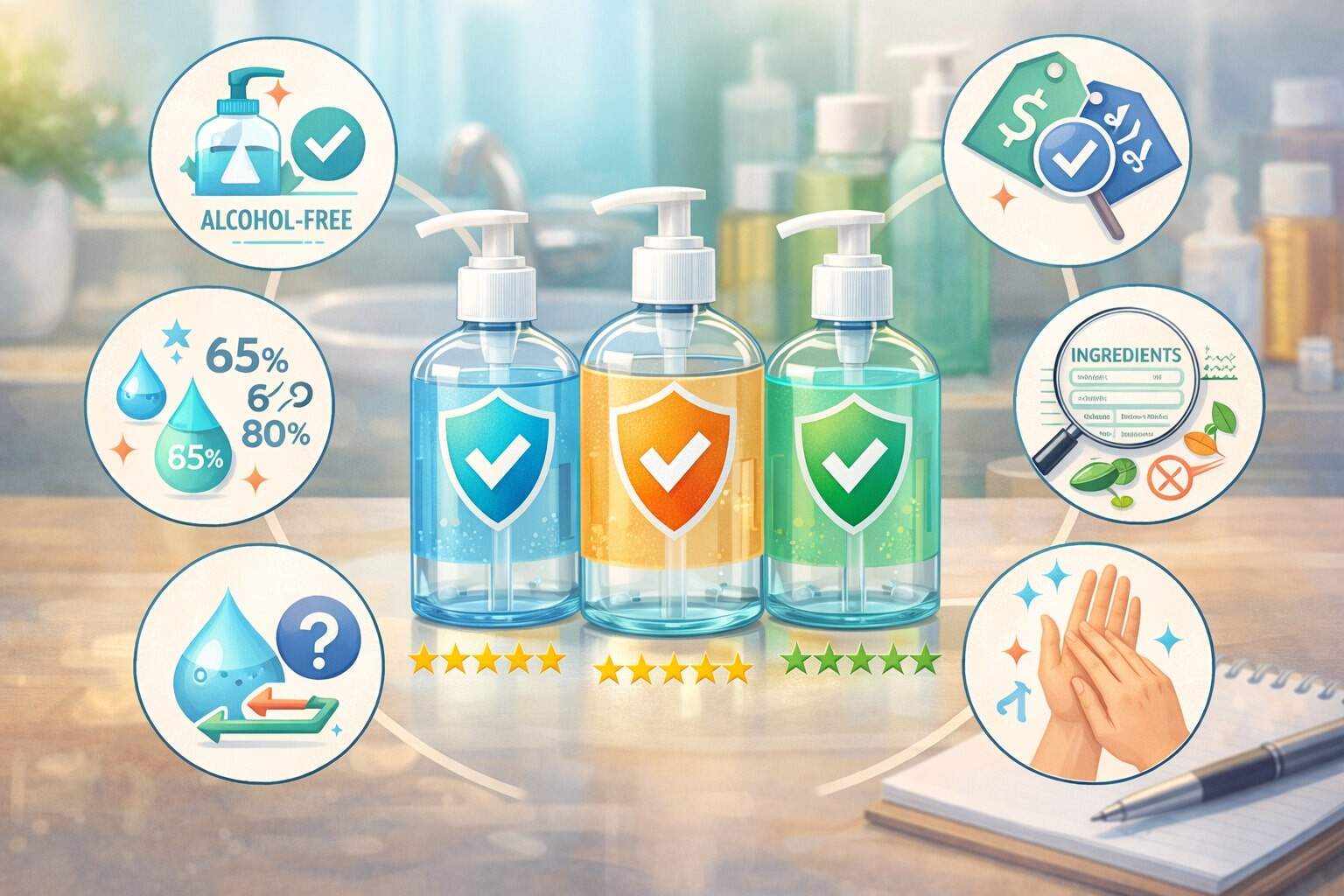
If you’ve ever stood in a store aisle staring at dozens of bottles and wondering which one is actually “better,” you’re not alone. Learning how to compare hand sanitizer brands is less about hype and more about reading labels, matching a product to your real-life use, and avoiding a few common quality traps.
A good brand should help you clean hands effectively, feel comfortable on skin, and be easy to use often. The tricky part is that two products can look similar—same bottle size, same scent, similar marketing—yet perform differently based on their active ingredient, alcohol percentage, formulation, and quality controls.
This guide breaks down a practical, label-first approach to compare hand sanitizer brands in a way that’s easy to follow and strong enough to make confident decisions for home, travel, work, schools, and customer-facing environments. It also includes realistic future trends so you can buy smarter today and stay ahead of what’s next in hygiene products.
What “Effective” Really Means When You Compare Hand Sanitizer Brands
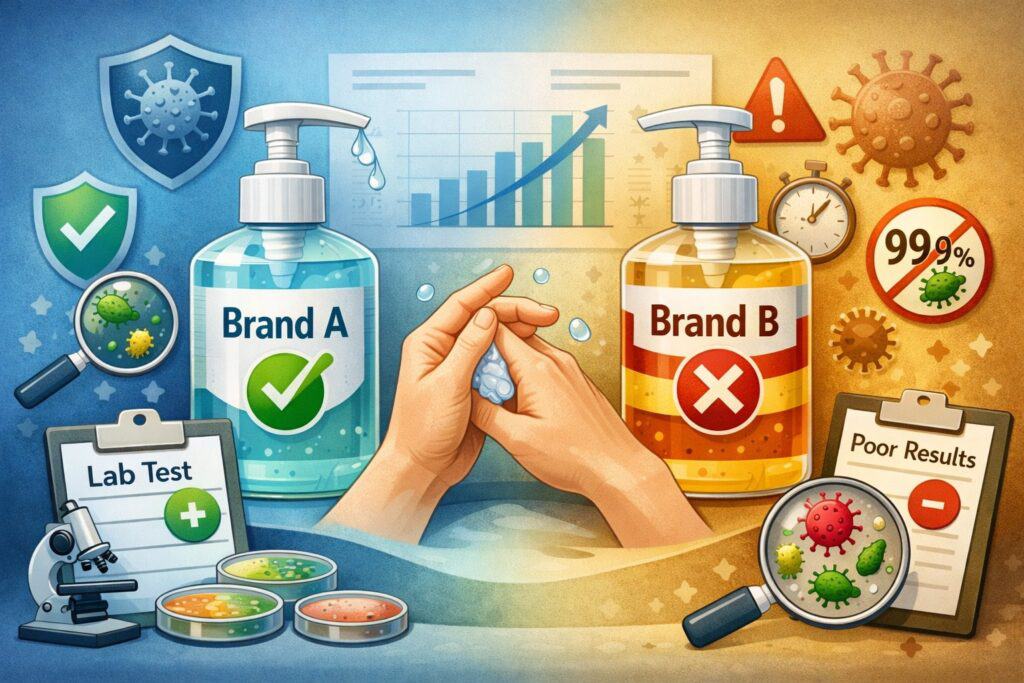
When people compare hand sanitizer brands, they often focus on scent, price, or how quickly the gel dries. But “effective” should mean the sanitizer helps reduce germs on hands when soap and water aren’t available, and it does so consistently with proper use.
Public health guidance generally emphasizes that handwashing is best in most situations, and sanitizer is the backup option when you can’t wash. Many recommendations specify choosing a sanitizer with at least 60% alcohol for routine community use.
That single number is one of the fastest ways to compare hand sanitizer brands because it separates “looks legit” from “meets the baseline.”
Effectiveness also depends on how you use it. You need enough product to cover all hand surfaces and you must rub until dry. If a sanitizer dries too fast (often from using too little), it may not work as well as you expect.
This is why comparing “dry time” alone can mislead shoppers—faster isn’t automatically better if it encourages under-dosing.
Finally, effectiveness has a context. If your hands are visibly dirty or greasy, sanitizer may be less reliable than soap and water. So the best way to compare hand sanitizer brands is to compare them for the situation you’re actually in—commuting, childcare, healthcare-adjacent settings, customer service, or travel—rather than trying to crown one “best” for everyone.
Compare Alcohol-Based vs Alcohol-Free: The Most Important Brand Divider
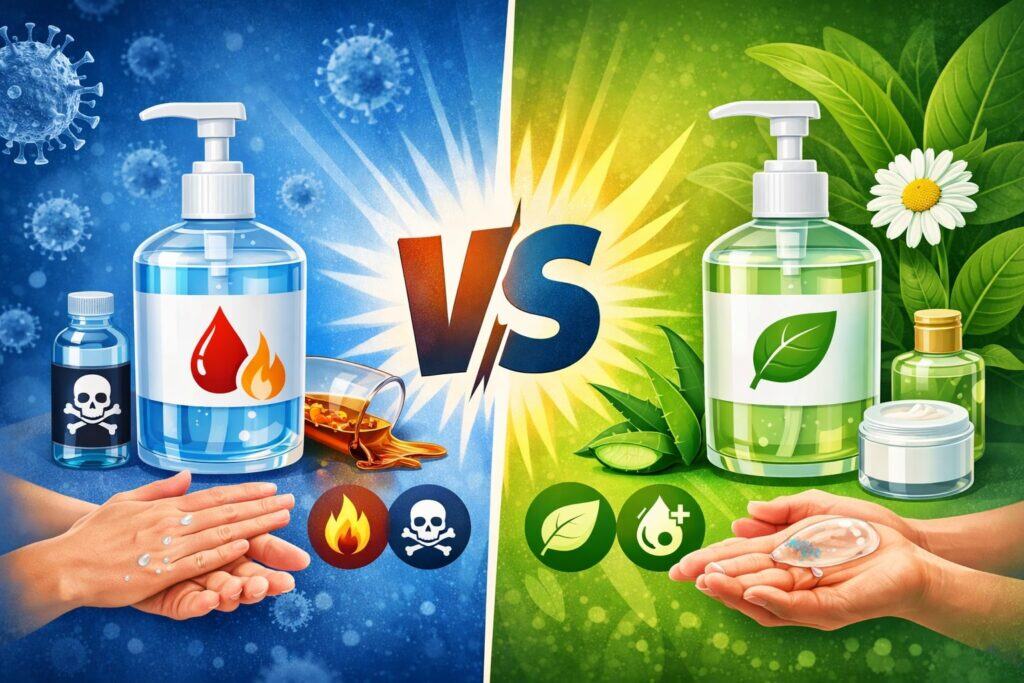
A lot of brand confusion disappears once you split the market into alcohol-based products and alcohol-free products. This one choice impacts germ coverage, skin feel, dry time, and even smell.
Alcohol-based sanitizers typically use ethyl alcohol (ethanol) or isopropyl alcohol as the active ingredient. Guidance widely points consumers toward alcohol-based sanitizer at or above the minimum alcohol percentage threshold for everyday use.
When you compare hand sanitizer brands in this category, alcohol percentage becomes a primary metric, but it’s not the only one. The full formula matters because additives can change evaporation rate, stickiness, and irritation.
Alcohol-free sanitizers often use benzalkonium chloride (a quaternary ammonium compound) or other actives. Some studies suggest benzalkonium chloride formulations can show comparable effectiveness in certain lab settings, but evidence strength and breadth can vary by organism and context, which is why many guidelines still emphasize alcohol-based options for general public use.
If you’re trying to compare hand sanitizer brands for frequent daily use, alcohol-free products may feel gentler for some people, but the tradeoff is that you should be more cautious about performance claims and intended use.
A smart approach is to choose alcohol-based as your default for broad coverage and keep an alcohol-free option as a secondary choice when alcohol causes significant dryness and you’ve verified the product’s labeling and credibility.
How to Compare Hand Sanitizer Brands by Alcohol Percentage and Alcohol Type
To compare hand sanitizer brands quickly, start with the “Active ingredient” line on the Drug Facts label. Look for ethanol (ethyl alcohol) or isopropyl alcohol and then confirm the percentage.
Many public health recommendations highlight at least 60% alcohol as a baseline. If a product doesn’t clearly show the percentage on the label, treat that as a red flag. A credible brand makes the key information easy to find.
Next, consider the alcohol type. Ethanol and isopropyl alcohol are both common. You’ll see differences in smell (isopropyl can smell stronger), and some people find one feels harsher than the other. When you compare hand sanitizer brands, don’t assume “higher percentage is always better.”
Extremely high alcohol can evaporate very quickly, and if the formula is thin or poorly balanced, users may apply too little. A well-designed formula encourages correct dosing.
Also look for product form compatibility with the percentage. Foams and sprays sometimes feel lighter and can encourage better coverage for certain users, while thick gels can lead to missed areas if people don’t rub thoroughly. Your goal in comparing hand sanitizer brands is to pick the one that will actually be used correctly by the people using it.
Finally, remember that effectiveness is tied to contact time created by rubbing until dry. If you want a real-world test while you compare hand sanitizer brands, dispense your usual amount and see whether you can rub hands fully (palms, backs, between fingers, fingertips, thumbs) before it dries.
Read the Drug Facts Label Like a Pro: A Step-by-Step Brand Comparison
If you want a reliable way to compare hand sanitizer brands, the Drug Facts label is your best friend. Marketing claims are optional. The label is where a brand must list active ingredient, purpose, uses, warnings, directions, and inactive ingredients.
Start at the top: “Active ingredient” and “Purpose.” This tells you whether it’s alcohol-based and what type of alcohol it uses. Next, read “Uses.” Many labels say “to help reduce bacteria on the skin.” Some brands use vague wording that sounds impressive but doesn’t add real meaning.
Then check “Warnings.” This section matters more than people think because it signals the risks you need to manage: flammability for alcohol-based products, avoiding eye contact, and supervising children. If you’re comparing brands for school bags, sports teams, or waiting rooms, warnings matter as much as scent.
The “Directions” section helps you compare ease of use. If a sanitizer is too watery, directions might still be fine, but user experience can make people rush. Brands that create a pleasant, non-sticky finish can improve compliance—meaning people actually sanitize more often.
Finally, scan inactive ingredients. This is where you compare hand sanitizer brands for skin feel, fragrance, allergens, and residue. A “better” brand for you might simply be the one with fewer irritants, especially if you sanitize many times per day.
Active Ingredients vs Inactive Ingredients: What Matters Most When You Compare Hand Sanitizer Brands
When you compare hand sanitizer brands, active ingredients determine germ-killing potential, while inactive ingredients determine whether you’ll tolerate the product long-term.
The active ingredient is non-negotiable. If you’re choosing alcohol-based sanitizer, look for ethanol or isopropyl alcohol and confirm the percentage meets baseline guidance. A “natural” brand that smells great but doesn’t meet basic label expectations isn’t a smart buy.
Inactive ingredients, however, can be the difference between a brand you use daily and one you avoid. Common additives include glycerin, aloe, or other humectants intended to reduce dryness.
Some brands use heavy fragrance, essential oils, or botanical extracts that can trigger irritation for sensitive skin. If you are comparing hand sanitizer brands for a workplace, fragrance can also be a comfort and accessibility issue for employees and customers.
Pay attention to residue. Some formulas leave a tacky film that makes people wipe hands on clothing, reducing the benefit. If you run a customer-facing counter or you’re choosing sanitizer for a team, that sticky feel can quietly reduce usage.
Also note that “dermatologist tested” is not the same as “hypoallergenic.” A practical way to compare hand sanitizer brands is to look for clearly stated fragrance-free options, minimal ingredient lists, and the presence of moisturizers that don’t increase stickiness.
Compare Formats and Dispensers: Gel vs Foam vs Spray vs Wipes
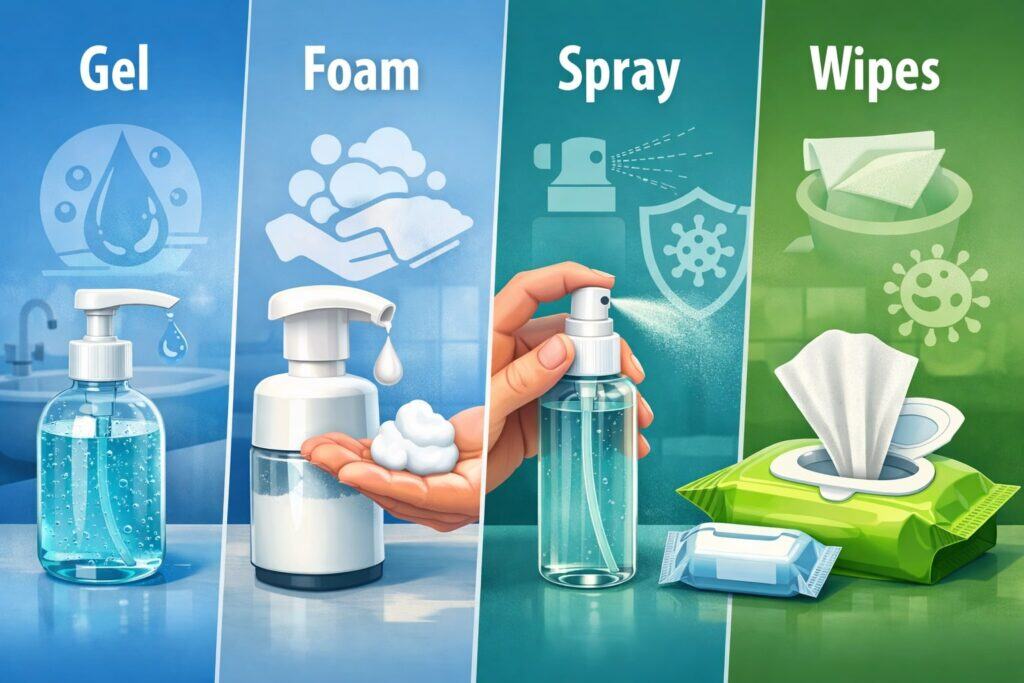
Many people compare hand sanitizer brands as if the product is only the liquid inside. In real life, format and dispenser design can matter just as much because they influence coverage, dosing, mess, and whether people use sanitizer consistently.
Gel is the most common. It’s familiar and portable, and it’s less likely to drip. But some gels are so thick that people don’t spread them across fingertips and thumbs thoroughly.
Foam feels lighter and can spread quickly, which can improve coverage for some users—especially kids who dislike sticky textures. Spray is convenient for quick application and can feel clean, but it’s easier to under-apply, and it can create more inhalation exposure in small spaces if used heavily.
Wipes are a different category. They can be useful for wiping grime first, but they may not always be your best “hand sanitizer substitute” unless you confirm what the wipe is designed to do. Some are more like hand wipes than true sanitizer. When you compare hand sanitizer brands, treat wipes as a separate comparison and check the labeling carefully.
Dispensers matter for shared spaces. A pump that dispenses too little causes under-dosing. A pump that clogs frustrates users and reduces compliance. For offices, clinics, gyms, and retail counters, comparing hand sanitizer brands should include comparing dispenser reliability and refill availability, not just the bottle’s front label.
How to Compare Hand Sanitizer Brands by Dry Time, Coverage, and User Compliance
A sanitizer that works in theory but isn’t used correctly fails in practice. That’s why the smartest way to compare hand sanitizer brands includes a “human behavior” lens: will people actually use it, use enough, and rub long enough?
Dry time is a key clue. If a product dries in a few seconds with a normal amount, it may encourage poor coverage—people stop rubbing before reaching fingertips, thumbs, and between fingers. If a product takes too long to dry, users may wave hands, touch surfaces too soon, or simply avoid using it.
Coverage is about spread. Foams can help some people spread more evenly. Thin gels can drip. Thick gels can clump. Sprays can miss spots. The best brand is often the one that makes correct technique effortless.
When you compare hand sanitizer brands, do a simple real-world test: one pump, rub thoroughly, and notice whether the formula naturally supports full-hand coverage until dry.
In shared settings, compliance is everything. A pleasant-feeling sanitizer can increase use frequency. This matters in workplaces and customer-facing environments because the biggest health benefit comes from consistent use when washing isn’t possible.
If you’re comparing hand sanitizer brands for a team, don’t only choose what you personally like. Choose the one most people will tolerate and use without complaints. That often means moderate scent, non-sticky finish, and a dispenser that consistently delivers enough product.
Compare Skin Safety, Sensitivity, and Everyday Comfort
Skin comfort is not a “nice to have.” If a sanitizer dries hands, stings small cuts, or causes irritation, people stop using it—or they use less than needed. So, to compare hand sanitizer brands properly, treat skin feel as a core decision factor.
Alcohol-based sanitizer can dry skin, especially with frequent use. That doesn’t mean it’s “bad,” but it does mean you should compare brands by how well they balance alcohol with moisturizers.
Look for formulas that include humectants like glycerin and that don’t overload fragrance. If you sanitize dozens of times daily, choose a brand designed for frequent use.
Also think about setting. In winter or in dry indoor environments, irritation risk rises. For service workers, healthcare-adjacent roles, and parents, cracked hands can become a barrier to hygiene. When you compare hand sanitizer brands for these users, fragrance-free and added moisturizers usually win.
Be cautious with heavy essential oils and “botanical blends.” These can smell great but may increase sensitivity for some users. If you need sanitizer for a mixed group—employees, customers, kids, older adults—a low-irritant formula is the safest bet.
Finally, don’t ignore how sanitizer interacts with your routine. If you also use lotions, choose a sanitizer that doesn’t pill, smear, or feel slimy afterward. The best brand is the one that fits into your habits without creating friction.
Fragrance, Moisturizers, and Irritants: Comparing Brands for Sensitive Skin
If you’re comparing brands for sensitive skin, your “best” sanitizer may not be the one with the most features—it may be the simplest.
Fragrance is one of the biggest differentiators. Many brands use strong scents to mask alcohol odor. That can be unpleasant in enclosed spaces, and it can trigger headaches or irritation for some people. A fragrance-free option is often the safest universal pick for offices, schools, clinics, and customer service areas.
Moisturizers help, but they can also create residue. When you compare hand sanitizer brands, look for moisturizers that reduce tightness without making hands sticky. Stickiness can reduce compliance because people feel the need to wipe hands, which undermines the whole point.
Watch for “tingling” or “cooling” additives. Some products add sensory ingredients to feel “extra clean,” but that sensation can irritate broken skin. If you sanitize often, you want boring, consistent, comfortable performance.
A practical approach is to compare hand sanitizer brands by conducting a two-day wear test: use one brand exclusively for a day, then switch. Notice dryness, redness, cracking, and whether you avoid using it due to feel or smell. The brand you’ll actually use consistently is usually the right pick.
Compare Proof and Performance: Claims, Testing, and What Brands Can (and Can’t) Promise
A big mistake people make when they compare hand sanitizer brands is trusting front-label claims like “kills 99.99% of germs” without context. Those claims can be based on specific test conditions that may not match real-life use, such as exact dosing, exact rub time, and a specific set of organisms.
Instead of relying on the biggest number, compare brands based on transparent labeling, credible positioning, and realistic instructions. A well-made product doesn’t need exaggerated language. It needs correct active ingredients, a clear percentage, and directions that match how people actually sanitize.
Also, be cautious with brands that imply sanitizer replaces washing in all cases. Many public health sources emphasize handwashing as the best option when available, and sanitizer as the alternative when soap and water aren’t accessible. If a brand’s messaging encourages “skip washing,” that’s not a quality signal.
For professional settings, look for consistency and procurement reliability. Some brands offer institutional versions with compatible wall dispensers and refill systems. In those cases, performance is not only formula—it’s whether the dispenser delivers an adequate dose every time.
When you compare hand sanitizer brands with performance in mind, focus on what you can verify: active ingredient, percentage, directions, and whether the brand avoids suspicious claims.
How to Compare Hand Sanitizer Brands Using Standards, Certifications, and “Trust Signals”
Not all “trust signals” are equal. Some are marketing badges; others reflect real compliance. The most dependable trust signal remains a complete and legible Drug Facts label with the active ingredient and percentage clearly stated.
Beyond that, compare brands by operational credibility. Established consumer brands often have consistent supply chains and quality controls. Smaller brands can be excellent too, but you should be stricter about label clarity and recall history.
Another trust factor is whether a product looks like it’s designed for long-term retail, not a rushed, pop-up product. During periods of high demand, temporary manufacturing policies expanded production, and regulators later pulled back some temporary measures as supply stabilized.
When you compare hand sanitizer brands now, you’re in a market that is more mature, which makes it easier to choose stable, consistently produced options.
Finally, use official recall channels. Some older “do-not-use” sanitizer lists are no longer updated, and agencies direct consumers to recall databases for current information. That matters because a brand that was safe last year could have a recall today, and your comparison should reflect current safety data.
Compare Price the Right Way: Cost Per Use, Not Just Cost Per Bottle
Price comparison gets tricky because bottles are misleading. One brand may cost less but require more product per use to keep hands wet long enough to rub thoroughly. Another may cost more but deliver consistent dosing with a high-quality pump.
A smart way to compare hand sanitizer brands is to estimate cost per use. Count how many pumps you typically need for full coverage. For many people, one pump from a strong dispenser is enough. For a weak pump, it might take two or three. Over weeks, that difference matters more than the sticker price.
Also consider portability and waste. Tiny bottles are convenient but cost more per ounce. Family-size bottles can save money but are less likely to travel with you. Refill pouches can reduce cost and packaging waste, but only if the sanitizer stays stable and the refill process doesn’t get messy.
For businesses, price is more than product. Wall dispensers, refills, maintenance, and employee compliance all factor in. A cheap sanitizer that nobody likes becomes expensive because it doesn’t get used.
When you compare hand sanitizer brands for a workplace, aim for the best balance of cost, comfort, and consistent dosing rather than chasing the lowest price per ounce.
Comparing Hand Sanitizer Brands for Bulk Buying, Refills, and Workplace Use
If you’re comparing brands for bulk, focus on logistics and consistency. You need predictable inventory, stable packaging, and a dispenser system that doesn’t fail.
Refills are a big trend. Many facilities prefer sealed refill cartridges or pouches to reduce tampering and spills. When you compare hand sanitizer brands for refills, verify compatibility: not all formulas behave the same in the same dispenser. Some foams require foaming pumps; some gels clog certain nozzles.
Also consider placement strategy. Public health guidance for respiratory virus prevention often includes placing sanitizer with at least 60% alcohol in accessible areas when soap and water aren’t nearby. The “best” brand for your building may be the one that supports wide placement with reliable dispensers.
For customer-facing locations, choose a neutral or light scent, quick-drying but not instant-evaporating, and non-sticky. For employee-only areas, you can prioritize fragrance-free and skin comfort to support frequent use.
Bulk buying also raises safety concerns: storage of flammable alcohol products, temperature exposure during shipping, and child safety. A high-quality brand will provide clear warnings and stable packaging. Those details belong in your comparison checklist.
Compare Safety and Quality Red Flags: Recalls, Contamination, and What to Avoid
The fastest way to eliminate bad options when you compare hand sanitizer brands is to know the red flags.
First, avoid products without a clear Drug Facts label or without a clear alcohol percentage. Second, be cautious with unfamiliar brands that appeared suddenly and have limited distribution transparency.
Third, pay attention to official safety updates and recall channels. Some agency pages that once tracked unsafe sanitizers are no longer updated and now direct consumers to recall databases for current information.
Historically, one major safety issue involved contamination with toxic alcohols like methanol in certain products. While the market has stabilized, the lesson remains: your comparison should include checking for current recalls, especially if you buy from third-party marketplaces, discount import channels, or liquidation lots.
Also watch for “too good to be true” performance claims, especially those that downplay warnings or suggest ingestion safety. Any sanitizer that smells unusually like fuel or solvent should be treated as suspicious.
A good brand makes safety information boring and obvious: clear labeling, clear warnings, and reliable sourcing. When you compare hand sanitizer brands, the goal isn’t to find the fanciest product—it’s to choose one that is consistently safe and predictably effective.
How to Compare Hand Sanitizer Brands Using Recalls and Regulatory Signals
A modern brand comparison should include a quick recall check. This isn’t about paranoia—it’s basic hygiene purchasing.
Start by searching official recall databases when buying in bulk, buying for an organization, or buying an unfamiliar brand. This matters because the market can change quickly based on inspections and supply chain issues.
Also note that temporary policies used during emergency shortages were later withdrawn, signaling a return to more typical oversight expectations.
Next, compare brand transparency. Does the label include a real manufacturer or distributor name and location? Is there a lot number? Is there customer support contact info? Brands that hide behind vague packaging are harder to trust.
If you’re comparing brands for workplace compliance, also evaluate whether the product is consistently available. Switching formulas frequently can reduce acceptance because people dislike changing scents and textures. Consistency is a quality signal.
Finally, treat online marketplace listings carefully. Counterfeit or mislabeled products can exist in any category. If you compare hand sanitizer brands and one seller’s listing photos don’t match the actual product label details you receive, don’t keep using it—compare again with a more reliable source.
A Simple At-Home Method to Compare Hand Sanitizer Brands Without Lab Equipment
You don’t need a lab to make a strong comparison. You need a consistent method.
First, choose three brands to compare: one familiar, one budget, and one “premium” or institutional. Make sure each has a clear active ingredient and percentage on the label. If one doesn’t, remove it from the test immediately—brand comparison should reward transparency.
Next, standardize dosing. Use one pump (or a measured coin-sized amount) for each product. Rub hands the same way each time: palms, backs, between fingers, fingertips, thumbs, and wrists if desired. Count how long it takes to feel dry.
Now evaluate four categories that matter in real life:
- Coverage: Did it spread easily to fingertips and thumbs?
- Dry time: Did it stay wet long enough to rub thoroughly without feeling slow?
- Residue: Did it leave stickiness or film that made you want to wipe?
- Skin feel after 30 minutes: Tightness, dryness, irritation, or comfort?
Do this across two days because your skin changes with repeated use. The “best” result is the brand you can use repeatedly without irritation while still meeting the baseline effectiveness guidance.
This method makes it easier to compare hand sanitizer brands for your real routine instead of guessing from packaging.
Build a Personal Scorecard to Compare Hand Sanitizer Brands for Your Needs
A scorecard keeps you from getting distracted by scent and marketing. When you compare hand sanitizer brands, your scorecard should reflect your priorities.
If you sanitize occasionally (errands, travel), prioritize portability, quick dry, and label clarity. If you sanitize frequently (work, childcare), prioritize skin comfort, fragrance-free options, and non-sticky finish. If you’re buying for an organization, prioritize dispenser reliability, refill availability, neutral user experience, and recall-check discipline.
Add “compliance risk” as a category. Ask: will people actually use this? A sanitizer that smells too strong or feels sticky often fails here. The best brand is frequently the one nobody complains about.
Also add “environment fit.” A spray may be convenient outdoors but irritating indoors if mist is inhaled. A gel may be perfect for purses but messy in a car. Foam may work best for kids.
Finally, add “future readiness.” Choose brands that offer refills, compatible dispensers, and stable supply. Many facilities are moving toward refill systems and placement strategies that make sanitizer easy to access near entrances and shared surfaces. If you build your scorecard once, you can reuse it whenever you compare hand sanitizer brands again.
Future Predictions: How Hand Sanitizer Brands Are Likely to Change Next
When you compare hand sanitizer brands today, you’re also choosing which product ecosystem you’ll live with for the next few years—especially if you buy for a workplace or manage supplies.
One likely direction is more emphasis on skin barrier support. Brands will continue to add humectants and barrier-friendly ingredients to reduce dryness without compromising feel. Expect more “frequent-use” positioning and more fragrance-free offerings as workplaces consider comfort and accessibility.
Another direction is smarter dispensing. Touchless dispensers, dose-controlled pumps, and refill cartridges will keep growing in shared settings. This supports better dosing and reduces waste and mess.
You’ll also see more packaging and refill innovation. Refill pouches, concentrated formats, and reduced-plastic packaging will expand, particularly for organizations looking to cut costs and waste. As refills grow, brand comparison will shift from “Which bottle is best?” to “Which system is easiest to manage and hardest to mess up?”
Finally, expect more transparency expectations from buyers. As consumers become more recall-aware and label-literate, brands with clear sourcing, consistent labeling, and stable formulas will win. If a brand can’t be compared easily—because it hides key details—it will lose shelf trust.
So when you compare hand sanitizer brands now, consider not just the bottle you’re buying, but whether the brand looks built for the long haul.
FAQs
Q.1: Which is better when I compare hand sanitizer brands: 60% alcohol or higher?
Answer: For everyday community use, many recommendations point to using sanitizer with at least 60% alcohol when soap and water aren’t available. Higher than 60% can be fine, but “higher” doesn’t automatically mean “better” for your life.
When you compare hand sanitizer brands, the better choice is the one that encourages correct use: enough product, good coverage, and rubbing until dry. Some very high-alcohol formulas evaporate quickly and can push users to under-apply.
A balanced formula that stays wet long enough to rub thoroughly may perform better in practice because it supports proper technique.
Also consider skin comfort. If a higher alcohol percentage makes your hands crack, you may avoid using it or use less than needed. In that case, a brand with the same minimum threshold but a better moisturizer balance could be a better real-world choice.
So, use 60% as a baseline filter, then compare hand sanitizer brands based on how well the product supports full coverage and frequent use without irritation.
Q.2: How do I compare hand sanitizer brands for kids and families?
Answer: For families, the “best” brand is the one that adults and kids will actually use correctly, and that you can supervise safely.
Start by filtering for clear labeling and the baseline alcohol percentage guidance for when soap and water aren’t available. Then compare hand sanitizer brands by format: foam is often easier for kids to spread without dripping, and pumps can be easier than flip caps.
Next, prioritize fragrance level and irritation risk. Strong scents can bother kids or trigger sensitivity. A gentle, low-residue formula helps prevent kids from wiping hands on clothes. Also pay attention to warnings and storage, since alcohol-based products are flammable and should be kept out of reach.
Finally, compare brands by the routine you want. If you’re using sanitizer after playgrounds, stores, and sports practices, choose a brand that dries comfortably and doesn’t sting. If sanitizer use causes dryness, pair it with handwashing when available and use a simple moisturizer at home.
Q.3: Are alcohol-free sanitizers good options when I compare hand sanitizer brands?
Answer: Alcohol-free sanitizers can be useful, but brand comparison should be stricter here.
Some alcohol-free products use benzalkonium chloride, and research has explored its effectiveness in certain contexts, but evidence breadth can vary across organisms and scenarios.
Because of that, many broad community recommendations still emphasize alcohol-based sanitizer as the default when soap and water aren’t available.
If alcohol-based sanitizer causes significant dryness or irritation, comparing alcohol-free brands may make sense. In that case, focus on label clarity, credible manufacturing, and realistic claims. Avoid brands with vague actives or unclear directions.
A practical strategy is to keep an alcohol-based option for general use and an alcohol-free option as a backup for comfort—especially if it improves compliance for someone who would otherwise avoid sanitizing.
Q.4: What’s the fastest way to avoid unsafe products when I compare hand sanitizer brands?
Answer: Use a three-step safety filter.
- Only consider products with a clear Drug Facts label, active ingredient, and percentage.
- Avoid suspiciously cheap, unfamiliar marketplace listings with unclear manufacturer information.
- Check official recall sources when buying unfamiliar brands or buying in bulk. Some older “do-not-use” list pages are no longer updated and point users to recall databases for current information.
Also trust your senses: if a product smells like fuel or solvent, stop using it and compare again with a more reputable option. If the label looks low-quality, blurry, or incomplete, treat that as a red flag.
When you compare hand sanitizer brands with safety in mind, transparency wins. Brands that make it easy to verify what you’re buying are usually the ones worth keeping.
Conclusion
To compare hand sanitizer brands confidently, stop starting with scent and start with the label. Filter for a clear active ingredient and alcohol percentage that meets baseline guidance for when soap and water aren’t available, then compare brands by how they perform in real hands: coverage, dry time, residue, and skin comfort.
The “best” brand isn’t universal. The best brand for a parent juggling kids may be foam with a gentle feel. The best brand for a retail counter may be a neutral, non-sticky formula with a reliable dispenser. The best brand for travel may be a leak-proof gel that still spreads well.
When you compare hand sanitizer brands using a simple at-home test and a personal scorecard, you avoid marketing traps and choose what will actually get used correctly. Add a quick recall-awareness habit—especially for unfamiliar brands—and you’ll have a safer, smarter system.
Looking ahead, expect brands to compete more on skin barrier support, refill systems, and dispenser technology. If you pick a brand that’s transparent, comfortable, and easy to use consistently, you won’t just win today’s comparison—you’ll stay ahead of the next wave of hygiene product upgrades.