By myhandsanitizershop January 7, 2026
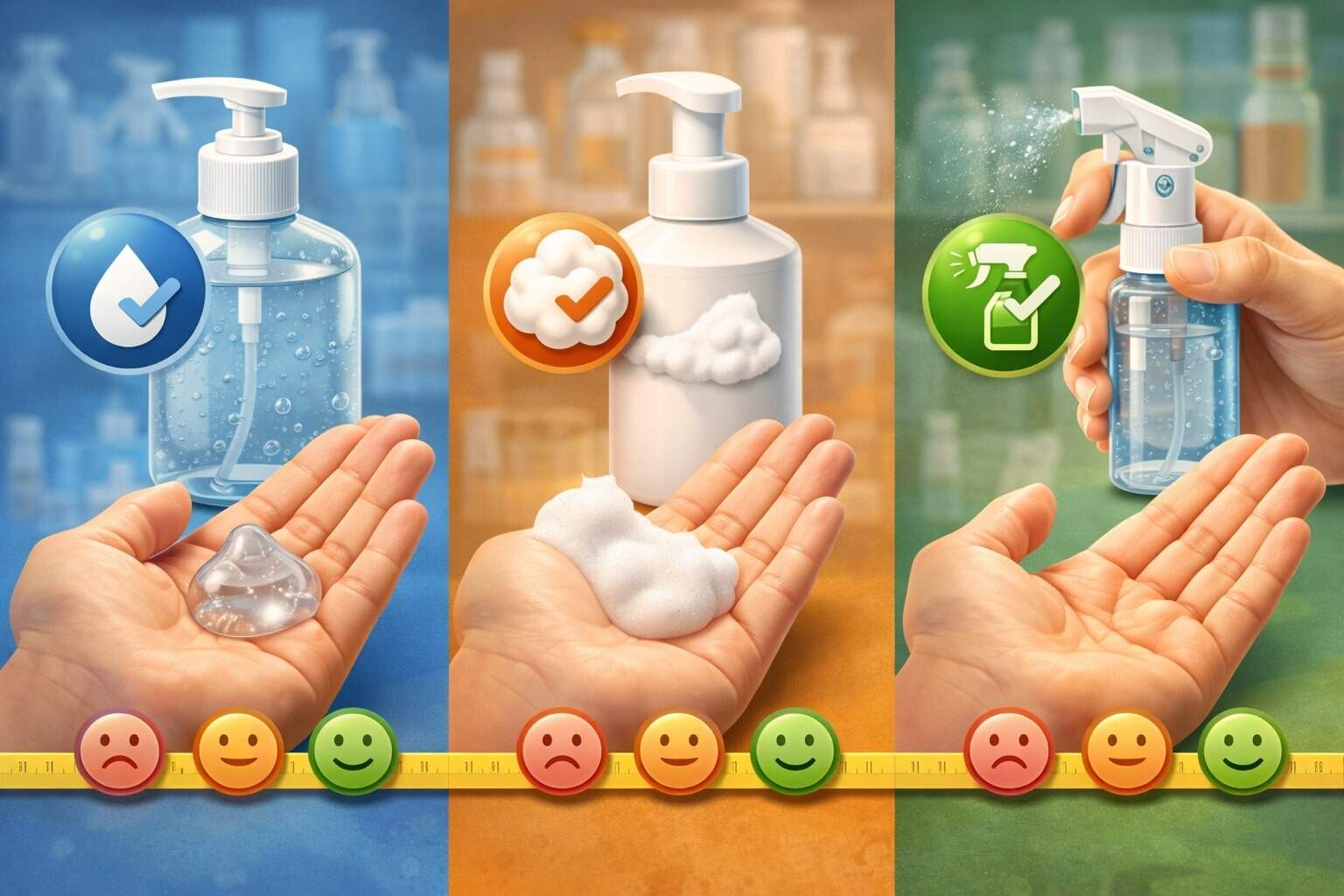
Hand sanitizer has become a daily essential in homes, workplaces, schools, gyms, and travel bags. But “hand sanitizer” isn’t one product type—gel hand sanitizer, foam hand sanitizer, and spray hand sanitizer behave differently on skin, spread differently across fingers, and fit different real-world routines.
Choosing the right hand sanitizer format can improve coverage, reduce waste, and make it more likely you’ll use hand sanitizer correctly every time.
Soap and water is still the best option in most situations, but when a sink isn’t available, health guidance supports using an alcohol-based hand sanitizer with at least 60% alcohol.
That simple rule matters for gel hand sanitizer, foam hand sanitizer, and spray hand sanitizer alike. The format changes how the hand sanitizer feels, how fast it dries, and how easy it is to apply enough product to cover all hand surfaces.
This guide breaks down gel vs foam vs spray hand sanitizer in practical terms: how each hand sanitizer type works, where each hand sanitizer shines, common mistakes people make with hand sanitizer, and what to watch for on labels.
You’ll also find safety tips for kids, scent sensitivity, workplace dispensing, and future predictions for how hand sanitizer products may evolve.
Why Hand Sanitizer Format Matters More Than Most People Think
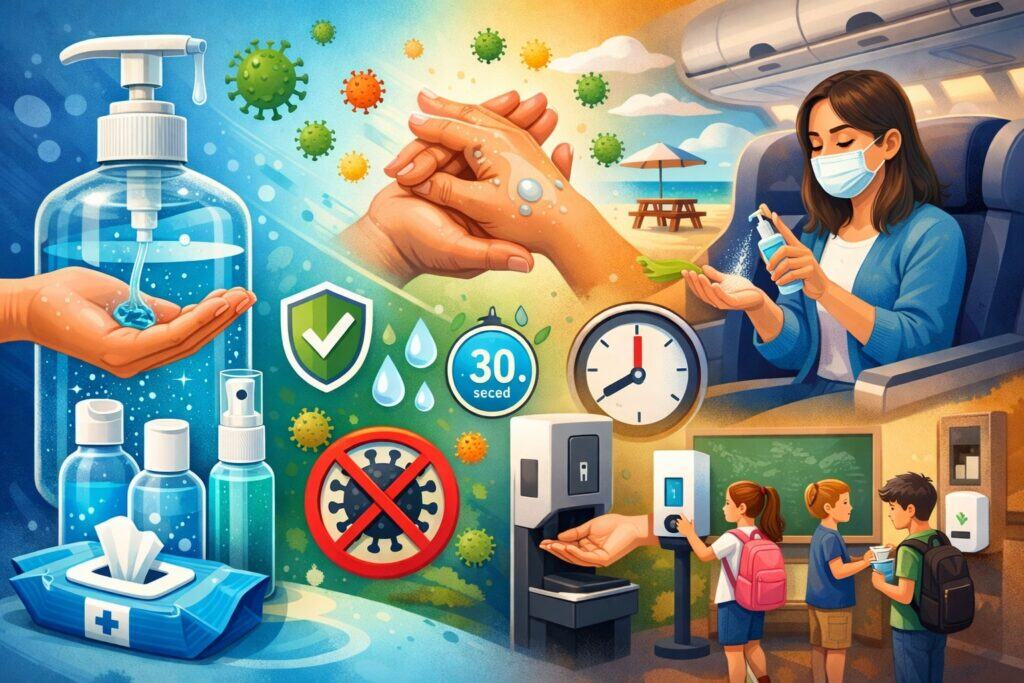
People often buy hand sanitizer based on fragrance, brand familiarity, or price per ounce. But hand sanitizer format affects the two things that matter most: hand sanitizer coverage and hand sanitizer compliance (whether you use it correctly and consistently).
Coverage is about whether your hand sanitizer actually reaches fingertips, thumbs, nail edges, and the spaces between fingers. When used correctly, you apply enough hand sanitizer to cover all surfaces and rub until dry—often around 20 seconds.
Format influences how easy it is to apply “enough” hand sanitizer without dripping, splattering, or evaporating too quickly.
Compliance is about human behavior. If a hand sanitizer feels sticky, smells overpowering, or leaves hands irritated, people use less hand sanitizer or skip it. If a spray hand sanitizer dries instantly but you only hit the palms, you might feel “done” too fast.
If a foam hand sanitizer is airy and pleasant, you may use it more often—but only if you dispense enough foam hand sanitizer to fully coat the hands.
In shared environments, format also impacts hygiene logistics. Gel hand sanitizer is common in pumps and travel bottles. Foam hand sanitizer is popular in wall dispensers because it reduces drips and feels less messy.
Spray hand sanitizer can be convenient for quick applications, but it introduces extra considerations around flammability, inhalation, and where the mist lands.
Ultimately, the best hand sanitizer is the one you will use correctly. Understanding gel vs foam vs spray hand sanitizer helps you match the hand sanitizer format to your lifestyle, dispenser setup, and skin needs—without sacrificing effectiveness.
How Alcohol-Based Hand Sanitizer Works (And What “60% Alcohol” Really Means)
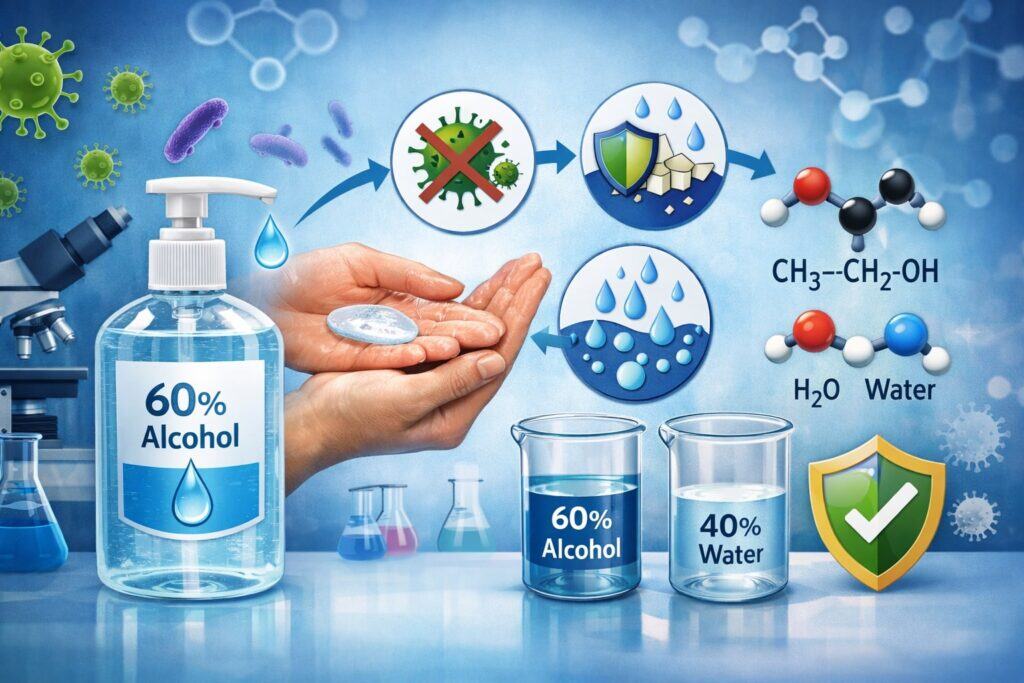
Most effective consumer hand sanitizer products rely on alcohol to inactivate many germs. Guidance emphasizes choosing a hand sanitizer that contains at least 60% alcohol when soap and water are unavailable. This applies regardless of whether you choose gel hand sanitizer, foam hand sanitizer, or spray hand sanitizer.
Alcohol-based hand sanitizer works primarily by damaging the outer structures of many microbes and disrupting essential proteins. That’s why the alcohol percentage matters: too low and the hand sanitizer may not work as intended; too high and the product may evaporate so fast that you don’t get adequate wet contact time.
In practice, reputable hand sanitizer brands formulate the alcohol system and supporting ingredients so the hand sanitizer stays wet long enough for proper rubbing.
Another key point: hand sanitizer is not a perfect replacement for handwashing. Health guidance notes that washing with soap and water reduces germs and also removes certain chemicals from hands.
Hand sanitizer is a strong backup, but it can be less effective when hands are visibly dirty or greasy, or when dealing with certain hard-to-kill germs. When you can wash, wash—then use hand sanitizer as an additional layer when appropriate.
Finally, technique matters as much as product choice. Use enough hand sanitizer to cover all surfaces, rub hands together, and keep rubbing until hands feel dry. If your gel hand sanitizer dries in five seconds, you probably didn’t use enough hand sanitizer.
If your spray hand sanitizer evaporates before you finish rubbing, you likely need a second spray or a different hand sanitizer format.
Gel Hand Sanitizer: The Classic, Travel-Friendly Workhorse

Gel hand sanitizer is the most familiar format for many people. Gel hand sanitizer typically uses a thickening system that helps the hand sanitizer stay in place during application. That “staying power” can make gel hand sanitizer easier to control, especially when you’re walking, driving, or handling kids.
One major advantage of gel hand sanitizer is dosing. With a squeeze bottle or pump, it’s relatively easy to dispense a consistent blob of hand sanitizer, then spread it across palms, backs of hands, fingertips, and thumbs.
Gel hand sanitizer also tends to be forgiving in windy or outdoor situations because it doesn’t mist away like spray hand sanitizer might.
Gel hand sanitizer can, however, feel tacky depending on the formulation. Many gel hand sanitizer products include humectants (like glycerin) and skin conditioners to offset dryness from alcohol. Some people love the “coated” feel; others dislike any residue and prefer foam hand sanitizer for a lighter finish.
Gel hand sanitizer also varies widely in fragrance and additive ingredients. If you have sensitive skin, fragrance-free gel hand sanitizer may reduce irritation. If you work with food, healthcare, or customer-facing roles, you may prefer gel hand sanitizer with minimal scent to avoid fragrance transfer.
For pure practicality, gel hand sanitizer remains a top choice for purses, backpacks, glove compartments, and travel kits. It’s easy to find, easy to refill, and easy to apply with one hand—making gel hand sanitizer one of the most reliable hand sanitizer options for everyday life.
When Gel Hand Sanitizer Performs Best
Gel hand sanitizer performs best when you need control, portability, and predictable application. If you’re commuting, shopping, pumping gas, or moving through crowded places, gel hand sanitizer is simple: squeeze, rub, dry. That simplicity is important because hand sanitizer effectiveness depends on using it correctly, not just owning it.
Gel hand sanitizer is also strong for people who struggle with “coverage discipline.” Because gel hand sanitizer stays wet a bit longer than some spray hand sanitizer products, users are more likely to rub thoroughly. The texture of gel hand sanitizer naturally encourages spreading from palm to fingertips.
In households, gel hand sanitizer is often the easiest hand sanitizer to keep by doors, in the kitchen, and in bathrooms. A pump bottle of gel hand sanitizer can turn hygiene into a quick routine—especially before meals or after coming home from errands.
Gel hand sanitizer can also be the best hand sanitizer for outdoor events like markets and festivals. Wind can disrupt spray hand sanitizer. Foam hand sanitizer can be great too, but gel hand sanitizer is widely compatible with travel bottle designs and doesn’t require specialized foam pumps.
If your main goal is a dependable hand sanitizer you’ll actually use, gel hand sanitizer is hard to beat. The best gel hand sanitizer is one that meets the alcohol threshold, feels comfortable enough for frequent use, and dispenses a dose large enough to keep hands wet while rubbing.
Common Mistakes With Gel Hand Sanitizer (And How to Avoid Them)
A common gel hand sanitizer mistake is using too little product. People often dispense a tiny dot of gel hand sanitizer, rub quickly, and stop. Proper technique requires enough hand sanitizer to cover all hand surfaces and rubbing until dry. If gel hand sanitizer dries before you’ve covered fingertips, you didn’t use enough hand sanitizer.
Another mistake is ignoring high-contact areas: thumbs, fingertips, and between fingers. Gel hand sanitizer makes it easy to get these areas—if you remember to target them. A helpful habit is to rub fingertips in the opposite palm, then rotate thumbs.
People also misuse gel hand sanitizer when hands are visibly dirty, oily, or covered in grime. In those cases, handwashing is preferred. Gel hand sanitizer can’t “lift off” dirt the same way soap can.
Finally, some users “top off” gel hand sanitizer containers by mixing brands. That can cause dispenser clogs or texture changes. If you refill gel hand sanitizer bottles, do it with the same product line when possible, or clean and dry the bottle before switching.
Correct gel hand sanitizer use is simple: enough gel hand sanitizer, full coverage, rub until dry, and wash hands when you can.
Foam Hand Sanitizer: Lightweight Feel, High Compliance, Great for Dispensers

Foam hand sanitizer is popular in offices, schools, gyms, and retail entrances because it feels light, spreads quickly, and often leaves less residue than gel hand sanitizer. Foam hand sanitizer uses a foaming pump or dispenser that mixes product with air, creating a cloud-like foam that collapses into a thin liquid during rubbing.
A major benefit of foam hand sanitizer is user experience. Many people perceive foam hand sanitizer as “cleaner” and less sticky, which can increase how often they use hand sanitizer. That matters because the best hand sanitizer routine is the one people follow consistently.
Foam hand sanitizer can also reduce mess. In high-traffic locations, gel hand sanitizer sometimes drips down bottles or onto floors. Foam hand sanitizer tends to stay in the hand better during dispensing. This makes foam hand sanitizer appealing for facility managers who want fewer slippery spots and less product waste.
However, foam hand sanitizer has a hidden challenge: under-dosing. Because foam looks like “a lot,” users may dispense a small puff of foam hand sanitizer that isn’t actually enough liquid hand sanitizer to coat both hands. The fix is simple: dispense more foam hand sanitizer than you think you need, then rub thoroughly until dry.
Foam hand sanitizer also pairs well with fragrance-free and sensitive-skin formulations. If you use hand sanitizer dozens of times a day, foam hand sanitizer may feel less heavy than gel hand sanitizer, especially in dry seasons.
When Foam Hand Sanitizer Performs Best
Foam hand sanitizer performs best in shared spaces and high-frequency use environments. If you’re sanitizing hands repeatedly—before meetings, after shared equipment, after greeting customers—foam hand sanitizer can feel less burdensome than gel hand sanitizer.
Foam hand sanitizer is also excellent for wall-mounted dispensers. In workplaces and public venues, a dispenser that delivers foam hand sanitizer can standardize hand sanitizer access and nudge better habits.
The tactile feel of foam hand sanitizer makes it easy for people to recognize that they’ve used hand sanitizer, which can reinforce routines.
In schools and childcare settings, foam hand sanitizer is often easier for supervised use because it’s less likely to splatter compared to spray hand sanitizer.
Guidance also stresses supervising young children when they use hand sanitizer to prevent swallowing alcohol. Foam hand sanitizer supports that supervision because it’s dispensed in a controlled, visible amount.
For people with sensory preferences, foam hand sanitizer can be a “best of both worlds” option: quick drying like spray hand sanitizer, but with more control like gel hand sanitizer. If sticky residue causes you to avoid hand sanitizer, foam hand sanitizer may be the format that keeps you consistent.
Common Mistakes With Foam Hand Sanitizer (And How to Avoid Them)
The biggest foam hand sanitizer mistake is using an amount of foam hand sanitizer that looks generous but contains too little actual liquid hand sanitizer. Foam is mostly air, so you must still ensure enough foam hand sanitizer collapses into enough wet coverage to keep rubbing until dry.
Another foam hand sanitizer mistake is stopping early because the foam hand sanitizer “disappears.” Foam hand sanitizer breaks down quickly during rubbing. Some users interpret that as completion. Instead, keep rubbing all surfaces until hands feel dry, aiming for full coverage.
In facilities, a common operational mistake is using the wrong refill for the foam hand sanitizer dispenser. Foam hand sanitizer systems often require specific viscosity and pump designs. If you put gel hand sanitizer in a foam hand sanitizer dispenser, the pump can clog or produce poor foam.
Finally, people sometimes rely on foam hand sanitizer alone in situations where soap and water is clearly available and preferable. Guidance emphasizes handwashing as the best method in most situations. Foam hand sanitizer is a strong backup, but it’s not meant to replace every wash.
The solution is straightforward: dispense enough foam hand sanitizer, rub like you mean it, and treat foam hand sanitizer as part of a broader clean-hands routine.
Spray Hand Sanitizer: Fast Application, Coverage Challenges, and Extra Safety Considerations
Spray hand sanitizer is often marketed as convenient, quick-drying, and easy to apply on the go. A spray hand sanitizer can be especially appealing when you don’t want the feel of gel hand sanitizer or the puff of foam hand sanitizer. It’s also common in small pocket bottles, making spray hand sanitizer a frequent choice for travel and outdoor use.
The main advantage of spray hand sanitizer is speed and simplicity—spritz and rub. But spray hand sanitizer introduces a unique challenge: where does the hand sanitizer actually land?
If you spray hand sanitizer onto palms only, you may miss fingertips and thumbs. If you spray hand sanitizer in windy conditions, some of the hand sanitizer may disperse into the air rather than onto hands.
Spray hand sanitizer may also dry faster than gel hand sanitizer, which can reduce rubbing time if you don’t spray enough. Remember: you need enough hand sanitizer to cover all surfaces and rub until dry. If your spray hand sanitizer evaporates instantly, add another spray.
Safety is another key topic with spray hand sanitizer. Many spray hand sanitizer products are alcohol-based and therefore flammable. Spray hand sanitizer creates fine droplets, and some products are aerosolized.
That means you should avoid spraying hand sanitizer near open flames, high heat sources, or while smoking. It also means you should spray hand sanitizer in a way that minimizes inhaling mist, especially for people with respiratory sensitivity.
Spray hand sanitizer can be an excellent tool when used thoughtfully, but it benefits from careful technique: spray enough, rub thoroughly, and keep it away from ignition sources.
When Spray Hand Sanitizer Performs Best
Spray hand sanitizer performs best when you need a quick, low-residue hand sanitizer and you can control the application. For example, if you’re moving through a store and want to sanitize hands quickly before getting back into your car, spray hand sanitizer can be convenient.
Spray hand sanitizer can also work well for people who strongly dislike the feel of gel hand sanitizer or who find foam hand sanitizer dispensers inconvenient. If sensory comfort is the barrier to using hand sanitizer at all, spray hand sanitizer may increase your consistency.
In some workplaces—like delivery, field service, and event staffing—spray hand sanitizer can be practical because it fits in uniform pockets and doesn’t leak as easily as some flip-top gel hand sanitizer bottles.
Spray hand sanitizer can also be helpful when sharing is a concern. Some people feel more comfortable using their own spray hand sanitizer rather than touching a public pump. While this is partly preference, it can influence whether people actually use hand sanitizer.
To get the best results from spray hand sanitizer, focus on technique: spray enough onto one hand, spread to the other, then rub palms, backs of hands, between fingers, thumbs, and fingertips until dry. Done correctly, spray hand sanitizer can be just as practical as other hand sanitizer formats.
Common Mistakes With Spray Hand Sanitizer (And How to Avoid Them)
Spray hand sanitizer mistakes usually come down to insufficient product and incomplete coverage. A single quick spritz often isn’t enough hand sanitizer to wet both hands. Spray hand sanitizer can fool you because it feels like it “hits everything,” but the mist may only land on a small area.
Another mistake is spraying hand sanitizer into the air and then “catching” it. That wastes hand sanitizer and increases inhalation exposure. Instead, spray hand sanitizer directly onto one palm at close range, then rub hands together.
People also misuse spray hand sanitizer near ignition sources. Because alcohol-based hand sanitizer is flammable, spraying hand sanitizer near heat or flame is risky. This becomes more relevant with aerosol spray hand sanitizer products because the droplets disperse more widely.
A final mistake is assuming spray hand sanitizer can replace handwashing even when a sink is available. Guidance emphasizes soap and water as the best approach in most situations. Spray hand sanitizer is best used as a backup when washing isn’t possible.
If you love spray hand sanitizer, keep it effective by spraying enough, rubbing thoroughly until dry, and using it in safe conditions.
Ingredients That Matter in Gel, Foam, and Spray Hand Sanitizer
No matter the format, the most important hand sanitizer ingredient factor is whether it meets the alcohol threshold recommended for effectiveness when soap and water are unavailable. Guidance states to use a hand sanitizer with at least 60% alcohol. You can verify this on the Drug Facts label for many hand sanitizer products.
Beyond alcohol percentage, you’ll see supporting ingredients that shape how hand sanitizer feels and performs. Humectants like glycerin help reduce dryness and improve skin feel.
The World Health Organization’s handrub formulations, for example, include alcohol plus glycerol and small amounts of hydrogen peroxide as part of the formulation approach. While consumer products differ from institutional formulas, this highlights how hand sanitizer isn’t just “alcohol in a bottle.”
Thickeners or gelling agents determine gel hand sanitizer texture. Foaming systems determine how foam hand sanitizer forms and collapses. Spray hand sanitizer often uses lower viscosity formulas so it can atomize through a sprayer.
You may also encounter non-alcohol antiseptics in some products, but alcohol-based hand sanitizer remains the most common and widely recommended consumer option for situations without soap and water. If you choose a non-alcohol hand sanitizer, evaluate it carefully and consider whether it aligns with your needs and setting.
Finally, fragrance and essential oils are common in hand sanitizer for marketing appeal. If you experience irritation, dermatitis, or headaches, switching to fragrance-free hand sanitizer—gel, foam, or spray—can improve comfort and help you maintain consistent hand sanitizer use.
Skin Health: Dryness, Dermatitis, and Choosing a Hand Sanitizer You’ll Actually Tolerate
Frequent hand sanitizer use can dry skin, especially in cold weather or in workplaces where you sanitize hands repeatedly. Alcohol-based hand sanitizer evaporates quickly and can reduce natural oils in the skin barrier.
That doesn’t mean you should avoid hand sanitizer—rather, it means you should choose a hand sanitizer format and formula that supports your skin.
Gel hand sanitizer sometimes feels more moisturizing because it often contains humectants and leaves a slight film. For some people, that film is protective; for others, it feels sticky and uncomfortable.
Foam hand sanitizer often feels lighter and may reduce the perception of residue, which can help people continue using hand sanitizer throughout the day. Spray hand sanitizer can feel the least heavy, but it can also feel the most drying if it lacks skin-conditioning ingredients.
If you’re prone to eczema or contact dermatitis, your best hand sanitizer strategy is usually: fragrance-free hand sanitizer, consistent moisturizer use, and switching to soap-and-water handwashing when you can do it without harsh soaps.
Guidance still prioritizes washing hands with soap and water in most situations. Pairing handwashing with a good moisturizer can reduce the need for constant hand sanitizer use while still keeping hands clean.
Also consider workplace realities. In healthcare-adjacent settings or customer-facing roles, you may use hand sanitizer dozens of times daily. In that case, foam hand sanitizer dispensers with gentle formulations often improve comfort. At home, a gel hand sanitizer pump near the entryway plus lotion nearby can help maintain skin health.
The bottom line: the best hand sanitizer is one that meets effectiveness guidance and doesn’t punish your skin so much that you stop using hand sanitizer correctly.
Safety and Label Smarts: Flammability, Kids, and Quality Concerns
Hand sanitizer is a drug product in many consumer contexts, and safety details matter. Alcohol-based hand sanitizer is flammable, so store hand sanitizer away from heat sources and open flames. This is especially relevant for spray hand sanitizer and aerosol formats where droplets disperse in the air.
If you have children at home or work in childcare, supervision matters. Guidance emphasizes supervising young children when they use hand sanitizer to prevent swallowing alcohol. Hand sanitizer ingestion can be dangerous because alcohol is absorbed quickly. Keep hand sanitizer out of reach and use child-safe routines.
Quality concerns have also been a real issue in the marketplace. Regulatory communications note that some hand sanitizer recall information pages have been replaced by recall databases and other safety resources, reflecting ongoing monitoring.
There have also been contamination concerns in the broader consumer product landscape, including attention to benzene contamination in some recalled products and aerosols.
While most reputable hand sanitizer products are safe when used as directed, these events reinforce the value of choosing trusted manufacturers and checking recall resources when you hear about a hand sanitizer issue.
For everyday safety, follow these habits:
- Use hand sanitizer only on hands, not as a general-purpose body spray.
- Avoid spraying hand sanitizer near the face.
- Let hand sanitizer fully dry before touching heat sources.
- Store hand sanitizer securely, especially around kids.
Safe hand sanitizer use is simple, but it depends on treating hand sanitizer as a functional hygiene product—not a cosmetic mist.
Regulations and Compliance: What’s Changing and Why It Matters for Hand Sanitizer Buyers
Hand sanitizer regulation has evolved significantly in recent years. The Food and Drug Administration announced a final rule focused on helping ensure consumer hand sanitizer products are safe and effective, including addressing which active ingredients are allowed for over-the-counter consumer antiseptic rubs.
For consumers, this matters because it shapes which hand sanitizer products remain on shelves and what standards manufacturers must meet.
Regulation also influences labeling. You should be able to identify the active ingredient and its concentration on many hand sanitizer Drug Facts labels, especially for alcohol-based hand sanitizer products. This helps you confirm whether the hand sanitizer meets the “at least 60% alcohol” guidance.
Another regulatory reality is that the hand sanitizer marketplace can shift quickly when safety concerns arise. Some FDA consumer hand sanitizer update pages are no longer actively updated and direct users to recall databases and other tools instead. For practical buyers, that means the “latest list” might live in recall systems rather than a single static page.
In procurement settings—schools, offices, clinics, gyms—compliance is also about storage and dispensing. Facilities may prefer foam hand sanitizer in controlled dispensers to reduce waste and ensure consistent use. They may also set fragrance policies or require specific hand sanitizer labeling.
The key takeaway is that buying hand sanitizer isn’t only about scent and feel. It’s also about verified alcohol percentage, transparent labeling, reputable manufacturing, and awareness of recall systems. In regulated consumer markets, those details help you choose a hand sanitizer that’s both effective and trustworthy.
Which Hand Sanitizer Format Is Best for Different Real-World Situations?
There isn’t one best hand sanitizer format for everyone. The best hand sanitizer depends on your routine, skin, and environment. But you can make a smart choice by matching gel, foam, or spray hand sanitizer to the situation.
For families and daily errands, gel hand sanitizer is often the best default hand sanitizer. It’s portable, easy to apply with one hand, and less affected by wind. A gel hand sanitizer bottle in the car and a gel hand sanitizer pump at home create consistent access.
For offices, gyms, and public entrances, foam hand sanitizer is often the best hand sanitizer format. Foam hand sanitizer feels clean, reduces drips, and works well with dispensers. Foam hand sanitizer can also increase usage because people dislike it less. Just ensure signage or training encourages using enough foam hand sanitizer to cover hands fully.
For travel, outdoor work, and pocket carry, spray hand sanitizer can be the best hand sanitizer format—if you’re disciplined about applying enough. Spray hand sanitizer is also helpful for people who hate residue. But spray hand sanitizer needs more attention to safe use (avoid face spraying, avoid flames, avoid inhalation).
For sensitive skin, the best hand sanitizer may be fragrance-free foam hand sanitizer or a conditioning gel hand sanitizer plus a moisturizer routine. For scent-sensitive workplaces, unscented hand sanitizer—gel or foam—reduces complaints and improves acceptance.
A practical approach is to own more than one hand sanitizer type: gel hand sanitizer for travel kits, foam hand sanitizer for entryways and shared spaces, and spray hand sanitizer for personal pocket use. The goal is not loyalty to a format—it’s consistent, correct hand sanitizer use.
Future Predictions: Where Hand Sanitizer Is Headed Next
Hand sanitizer is likely to keep evolving in three major directions: better skin feel, smarter dispensing, and more transparent quality control.
First, skin-friendly formulations will become even more important. As more people use hand sanitizer daily, demand grows for hand sanitizer that doesn’t dry hands out.
Expect more hand sanitizer products with barrier-support ingredients, fragrance-free options, and dermatologist-tested claims. Foam hand sanitizer may gain market share in workplaces because it already fits the “pleasant enough to use often” category.
Second, dispensing tech is likely to improve. Touchless dispensers, controlled-dose pumps, and refill systems can standardize hand sanitizer use in public spaces. Foam hand sanitizer is especially compatible with these systems, though gel hand sanitizer dispensers will remain common due to lower system complexity.
Third, quality and safety transparency will stay in focus. The broader marketplace has dealt with contamination concerns and recalls, including attention to benzene issues in some recalled products and aerosols.
This doesn’t mean hand sanitizer is broadly unsafe; it means consumers and buyers will increasingly expect reputable sourcing, testing, and clear labeling.
Over time, “best hand sanitizer” may become less about gel vs foam vs spray hand sanitizer and more about validated performance, user compliance, and skin tolerance—supported by better packaging and clearer standards.
FAQs
Q.1: Is gel hand sanitizer better than foam hand sanitizer?
Answer: Gel hand sanitizer isn’t automatically better than foam hand sanitizer. Both can be effective hand sanitizer options when they contain enough alcohol and are used correctly. Guidance recommends using a hand sanitizer with at least 60% alcohol when soap and water aren’t available.
Gel hand sanitizer may feel more controllable and is easy to dose in travel bottles. Foam hand sanitizer often feels lighter and may increase how often people use hand sanitizer, especially in workplaces.
The real deciding factor is whether you apply enough hand sanitizer to cover all hand surfaces and rub until dry. If foam hand sanitizer causes you to under-dose, gel hand sanitizer may be better for you. If gel hand sanitizer feels sticky and makes you avoid using hand sanitizer, foam hand sanitizer may be your best option.
Q.2: Does spray hand sanitizer work as well as gel hand sanitizer?
Answer: Spray hand sanitizer can work well, but technique is critical. People often under-apply spray hand sanitizer because it dries quickly. You need enough hand sanitizer to cover all surfaces and rub until dry.
Spray hand sanitizer may also be harder to apply evenly, especially on fingertips and thumbs. If you use spray hand sanitizer, spray directly onto one palm (not into the air), then rub thoroughly across palms, backs of hands, fingers, and thumbs.
Also remember safety: alcohol-based hand sanitizer is flammable, and spray hand sanitizer mist can spread. Use spray hand sanitizer away from flames and avoid spraying near the face.
Q.3: What alcohol percentage should a hand sanitizer have?
Answer: Health guidance states that when soap and water aren’t available, you should use a hand sanitizer with at least 60% alcohol. You can confirm alcohol content by checking the label. This guidance applies to gel hand sanitizer, foam hand sanitizer, and spray hand sanitizer.
If you’re buying hand sanitizer for a workplace, prioritize products with clear labeling and consistent dosing. If the alcohol percentage isn’t clearly stated or the manufacturer seems questionable, choose a different hand sanitizer.
Q.4: When should I wash hands instead of using hand sanitizer?
Answer: Washing hands with soap and water is the best option in most situations. If your hands are visibly dirty, greasy, or contaminated with grime, handwashing is preferred because it physically removes dirt and many contaminants.
Hand sanitizer is ideal when you don’t have access to soap and water—like after touching shared surfaces in public spaces. Even then, use hand sanitizer correctly: enough product, full coverage, rub until dry.
Q.5: Is hand sanitizer safe for kids?
Hand sanitizer can be used for kids, but supervision is important. Guidance advises supervising young children when they use hand sanitizer to prevent swallowing alcohol. Keep hand sanitizer out of reach when not in use, and help children apply hand sanitizer properly.
For schools and childcare centers, foam hand sanitizer dispensers can be easier to control, but any hand sanitizer format requires adult oversight and safe storage.
Conclusion
Gel hand sanitizer, foam hand sanitizer, and spray hand sanitizer can all be good choices. The best hand sanitizer isn’t the trendiest format—it’s the hand sanitizer you’ll use correctly, consistently, and safely.
Gel hand sanitizer is the classic all-around hand sanitizer: portable, easy to dose, and controllable. Foam hand sanitizer is the comfort and compliance champion: light feel, dispenser-friendly, and often preferred for frequent daily use.
Spray hand sanitizer is the quick and minimalist option: great for pocket carry and fast use, but it requires disciplined technique and extra attention to safe spraying.
No matter which hand sanitizer you choose, the fundamentals stay the same: use a hand sanitizer with at least 60% alcohol when soap and water aren’t available, apply enough hand sanitizer to cover all surfaces, and rub until dry.
Keep hand sanitizer away from kids unless supervised, store hand sanitizer safely, and pay attention to labeling and recall resources when safety news emerges.
If you want the simplest winning setup, keep a gel hand sanitizer in your bag or car, install a foam hand sanitizer dispenser at home or work entrances, and use spray hand sanitizer only if you’re committed to spraying enough and rubbing thoroughly. With that approach, hand sanitizer becomes a dependable habit—without sacrificing comfort, safety, or effectiveness.