By myhandsanitizershop January 7, 2026
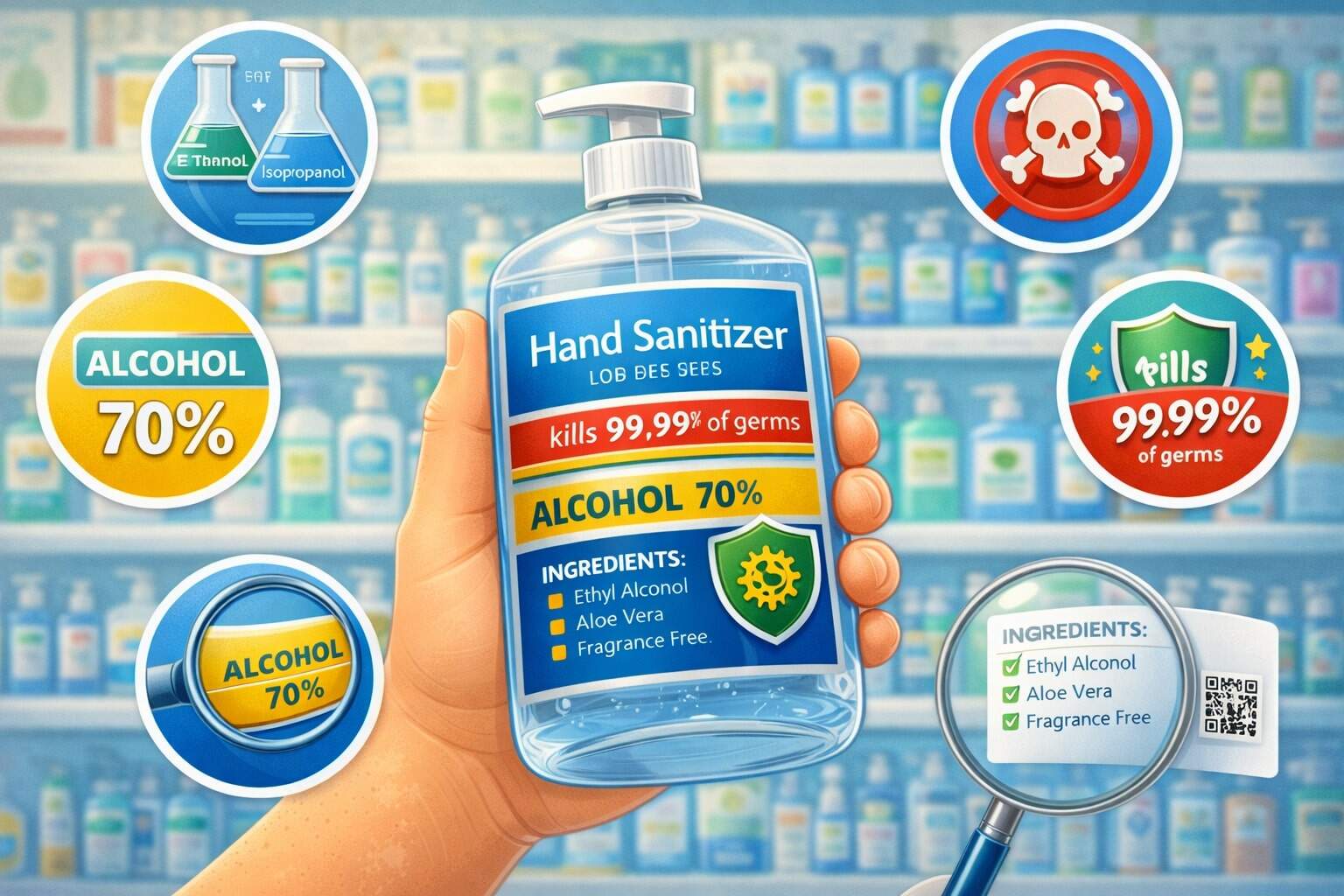
Hand sanitizer labels look simple at a glance, but they contain high-value safety and effectiveness details that help you choose the right product and use it correctly.
If you’ve ever wondered why some bottles have a “Drug Facts” box, why alcohol percentages vary, or what warnings actually matter, this guide will walk you through it—clearly, practically, and with real-world examples.
In everyday shopping, hand sanitizer labels are your quickest way to answer five critical questions:
- Will it work the way I need it to work?
- Is it safe for my skin, my family, and my workplace?
- Is it a true hand sanitizer product or a cosmetic “cleaning” gel?
- How do I use it to get the full benefit?
- Are the marketing claims believable and compliant?
Public health guidance consistently emphasizes that handwashing is best when available, and that alcohol-based products are a useful alternative when soap and water aren’t accessible. Health guidance also highlights a key label check: the alcohol percentage—because you can often tell whether it meets recommended thresholds by reading the label.
This article is designed so you can read hand sanitizer labels like a pro—whether you’re buying for your home, a business, a school, a clinic, or a travel kit.
What Hand Sanitizer Labels Are Designed to Tell You (And Why It Matters)
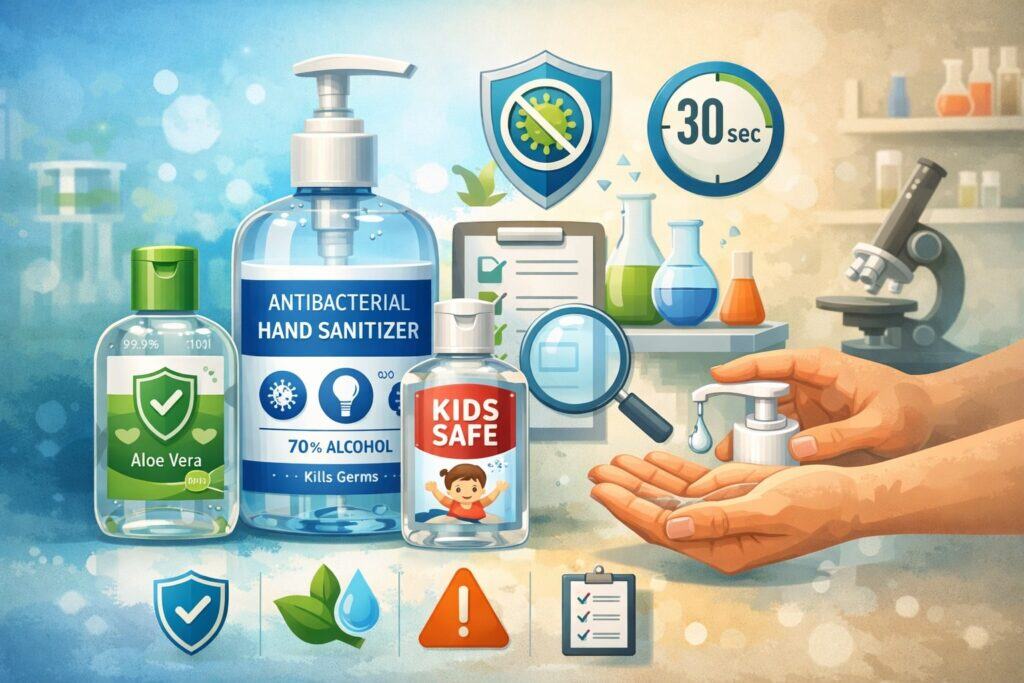
At their core, hand sanitizer labels are a safety and performance roadmap. They’re not just decoration. A well-built label is meant to help you compare products quickly and avoid mistakes that reduce effectiveness—like using too little product, wiping it off too soon, or assuming “natural” equals safer.
A major reason hand sanitizer labels matter is that many hand sanitizers are regulated as over-the-counter drug products, and those products commonly use a standardized label format (especially the Drug Facts panel).
The label is intended to communicate active ingredients, uses, warnings, directions, and other essential details so that consumers can use the product properly.
For shoppers, the label is also a credibility filter. When a product’s front label says “kills 99.99%,” you can use the back label to check the active ingredient and its concentration, and you can look for directions that match how sanitizer actually works (apply, rub, let dry).
If the directions are vague—or if the product doesn’t clearly list an active ingredient—your confidence should drop.
For businesses, hand sanitizer labels reduce risk. Proper labeling supports safer placement and use in public spaces (for example, noting flammability warnings and proper storage).
For parents and caregivers, the label helps you decide when supervision is needed and what to do if a child ingests it. For people with sensitive skin, labels help identify humectants (like glycerin) and fragrance triggers.
Think of hand sanitizer labels as a “fast audit.” In under a minute, you can determine whether the product is likely to meet your needs and whether it’s being marketed responsibly.
The Drug Facts Panel: How to Read It Like a Checklist
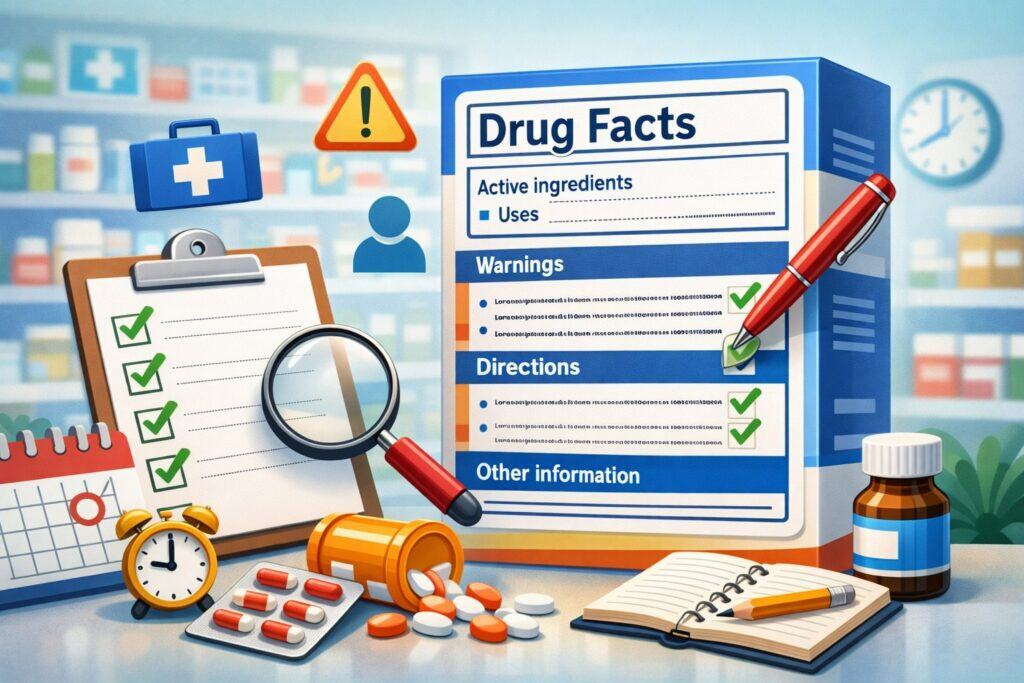
If you see a box labeled “Drug Facts,” that’s a strong signal you’re looking at an OTC-style product label format. The Drug Facts panel is designed to be consistent across many nonprescription products, making it easier to find the same types of information in the same order.
When reading hand sanitizer labels with Drug Facts, use this quick checklist:
- Active ingredient (what does the germ-killing work)
- Purpose (often “Antiseptic” for hand sanitizer)
- Uses (what the product is intended to do)
- Warnings (flammability, external use, eyes, ingestion, children)
- Directions (how much, how long to rub, when to use)
- Other information (storage conditions and handling notes)
- Inactive ingredients (skin conditioners, fragrance, thickening agents)
The most important section for real-world effectiveness is typically the active ingredient + directions combination. If the product contains an alcohol active ingredient, directions often instruct you to apply enough to cover hands and rub until dry.
This matters because sanitizer performance is not just about having alcohol—it’s about contact time and coverage.
Also pay attention to “Drug Facts (continued)” formatting on multi-panel labels. Regulations specify how the Drug Facts title is displayed when the panel continues across more than one label area, which is one reason compliant products tend to have a familiar, structured look.
If you’re comparing brands, the Drug Facts panel makes it easier: it’s like comparing nutrition labels. You can scan hand sanitizer labels for the same fields and make a confident choice faster.
Active Ingredient and Strength: The “Works vs. Doesn’t” Line
The active ingredient line is where hand sanitizer labels separate effective formulas from weaker “hand cleaning” products. For alcohol-based sanitizers, you’ll usually see ethyl alcohol (ethanol) or isopropyl alcohol (isopropanol) listed with a percentage.
Public health guidance commonly recommends choosing a product with at least 60% alcohol, and notes you can confirm that by checking the product label.
Why this matters: if the percentage is too low, the product may not reduce germs as effectively in real use. If the percentage is high enough but you use too little, or wipe it off immediately, you also lose effectiveness. That’s why good hand sanitizer labels pair the percentage with clear directions.
A practical tip: if the front label screams “kills germs” but you can’t easily find the alcohol percentage on the back, treat it as a red flag. The best hand sanitizer labels make the active ingredient and strength easy to find, because it’s central to performance.
Also, don’t confuse “alcohol-free” with “ineffective” automatically—but do scrutinize it. If it’s alcohol-free, check what the active ingredient is and whether the label supports credible use directions and warnings. Your level of caution should increase when a label’s claims are bigger than its ingredient transparency.
Uses, Warnings, and Directions: The Most Common Misread Sections
Many people focus only on the active ingredient and ignore the rest of the hand sanitizer labels—but the “Uses,” “Warnings,” and “Directions” sections are where you avoid avoidable harm.
Uses tells you what the product is intended to do. It might say it “reduces bacteria” or “helps prevent infection” in specific contexts. If the product’s marketing claims go beyond what’s written in Drug Facts, be cautious.
Warnings are especially important with alcohol-based products. They typically highlight:
- Flammability (keep away from heat/flame)
- External use only
- Keep out of eyes
- Do not ingest
- Keep out of reach of children (and what to do if swallowed)
These warnings aren’t just legal filler. Alcohol-based hand rubs are widely used, including in clinical environments, and safety guidance often notes they’re preferred in many clinical situations unless hands are visibly soiled. That widespread use makes proper warning visibility important.
Directions is where the label becomes a how-to guide. Strong hand sanitizer labels describe applying enough product to cover all hand surfaces and rubbing until dry. If directions don’t mention rubbing until dry, or they suggest wiping off immediately, that’s not aligned with how alcohol-based sanitizers typically work.
Alcohol Percentage on Hand Sanitizer Labels: What It Really Means
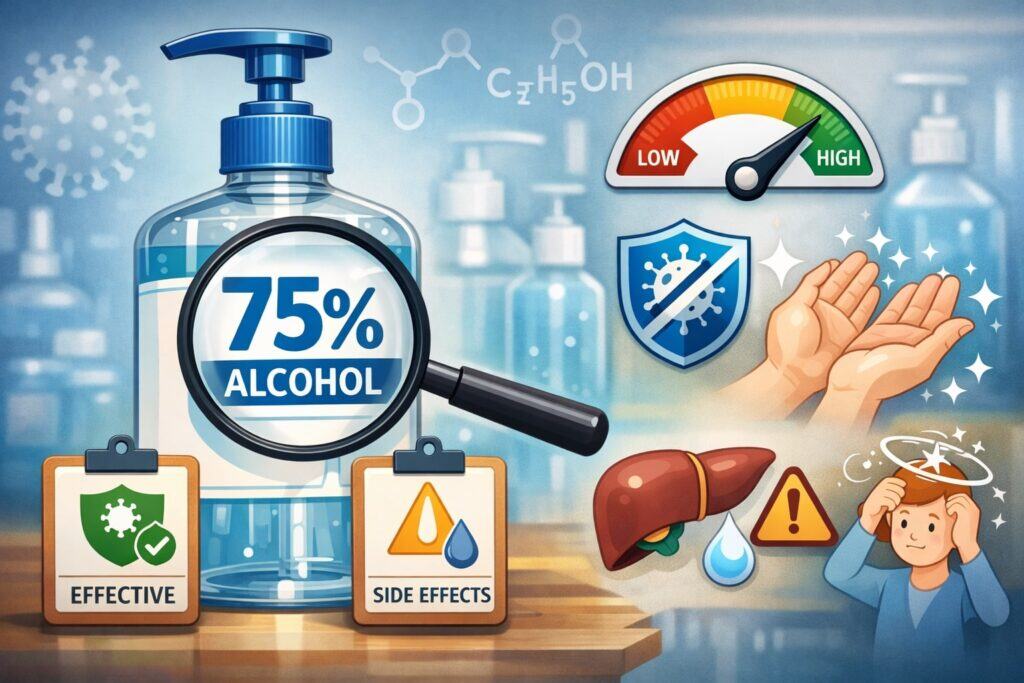
Alcohol percentage is the headline metric on most hand sanitizer labels, but it’s worth understanding what it does—and what it doesn’t do.
Alcohol kills many germs by disrupting membranes and proteins. If the concentration is too low, it may not work as intended. If the concentration is high enough, you still need sufficient volume and time on the skin. That’s why health guidance emphasizes checking for at least 60% alcohol and using it properly.
When reading hand sanitizer labels, you’ll typically see alcohol concentration expressed as:
- % v/v (by volume)
- or a simple percentage (commonly understood as by volume in these contexts)
If you’re buying for a business, you may also see references to “ABHS” (alcohol-based hand sanitizer). In clinical guidance, ABHS products are often recommended in many settings unless hands are visibly soiled.
Here’s what the percentage can help you decide:
- Daily carry / travel: you’ll want something that dries quickly, works well, and doesn’t feel sticky
- High-traffic environments: you’ll want reliable, clear labeling and directions people can follow quickly
- Sensitive skin: you may prefer a formula that balances alcohol with moisturizers and minimal fragrance (check inactive ingredients)
And here’s what the percentage can’t tell you alone:
- whether the product’s claims are honest
- whether it’s contaminated (quality controls matter, but that’s not fully visible on the label)
- how it will feel on skin (inactive ingredients drive feel)
The best approach is to treat alcohol percentage as necessary but not sufficient. Strong hand sanitizer labels make it easy to verify alcohol percentage, and also provide clear directions, warnings, and manufacturer information.
Ethyl Alcohol vs. Isopropyl Alcohol: What Labels Tell You About Performance and Feel
Many hand sanitizer labels list either ethyl alcohol or isopropyl alcohol as the active ingredient. For consumers, the practical label-based differences are usually about:
- skin feel (some users find one dries less or smells less harsh)
- sensory cues (odor can vary)
- formulation choices (gels vs. foams vs. liquids)
In daily life, both can be used in alcohol-based hand sanitizers. The more actionable guidance for most people is: confirm the percentage meets recommended thresholds, and follow directions (apply enough, rub thoroughly, allow to dry).
If hand sanitizer labels include added moisturizers (like glycerin) or soothing agents (like aloe), that can help with comfort. But it’s important not to let “aloe” distract you from the active ingredient line. A product can feel nice and still be underpowered if alcohol content is too low.
When in doubt, prioritize labels that make the active ingredient and strength unmistakable, and that provide plain-language directions. Clarity is a sign of quality in hand sanitizer labels.
“Alcohol-Free” and “Natural” Claims: How to Validate Them Using the Label
“Alcohol-free” and “natural” are common phrases on hand sanitizer labels, but they can be misunderstood.
First, “alcohol-free” does not automatically mean “bad,” but it does mean you should scrutinize the label more carefully. Look for:
- a clearly named active ingredient
- the purpose and uses that match the claims on the front
- realistic directions
- warnings consistent with the active ingredient
Second, “natural” is not a regulated performance guarantee. The label is where you validate what’s actually doing the work. If the marketing makes strong germ-kill claims but the Drug Facts (or equivalent) information is missing or unclear, that’s not a good sign.
Also, be careful with labels that imply protection against specific diseases or viruses without clear, compliant wording. Consumer protection enforcement has targeted deceptive health-related marketing during and after the pandemic period, reinforcing that “big health claims” require appropriate support.
Warnings and Safety Statements on Hand Sanitizer Labels You Should Never Ignore
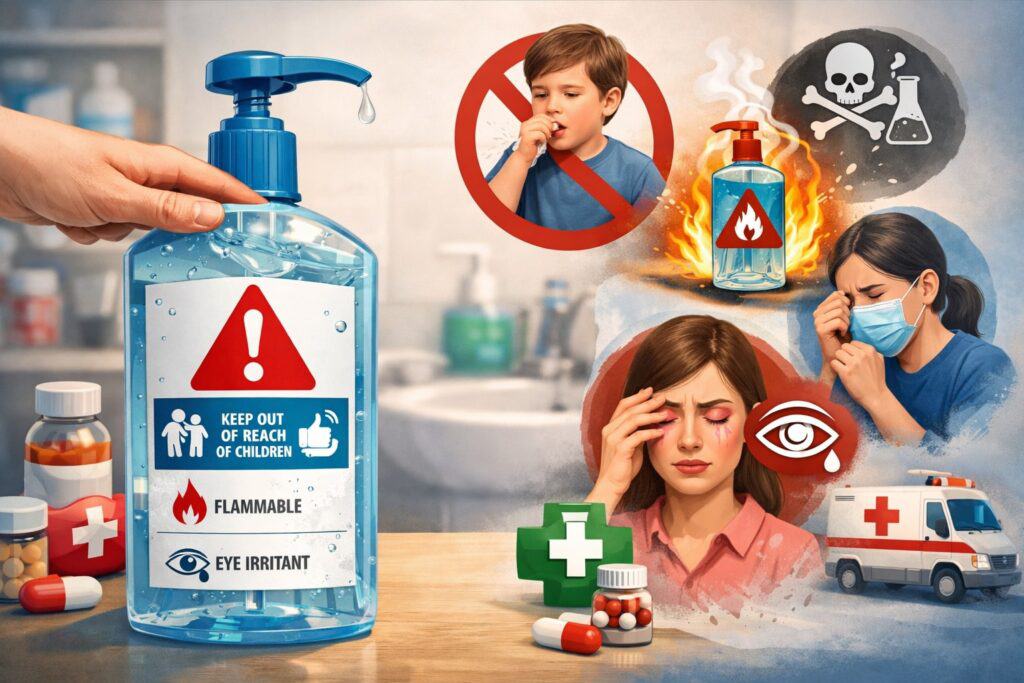
A surprisingly large portion of label value is in the warning language. Hand sanitizer labels are meant to prevent predictable harm—especially because alcohol-based products are common in homes, cars, schools, and workplaces.
The most common high-importance warning categories include:
- Flammability: Alcohol-based sanitizer can ignite. Labels commonly instruct keeping it away from heat and flame. This matters in cars (hot interiors), kitchens, near candles, and in industrial settings.
- External use only / do not ingest: Ingestion risk is real, especially for children. If you’re buying for a household with kids, read the warning text carefully and prioritize products with clear first-aid guidance.
- Keep out of eyes: Labels typically warn that eye contact can be painful and unsafe. This matters for parents, teachers, and anyone placing dispensers near face height.
- Supervision: Many labels include “keep out of reach of children” and related guidance.
Safety messaging also aligns with broader health guidance that soap and water is preferred when available, and sanitizer is a suitable alternative when it’s not. Using sanitizer correctly includes following label directions and warnings.
If you manage a workplace, hand sanitizer labels can help you set rules: where dispensers should go, what signage is needed, and how to store refills. The warning text is your built-in risk checklist.
Storage and Expiration: Where Labels Give You Real Operational Guidance
Storage guidance on hand sanitizer labels is often overlooked, but it’s crucial for safety and product performance. Labels may instruct storing at room temperature, avoiding excessive heat, and keeping containers tightly closed.
Why it matters:
- heat can increase evaporation of alcohol over time
- evaporating alcohol can reduce effectiveness
- heat also increases flammability risk during use and storage
You may also see expiration dates on hand sanitizer labels. Expiration is not just bureaucracy. It helps you manage stock rotation in a business, and it matters for emergency kits stored for long periods.
If you’re buying in bulk, make label checking part of receiving: confirm the lot/date information is present and readable. Even though the label can’t guarantee every aspect of manufacturing quality, clear traceability and storage instructions are a sign you’re dealing with a professionally handled product category.
For facilities, labels can inform where to store backstock: away from heat sources, out of direct sunlight, and away from open flames. These steps align with the basic flammability reality of alcohol-based products that the label is trying to communicate.
Children, Schools, and Public Dispensers: Label Clues for Safer Placement
When sanitizer is used in schools or public areas, hand sanitizer labels become part of a safety plan.
Key label clues include:
- warnings about supervision for children
- instructions that emphasize rubbing until dry (reduces transfer to eyes)
- flammability warnings that affect dispenser placement (away from heat sources)
In public settings, consistent labeling also helps users follow directions quickly. That matters because sanitizer is often used “on the go,” where people may under-apply or wipe off immediately. Clear directions on hand sanitizer labels can improve compliance and real-world effectiveness.
Public health resources emphasize that sanitizer is useful when soap and water are not available, and that alcohol content should meet recommended thresholds. Labels are the primary way the public verifies those requirements at purchase time.
If you’re selecting products for public dispensers, choose labels with legible font, clear warnings, and no confusing “miracle” claims. The label should teach correct use in seconds.
Marketing Claims on Hand Sanitizer Labels: How to Spot Hype, Risky Promises, and Red Flags
The front of many hand sanitizer labels is designed to sell. The back is designed (at least in part) to inform. Your job is to match them.
Common marketing claims include:
- “Kills 99.9% of germs”
- “Antibacterial”
- “Clinically proven”
- “Hospital grade”
- “Protects against viruses”
- “Long-lasting protection”
Some of these can be legitimate depending on the product and evidence, but you should validate them against the label’s disclosed active ingredient, directions, and intended uses.
Be especially cautious if:
- the label implies prevention or treatment of disease in a way that feels absolute
- the label lacks a clear Drug Facts-style structure while making strong germ-kill promises
- the label uses scientific language but provides no clear ingredients or directions
Consumer protection authorities have published extensive enforcement information related to pandemic-era and health-related claims, reflecting that misleading advertising and unsupported claims have been an active focus.
A practical method for reading hand sanitizer labels is the “claim-to-proof” test:
- Identify the biggest claim on the front.
- Find the matching support on the back (active ingredient, percentage, directions, intended uses).
- If the support isn’t there, downgrade trust and choose a clearer product.
In other words, the more the front label markets, the more the back label must substantiate—at least in plain language and transparent composition.
“Kills 99.9%” and Similar Phrases: What They Do and Don’t Prove
“Kills 99.9%” is one of the most common statements on hand sanitizer labels. It sounds definitive, but you should interpret it carefully.
What it can signal:
- the brand is positioning the product as broadly effective when used correctly
- the product likely contains a recognized active ingredient at a meaningful concentration
What it does not automatically prove:
- that it works equally well against every germ in every real-world condition
- that a tiny dab is enough
- that wiping hands immediately will still work
That’s why you must pair the claim with:
- alcohol percentage (often the “at least 60%” threshold is a key consumer check)
- directions emphasizing adequate coverage and rubbing until dry
- warnings and proper use cases
If the label is vague about how to apply and how long to rub, the claim becomes less meaningful. Strong hand sanitizer labels make the conditions of use obvious.
Regulation Snapshot: Why Some Label Formats Are More Standardized Than Others
In the United States, many consumer hand sanitizers are treated as OTC drug products, which is why you often see standardized Drug Facts labeling and structured content requirements. FDA resources explain how the Drug Facts label is organized and what it includes.
This regulatory backdrop explains why compliant hand sanitizer labels often look similar across brands: consistent headings, consistent order, consistent terminology. It’s not just design convention—it’s functional clarity.
The FDA also provides public information about topical antiseptic products, including hand sanitizers, and supports public health recommendations about when sanitizer is appropriate.
For consumers, the “regulation snapshot” takeaway is simple: when labels are structured, complete, and consistent, you can compare products more accurately and reduce risk. When labels are unusually vague—especially while making large claims—your skepticism should increase.
Choosing the Right Hand Sanitizer Label for Your Use Case: Home, Travel, Healthcare, and Business
Not all buying decisions are the same. The best hand sanitizer labels for you depend on how and where you’ll use the product.
Home and Family Use: Prioritize Clear Directions and Child Safety Warnings
At home, you want hand sanitizer labels that make correct use easy. Look for:
- alcohol percentage clearly shown
- directions that mention rubbing until dry
- strong “keep out of reach of children” language
- no confusing medical promises
If you have sensitive skin in the household, check inactive ingredients for fragrance, dyes, or known irritants. If you’re placing sanitizer near kitchens, pay extra attention to flammability warnings.
Also, align your household routine with public health guidance: use soap and water when available, and sanitizer when it isn’t.
Travel and On-the-Go: Look for Portability, Evaporation Risk, and Legible Instructions
For travel, hand sanitizer labels should still be readable even on small bottles. Tiny labels can hide critical information. Ensure you can find:
- active ingredient and percentage
- directions you can follow quickly
- storage guidance (hot cars can matter)
If the bottle will live in a car, storage and evaporation risk become more important. A product that sits in heat for long periods may lose alcohol over time due to evaporation, which can reduce performance. Labels that emphasize proper storage are a plus.
Healthcare and High-Risk Settings: Labels Must Support Fast, Correct Use
In healthcare settings, alcohol-based hand sanitizer is often preferred in many clinical situations when hands are not visibly soiled.
That means hand sanitizer labels should support quick compliance:
- clear directions: apply enough, rub until dry
- clear warnings: external use, avoid eyes, flammable
- reliable dispensing compatibility (for gels/foams commonly used)
For facility buyers, choose products with consistent lot coding and clear manufacturer identification for traceability.
Business Purchasing: Labels That Reduce Liability and Increase Compliance
For offices, restaurants, gyms, retail, and warehouses, hand sanitizer labels are part of operational safety. Choose labels that:
- are legible at arm’s length
- include flammability and storage warnings clearly
- avoid questionable disease-prevention claims
- match dispenser style (gel/foam/liquid)
Also, watch for claim compliance. Health-related advertising enforcement has been active in the broader consumer protection space, especially where products make big promises.
The Future of Hand Sanitizer Labels: What to Expect Next
Hand sanitizer labels have become more prominent and more scrutinized in recent years. Looking ahead, several trends are likely:
- Stronger claim discipline and clearer substantiation expectations: Consumer protection activity around health-related claims has highlighted how closely marketing can be evaluated, especially when it implies disease protection.
Future labeling will likely be more careful about wording, with fewer sweeping claims and more precise language. - More emphasis on readability and standardized formatting: As consumers learn to check alcohol percentages and directions, brands benefit from making key information obvious. FDA Drug Facts labeling resources reinforce the value of consistent structure.
- Growth of skin-health positioning—without reducing active ingredient clarity: Expect more labels that highlight moisturizers and “gentle” positioning. The best products will keep these claims secondary to the active ingredient line, not a distraction from it.
- Better education on correct use built into the label: More brands may include simplified directions, icons, and “rub until dry” prompts to reduce misuse in public settings.
- Sustainability and packaging claims will increase: You may see more “refill,” “recyclable,” or “reduced plastic” claims. As that grows, consumers will need to distinguish packaging sustainability from product efficacy—both may matter, but they’re not the same.
In short, hand sanitizer labels will likely become more consumer-education oriented while being more conservative with bold health claims.
FAQs About Hand Sanitizer Labels
Q1) What is the single most important thing to check on hand sanitizer labels?
Answer: Check the active ingredient and its percentage. Health guidance commonly recommends choosing a sanitizer with at least 60% alcohol and notes you can verify this by reading the label.
Q2) If a product doesn’t have a Drug Facts panel, is it fake?
Answer: Not automatically, but it’s a reason to look closer. If the label makes strong germ-kill claims, you should expect clear active ingredient disclosure, directions, and warnings. Vague labels paired with big claims are a red flag.
Q3) Do “kills 99.9% of germs” claims mean it protects me from everything?
Answer: No. It doesn’t mean it works against every organism in every scenario. You still need proper application, enough product, and rubbing until dry for best performance.
Q4) Are scented hand sanitizers less effective?
Answer: Scent doesn’t necessarily change effectiveness, but fragrances and dyes can irritate some skin types. Use hand sanitizer labels to check inactive ingredients if you’re sensitive.
Q5) What does “external use only” mean on hand sanitizer labels?
Answer: It means the product is intended only for skin and should not be ingested or used internally. Follow the label’s instructions for accidental ingestion and keep away from children.
Q6) Is soap and water always better than sanitizer?
Answer: Guidance commonly states washing with soap and water is best in most situations, and sanitizer is a suitable alternative when soap and water aren’t available.
Q7) Why do some labels warn about fire?
Answer: Alcohol is flammable. The warning helps prevent use or storage near heat, sparks, or open flames.
Q8) How can businesses use hand sanitizer labels to reduce risk?
Answer: Use labels to guide dispenser placement (flammability), signage, staff training (directions), and storage rules. Labels also help with traceability and consistency across locations.
Conclusion
Reading hand sanitizer labels is one of the easiest ways to protect yourself from ineffective products and preventable safety issues. The best labels make the essentials obvious: a clear active ingredient, a meaningful alcohol percentage, realistic directions (apply enough, rub until dry), and warnings that match real-world risks like eye exposure, ingestion, and flammability.
If you remember only a few rules for hand sanitizer labels, make them these:
- Verify alcohol percentage and active ingredient (and aim for at least 60% alcohol per common health guidance).
- Follow directions exactly—coverage and drying time matter.
- Take warnings seriously—especially around children, eyes, and heat/flames.
- Treat exaggerated marketing claims as a cue to double-check the back label.
- Choose labels that are structured, legible, and transparent—clarity is a quality signal.
As labeling trends evolve, hand sanitizer labels will likely become even more focused on readability and responsible claim language. Until then, your best tool is still the same: flip the bottle, read the label, and let the facts guide your purchase.