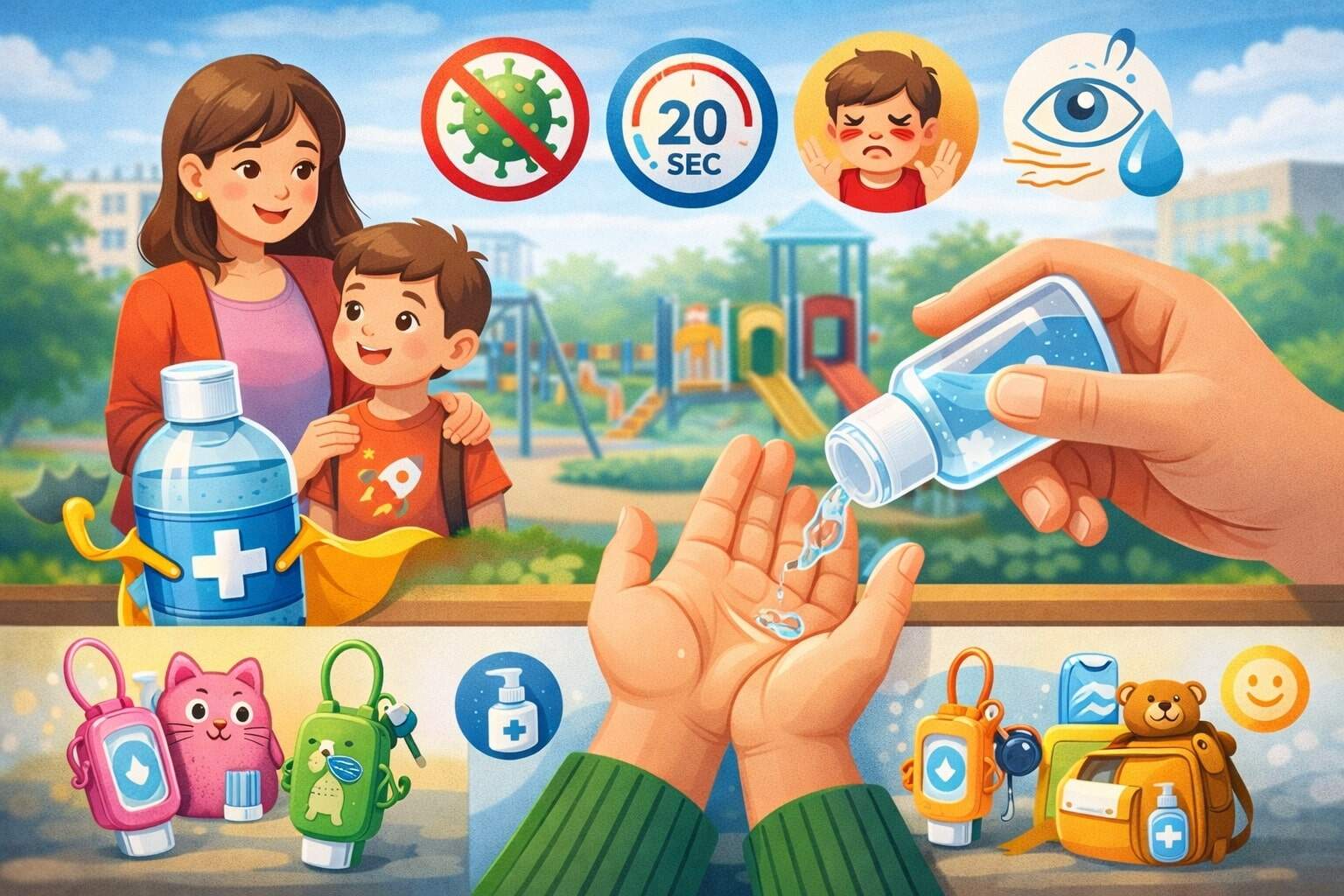
Hand sanitizer for kids can be a helpful tool for keeping hands cleaner when a sink isn’t nearby—but it’s not a perfect substitute for handwashing, and it comes with safety details every parent should understand.
The biggest parent question is usually simple: Is hand sanitizer for kids safe? The best answer is: yes, when used correctly, supervised appropriately, and chosen carefully.
Health guidance consistently emphasizes that soap and water are the best way to remove germs in most situations, while alcohol-based hand sanitizer is a practical backup when running water isn’t available.
Because kids touch everything—playground rails, classroom supplies, shopping cart handles, sports equipment—hand sanitizer for kids often becomes a “quick fix” for parents on the move. But speed can hide risks.
The same alcohol that helps hand sanitizer work can also be dangerous if swallowed. Poison control experts warn that even small amounts can cause alcohol poisoning in children, and exposure cases are tracked every year.
That’s why “hand sanitizer for kids” isn’t only about germ-killing. It’s also about ingredient awareness, safe storage, correct technique, and teaching kids good hygiene habits that last beyond the toddler years.
This guide breaks down what matters most: when to use hand sanitizer for kids, how to pick the right product, how to use it safely, what to do if a child swallows it, and what trends are shaping the future of kid-friendly hand hygiene.
Why Hand Sanitizer for Kids Matters in Everyday Life
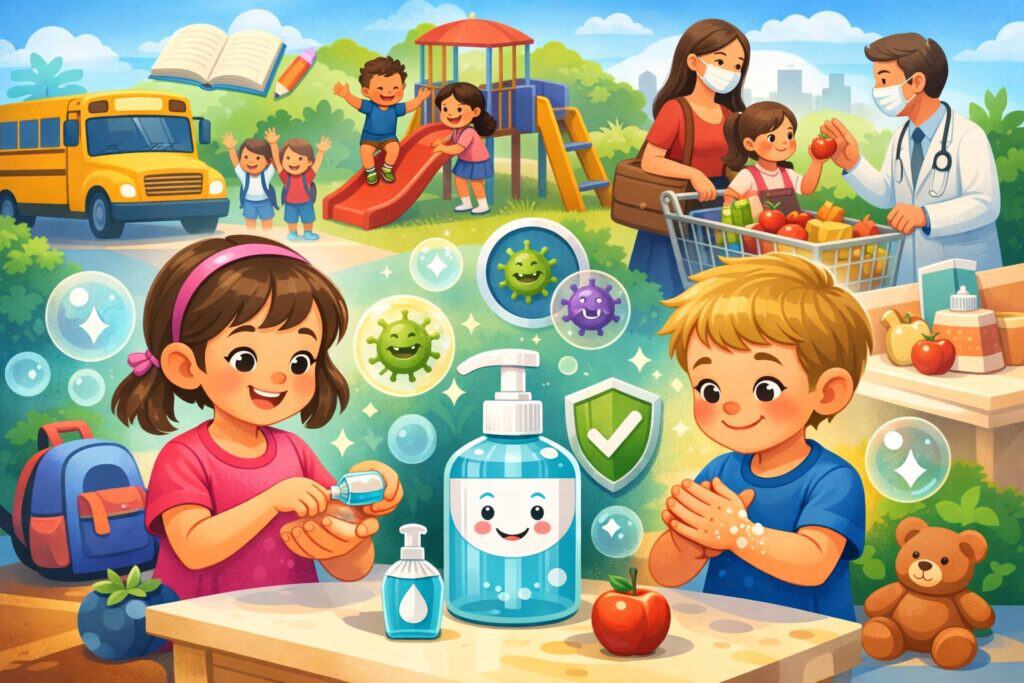
Hand sanitizer for kids became a household staple during recent years, but its value goes beyond any single outbreak or season. Childhood is full of high-contact, high-sharing environments—schools, early care centers, birthday parties, sports practices, camps, museums, and public transport.
In these settings, kids’ hands quickly collect germs, and kids often touch their faces without thinking. That combination makes clean hands a simple, powerful habit.
Hand hygiene matters because many common childhood illnesses spread through contact: touching a contaminated surface and then rubbing eyes, eating snacks, or putting fingers in the mouth.
Hand sanitizer for kids can reduce germs on hands when used properly, especially in “in-between” moments like leaving a playground, after petting animals at a farm visit, or before eating in the car.
However, it’s important to balance convenience with accuracy: hand sanitizer doesn’t remove visible dirt or grime well, and it may not work equally well for every type of germ in every situation. That’s why public health guidance still places handwashing first whenever possible.
From a parenting standpoint, hand sanitizer for kids is also a behavior tool. Used consistently, it can support routines: “Clean hands before snack,” “Clean hands after the restroom,” “Clean hands after you cough.”
In school and early care settings, hygiene guidance recommends building time into daily routines and encouraging cleaning hands at key times—either with soap and water or sanitizer when a sink isn’t readily available.
Soap and Water vs. Hand Sanitizer for Kids: What Works Best and When
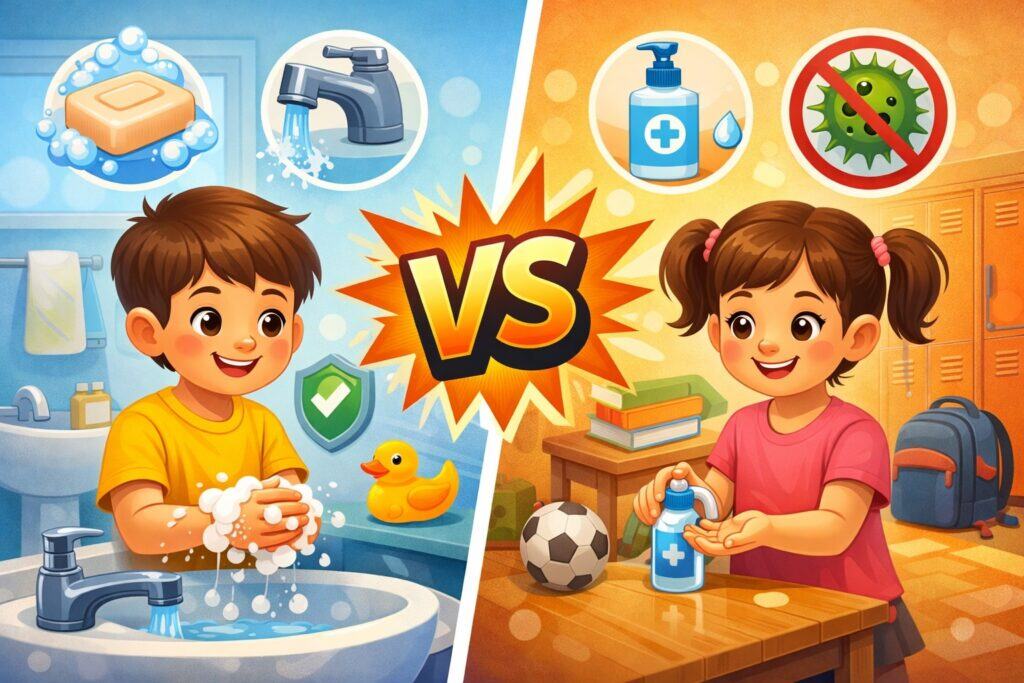
When parents compare soap and water to hand sanitizer for kids, the “best” option depends on the situation, the type of mess, and what’s available. Clear guidance says washing with soap and water is the best way to get rid of germs in most situations.
Soap and water physically lift dirt, oils, and many microbes off the skin, and rinsing carries them away. It’s especially important after bathroom use, before eating, and when hands are visibly soiled.
Hand sanitizer for kids is recommended when soap and water are not available. In those moments, alcohol-based sanitizer can reduce the number of germs on hands quickly.
Guidance emphasizes choosing products with at least 60% alcohol, which you can confirm on the label. That alcohol concentration is a big reason the product works—but it’s also why it must be handled like a household chemical, not a toy.
When Soap and Water Should Be the First Choice
Soap and water should come first in several common kid situations. If your child has sticky hands after eating, dirt from playing outside, paint from art class, or grime from sports, hand sanitizer for kids may not do a good job. In these cases, sanitizers can spread the mess around rather than remove it.
Soap and water are also the better choice after restroom use and before meals whenever a sink is available. Many hygiene posters and school programs reinforce handwashing for at least 20 seconds and build routines around key times in the day, such as after bathroom breaks and before lunch.
A practical parent strategy is to make sinks the “default” at home and in places with restrooms, while using hand sanitizer for kids as the “on-the-go” backup: in the car, at the park, or during errands.
When Hand Sanitizer for Kids Is a Smart Backup
Hand sanitizer for kids shines in fast transitions: leaving the playground, arriving at a playdate, getting into the car after shopping, or before eating at an outdoor event. In these situations, you may not have access to soap and water, and the goal is reducing germ load before kids snack or touch their faces.
To be effective, sanitizer needs the right alcohol percentage and enough contact time. A quick dab and wipe on pants won’t do much. Kids need to rub both hands thoroughly until dry, covering palms, backs of hands, fingertips, and between fingers.
How to Choose the Best Hand Sanitizer for Kids

Choosing hand sanitizer for kids is less about cute packaging and more about safety, effectiveness, and skin tolerance. The best “kid-friendly” options follow a few non-negotiable rules: the right alcohol concentration, clear labeling, safe packaging, and ingredients that reduce irritation.
Start with the label. Guidance recommends selecting a sanitizer with at least 60% alcohol. Many parents assume “the stronger, the better,” but extremely high alcohol content can be drying. A common sweet spot for family use is in the 60–80% range, paired with humectants (like glycerin) that help reduce dryness.
Next, consider the format. Gel is often easier for small kids because it stays in the palm rather than dripping. Foam can feel less sticky and may encourage kids to rub longer. Sprays can be convenient, but they raise extra concerns: kids may spray faces accidentally, inhale mist, or treat it like a toy. If you choose a spray, supervision matters even more.
Ingredients Parents Should Look For
Effective hand sanitizer for kids typically contains ethyl alcohol (ethanol) or isopropyl alcohol as the active ingredient. For everyday family use, many pediatric and public health resources focus on alcohol-based products that meet the minimum concentration and are used properly.
To support skin comfort, look for:
- Glycerin or other moisturizers (helps reduce dryness)
- Fragrance-free options (often better for sensitive skin)
- Dye-free formulations (reduces irritation risk for some children)
Fragrances like candy, fruit, or dessert scents may make kids more likely to lick hands or intentionally taste the product. Poison control groups warn that children may swallow sanitizer because it smells appealing, which is a safety risk. For that reason, “unscented” can be the safer choice for younger kids.
Ingredients and Product Risks to Take Seriously
Parents should also be aware that regulators have issued warnings and recalls over contamination and unsafe ingredients in some hand sanitizer products.
For example, certain recalls have involved toxic alcohols such as methanol, and alerts have also highlighted contamination concerns like benzene in some products (often tied to specific ingredients or manufacturing processes).
What that means for parents in real life:
- Buy hand sanitizer for kids from reputable retailers.
- Avoid unmarked bottles or “mystery brands.”
- Check the product label and avoid products with unclear manufacturer information.
- If you hear about a recall, look up the specific lot number in official recall listings.
Choosing hand sanitizer for kids is ultimately about reducing risk while improving hygiene. A well-labeled product with appropriate alcohol percentage, simple ingredients, and child-resistant or parent-controlled packaging is usually the safest path.
How to Use Hand Sanitizer for Kids Safely and Correctly
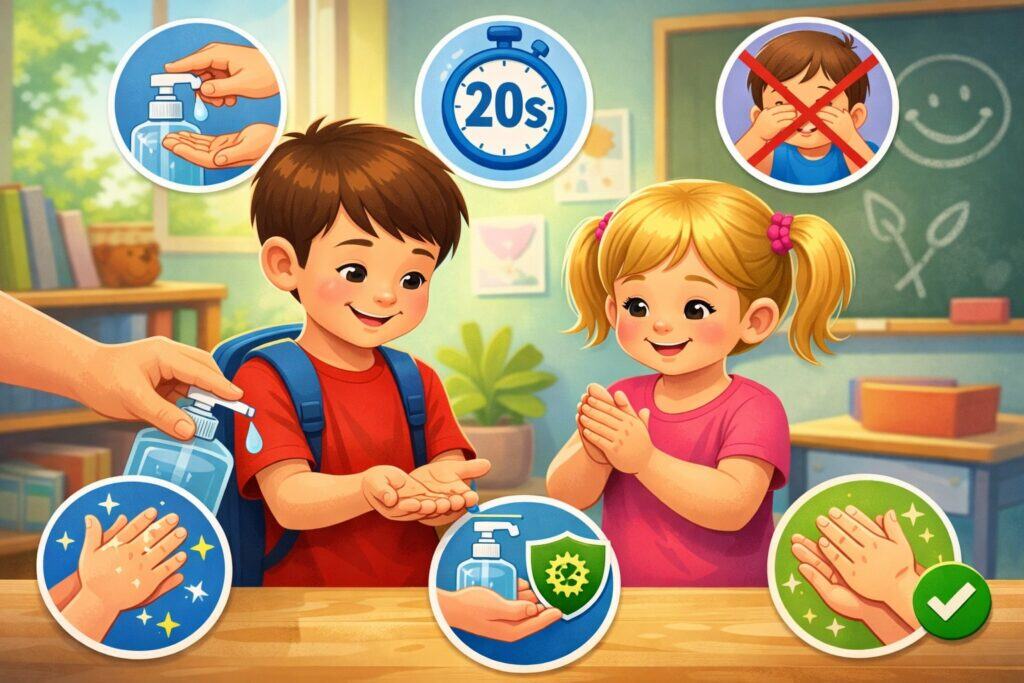
Even the best hand sanitizer for kids won’t help much if it’s used incorrectly. And even a high-quality product can become risky if it’s treated casually. Safe use comes down to three things: supervision, dosage, and technique.
First, supervision. Young children should not have free, unsupervised access to hand sanitizer for kids in backpacks, bedside drawers, or toy bins. It should be treated like medicine or cleaning products: accessible when needed, but stored safely the rest of the time.
Pediatric safety guidance highlights that swallowing even a small amount can cause poisoning, and recalled products have raised additional safety concerns.
Second, dosage. Most kids need about a dime-sized amount (or enough to cover all surfaces of both hands). Too little won’t cover fingertips and between fingers; too much will drip and increase the chance of accidental contact with eyes or mouth.
Third, technique. Kids should rub hands together until the product dries completely—no wiping on clothes, no rinsing, no quick shake-off. Coverage should include:
- Palms
- Backs of hands
- Between fingers
- Around thumbs
- Fingertips and under nails (as much as possible)
This thorough rubbing is part of why sanitizer works in practice. Public health guidance emphasizes using sanitizer properly and verifying at least 60% alcohol on the label.
Preventing Eye and Skin Irritation
Hand sanitizer for kids can sting if it gets into small cuts, cracked skin, or eczema patches. If your child has sensitive skin, use moisturizer after hand hygiene at home, switch to fragrance-free products, and lean more heavily on soap-and-water routines that include gentle soap and thorough rinsing.
Eye exposure is common with younger kids who rub faces. Teach a simple rule: “Sanitize, rub, hands down until dry.” If sanitizer gets in the eyes, rinse with clean water and seek medical advice if irritation persists.
Building Kid Habits That Actually Stick
Parents often want hand sanitizer for kids to be a “one and done,” but the best outcomes come from routine and consistency. Use short scripts:
- “Clean hands before we eat.”
- “Clean hands after we play.”
- “We rub until dry.”
For school-age kids, explain the “why” in simple terms: “Sanitizer helps reduce germs when there’s no sink, but washing is best when we can.” That message aligns with public health guidance and helps kids make good choices even when parents aren’t present.
Poisoning and Ingestion Risks: What to Do If a Child Swallows Hand Sanitizer
The most serious safety issue with hand sanitizer for kids is ingestion. Many sanitizers contain alcohol concentrations ranging widely, and alcohol poisoning can occur from surprisingly small amounts in young children.
Poison control experts emphasize that even a small amount of alcohol can cause alcohol poisoning, with symptoms ranging from drowsiness and vomiting to severe complications.
Kids may swallow hand sanitizer for kids accidentally (curiosity, grabbing a bottle), or because a scent/flavor seems appealing. Older children and teens can also misuse alcohol-based products on dares or experimentation, which makes safe storage and clear household rules important.
Signs of Possible Alcohol Poisoning in Children
Parents should watch for:
- Unusual sleepiness or difficulty waking
- Confusion or acting “drunk”
- Vomiting
- Slow or irregular breathing
- Seizure-like activity
If any of these occur after possible exposure, treat it as urgent.
What Parents Should Do Immediately
If your child swallows hand sanitizer for kids:
- Remove the product and keep it out of reach.
- Do not induce vomiting unless instructed by a medical professional.
- Call Poison Help (poison control hotline) right away for guidance.
- If the child is having trouble breathing, is very drowsy, collapses, or has seizures, call emergency services immediately.
America’s poison control network tracks exposures and provides prevention guidance, emphasizing the risks of alcohol poisoning in children. Pediatric resources also stress keeping sanitizer out of reach and using adult supervision.
Safe Storage Rules That Prevent Most Incidents
The simplest way to reduce risk is to treat hand sanitizer for kids like a cleaning product:
- Store it up high or in a locked cabinet at home.
- In bags, use an inside zip pocket and don’t let toddlers carry it.
- Avoid clip-on bottles dangling from backpacks for young kids.
- Use dispensers that give a controlled amount rather than large open-top bottles.
Poisoning risk is preventable. With supervision, safe storage, and kid-friendly teaching, hand sanitizer for kids can remain a helpful hygiene tool rather than a hazard.
Hand Sanitizer for Kids in Schools, Daycare, Sports, and Public Places
Hand sanitizer for kids is often used most outside the home—especially in classrooms and early care settings where dozens of children share space and supplies.
Hygiene guidance for schools and early care programs recommends teaching and reinforcing handwashing with soap and water for at least 20 seconds, integrating hygiene lessons into routines, and encouraging cleaning hands at key times. When soap and water aren’t readily available, sanitizer can be used as an alternative.
This matters because the “hand hygiene environment” changes the risks and benefits:
- In a classroom, sanitizer is convenient during transitions (entering class, before snack).
- On a sports field, sanitizer helps when kids share balls, bats, or mats and then eat.
- In public places (stores, museums), sanitizer can reduce germs after touching high-traffic surfaces.
Practical Tips for Parents Coordinating with Schools and Care Centers
To make hand sanitizer for kids safer in group settings:
- Ask whether sanitizer use is supervised for younger children.
- Encourage fragrance-free products if permitted.
- Confirm that children are taught to rub until dry and not lick hands afterward.
- For kids with eczema or sensory issues, discuss alternatives like scheduled handwashing breaks and gentle soap.
You can also reinforce school lessons at home. Kids learn fastest when messages are consistent: “Wash when you can, sanitize when you can’t.”
Special Considerations for Younger Kids
Toddlers and preschoolers require more supervision because they’re more likely to mouth hands and less able to follow “rub until dry” consistently. If your child is in early care, it’s reasonable to ask how products are stored and how staff prevent children from swallowing sanitizer.
Hygiene routines are most effective when they are realistic. A school or daycare that builds hand hygiene into daily schedules—before meals, after bathroom use, after outdoor play—helps kids develop habits that reduce illness spread and also improves safety by ensuring adults guide the process.
Skin Health and Sensitivities: Dryness, Eczema, and Allergy Concerns
Many parents stop using hand sanitizer for kids because it “dries out skin” or “makes eczema worse.” That concern is legitimate. Alcohol can strip oils from skin, and frequent use can worsen dryness, cracking, and irritation—especially in cold months or in children with sensitive skin.
The goal is not to avoid hand hygiene; it’s to make it sustainable. For families dealing with eczema, dermatitis, or frequent handwashing requirements, a balanced approach works best.
How to Reduce Dryness Without Reducing Hygiene
Try these strategies:
- Prefer soap-and-water handwashing with a gentle, fragrance-free soap at home when available (less stinging than sanitizer on broken skin for some kids).
- Use hand sanitizer for kids only when needed, not automatically every 10 minutes.
- Apply a thick moisturizer after hand hygiene at home (especially before bedtime).
- Choose fragrance-free, dye-free sanitizer options and avoid strong scents.
Kids often dislike sanitizer because it stings on small cuts. If your child resists, check hands for hangnails or cracks, moisturize proactively, and use sanitizer less on irritated skin while increasing sink-based washing where possible.
When a Reaction Might Signal Something More
Some children develop redness or rash after using certain products. This can be irritation from alcohol, fragrance, or preservatives, or it could be contact dermatitis. If you notice:
- Persistent rash
- Cracking and bleeding
- Swelling or hives
- Worsening eczema after a specific product
…consider switching products and discussing it with a pediatric clinician. Keeping a simple “product diary” (which sanitizer, how often, what happened) can help identify triggers.
Hand sanitizer for kids should support health, not create a new problem. The right product, combined with moisturizer and smart routines, can keep kids’ skin comfortable while still promoting clean hands.
Future Trends and Predictions: Where Kid-Friendly Hand Hygiene Is Headed
Hand sanitizer for kids is evolving. Parents increasingly want products that are effective, gentler on skin, and safer around children—while schools and public venues want easy, compliant hygiene options. Several trends are likely to shape the next few years.
Prediction 1: Stronger Quality Controls and More Targeted Recalls
Regulators and independent watchdogs have increased attention on contamination issues in consumer products, including hand sanitizers. Alerts about contaminants such as benzene, and past concerns about toxic alcohols like methanol, have made ingredient sourcing and manufacturing quality more visible topics.
The likely direction is tighter quality expectations, more testing, and faster, more searchable recall communication. For parents, this may mean improved transparency (better labeling, clearer manufacturer information) and fewer “unknown-brand” products in mainstream stores.
Prediction 2: More Skin-Supporting Formulas Designed for Frequent Use
As families normalize frequent hand hygiene in schools and public places, brands are likely to focus more on barrier-support ingredients—moisturizers, humectants, and fragrance-free formulations.
Hand sanitizer for kids that balances alcohol effectiveness with skin tolerance will remain a high-demand category, especially for children with sensitive skin.
Prediction 3: Smarter Dispensers and Better Supervision in Group Settings
Schools and childcare programs benefit from dispensers that provide controlled portions and reduce spills. Expect more hands-free or portion-controlled dispensers in classrooms, gyms, and public venues, paired with hygiene education integrated into routines.
Guidance for schools already emphasizes building hand hygiene into daily schedules and teaching it consistently.
Prediction 4: More Parent Education Around Poisoning Prevention
Exposure tracking and prevention messaging from poison control groups has helped parents understand ingestion risk. As long as alcohol-based sanitizer remains common, hand sanitizer for kids will continue to be framed as both a hygiene tool and a poisoning risk if swallowed.
This may push more families toward child-resistant packaging, better storage habits, and fragrance-free choices that are less tempting to taste.
The future of hand sanitizer for kids will likely be “less gimmick, more safety”—better formulations, stronger oversight, and wider hygiene education that makes correct use the norm.
FAQs
Q.1: Is hand sanitizer for kids safe for toddlers?
Answer: Hand sanitizer for kids can be safe for toddlers only with close adult supervision. Toddlers are at higher risk because they explore with their mouths and can swallow sanitizer quickly.
Alcohol-based sanitizer can cause poisoning in small amounts, and poison control organizations emphasize that even small exposures can be dangerous for children.
For toddlers, the safest approach is to prioritize soap-and-water washing whenever possible, keep sanitizer out of reach, and apply sanitizer yourself—then hold your toddler’s hands and rub until dry so they don’t immediately put fingers in their mouth.
If you use hand sanitizer for kids around toddlers, choose a fragrance-free product to reduce temptation, and never let them play with the bottle.
Q.2: What alcohol percentage should hand sanitizer for kids have?
Answer: Hand sanitizer for kids should contain at least 60% alcohol to be effective when soap and water are not available. This is a key effectiveness threshold recommended in public health guidance.
Parents should check the label for the active ingredient and alcohol percentage rather than relying on front-label marketing claims. If a product does not clearly list the alcohol percentage or manufacturer details, it’s better to skip it.
Remember: higher alcohol content can increase dryness, so pairing sanitizer use with moisturizer at home can make routines more comfortable for kids.
Q.3: Can kids use hand sanitizer for kids every day at school?
Answer: Yes, many kids use hand sanitizer for kids daily at school, especially during transitions like before snack or after shared activities. School hygiene guidance encourages cleaning hands at key times and using sanitizer when soap and water aren’t readily available.
The bigger concerns are technique and skin health. If your child uses sanitizer many times per day, consider sending a fragrance-free option if permitted and encouraging moisturizing at home.
Also reinforce “rub until dry” so it works as intended and reduces the chance of kids touching eyes with wet products.
Q.4: What should I do if my child gets hand sanitizer in their eyes?
Answer: If hand sanitizer for kids gets into the eyes, rinse gently with clean water. Many kids rub their eyes after applying sanitizer, so teaching “hands down until dry” can prevent this.
If irritation is severe, the child won’t stop rubbing, or redness/pain persists after rinsing, contact a medical professional for advice. Avoid “neutralizing” with other products, and don’t let children rub with contaminated hands. The most important immediate step is flushing with water and keeping the child calm.
Q.5: Are “natural” or alcohol-free hand sanitizers for kids products a good alternative?
Answer: Some parents prefer alcohol-free products because they worry about ingestion and dryness. However, alcohol-based sanitizer with at least 60% alcohol is specifically recommended when soap and water aren’t available because it reduces germs effectively in many situations.
If you choose an alcohol-free option, treat it as an “extra layer,” not a full replacement for handwashing. For many families, the best strategy is still: wash with soap and water when possible, use alcohol-based sanitizer for kids as the backup, and reduce risks through safe storage, supervision, and fragrance-free choices.
Q.6: How can I lower poisoning risk while still using hand sanitizer for kids?
Answer: Lowering poisoning risk is mainly about access control and supervision. Store sanitizer up high or locked, keep travel bottles in zipped compartments, and don’t allow young kids to carry sanitizer unsupervised.
Poison control groups emphasize that alcohol poisoning can happen from small amounts. Choose fragrance-free products to reduce “tasty smell” temptation, and use portion-controlled dispensers at home when possible. Finally, teach kids simple rules: “Sanitizer is not food,” “We rub until dry,” and “We only use it with a grown-up when you’re little.”
Conclusion
Hand sanitizer for kids is one of those parenting tools that’s incredibly useful when used correctly—and potentially dangerous when treated casually. The most important principles are straightforward: wash with soap and water whenever you can, and use hand sanitizer for kids as a backup when a sink isn’t available.
Public health guidance highlights that soap and water are best in most situations and that sanitizer should contain at least 60% alcohol to be effective.
From there, safety becomes the priority: supervise young children, store sanitizer out of reach, avoid tempting scents, and teach kids to rub hands until dry. Parents should also stay aware that product quality matters—choose reputable products with clear labeling and pay attention to official recall information when it appears.
If you treat hand sanitizer for kids as part of a bigger hygiene routine—handwashing, smart sanitizer use, moisturizing for skin comfort, and age-appropriate teaching—you’ll get the benefits without inviting unnecessary risks.
Clean hands are a habit kids can carry for life, and hand sanitizer for kids can be a helpful stepping stone when parents guide it thoughtfully.